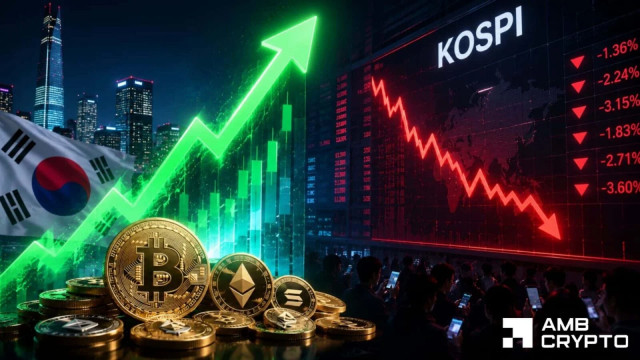
South Korea's crypto trading volume surged 82% to $964M during the KOSPI's 20% crash. Two theories: capital rotation or margin calls. Stock recovery may reduce crypto volumes.
South Korea's crypto trading volume spiked to $964 million across five major exchanges on July 28. That represented an 82% increase over the previous month's daily average. The surge coincided with an historic sell-off in the country's stock market.
The KOSPI benchmark index lost more than a fifth of its value in five days, dragged down by a semiconductor rout. Circuit breakers halted trading during the decline. Between July 28 and 29, the market shed roughly 864 trillion won in market capitalization.
On Upbit, KRW-USDT trading volume jumped 600%, from $20 million to nearly $140 million. The exchange's total volume climbed from $292.7 million to about $743 million before retreating. Bithumb saw a 438% increase, from $81 million to $436 million. Volume later fell to $144 million, still above the week's lowest levels.
Two explanations emerged for the crypto volume spike. PredictiveMoney said some investors rotated capital into digital assets as a haven alternative. The analyst pointed to the 82% exchange-volume increase and rising USDT activity as evidence. The data did not confirm that equity capital directly entered crypto, PredictiveMoney said.
Seoul Economic Daily offered a different read. Crypto holders may have sold assets to meet margin obligations elsewhere, the report said. Others may have moved funds overseas to trade Korean equity derivatives. The volume spike likely reflected both defensive positioning and liquidity demand, the reports suggested.
South Korean stocks later staged a sharp recovery. Crypto Rover estimated that 720 trillion won returned to the market during the rebound. At press time, the KOSPI had risen 18.27% to 6,615.60, recovering much of the previous decline.
Drafted by a large language model from the source reporting linked above, then screened by automated publishing checks. It is not read by a journalist before publication. Some articles cite our Alpha Score. Verify prices and figures against the original source. Educational coverage, not personalized advice.