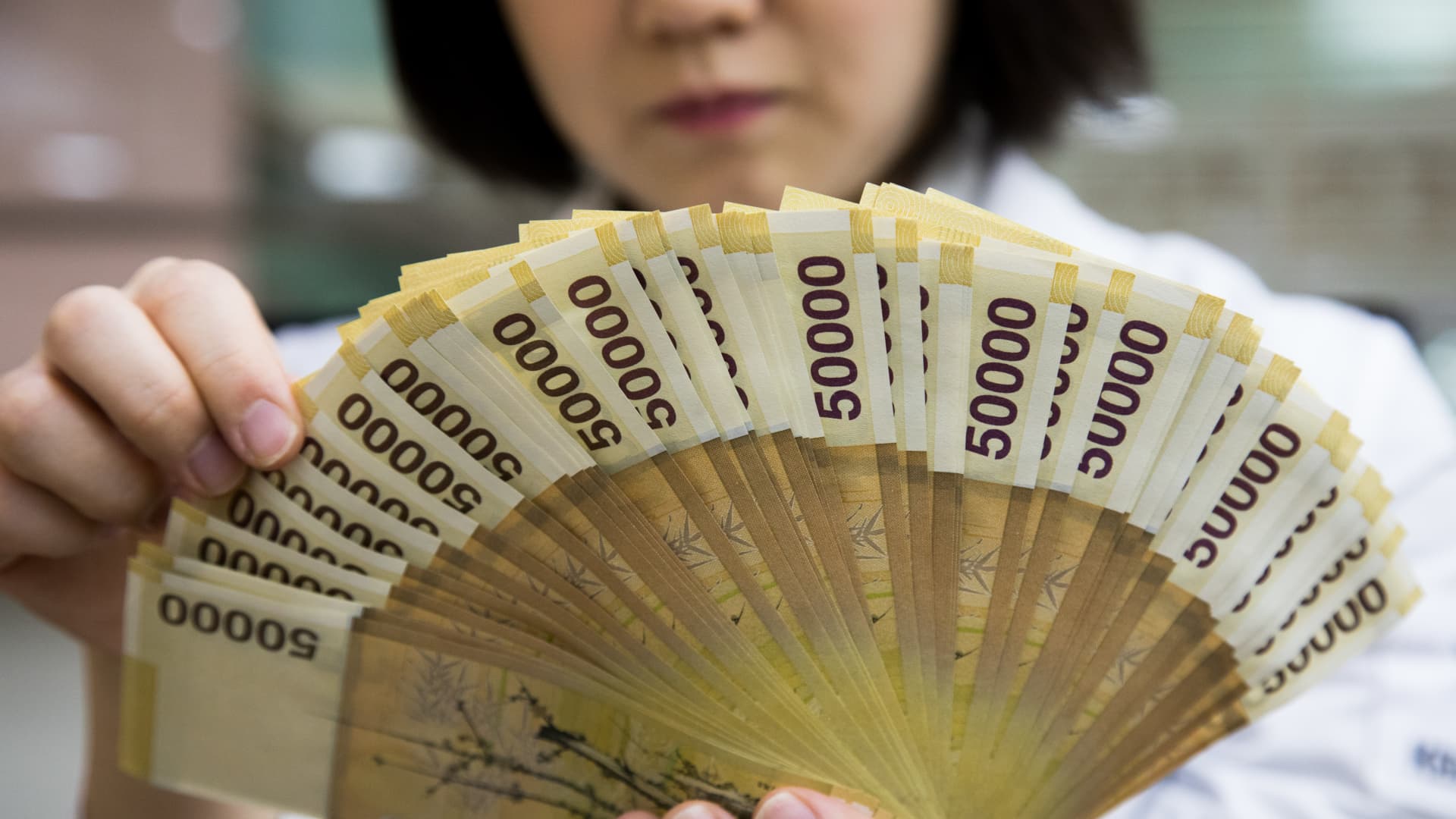
South Korea's central bank has flagged an unusual inflation risk: cash bonuses for chip workers that top $410,000 per employee at some companies. The Bank of Korea warned the payments could fuel broader wage growth and keep inflation above its 2% target even after the energy-price shock from the Iran conflict subsides.
The warning came in a June 17 report. The BOK wrote that inflation this year has been driven largely by higher energy prices tied to the war. Even if that conflict eases, it said, inflationary pressures may gradually increase as income conditions improve and wage growth becomes more widespread. The central bank singled out the payment of large performance bonuses at major IT-sector companies, saying those payments could spill into broader wage increases and translate into upward pressure on inflation.
South Korea already runs above-target inflation. The BOK projects full-year inflation at 2.7%, well above its 2% target. The direct concern is that one-off bonuses, paid at exceptional scale, stop being one-off.
SK Hynix agreed last September to set aside 10% of operating profits as bonuses for workers. Samsung workers secured a deal that allocates 10.5% of semiconductor operating profit toward special bonuses, after threatening an 18-day strike in May. A union source told Reuters that a memory chip worker with a base salary of 80 million won ($52,400) is expected to receive a total bonus of around 626 million won ($410,000) this year. SK Hynix employees are on track for bonuses of more than 700 million won ($454,851) if the firm hits an annual profit of 250 trillion won this year, Reuters calculated.
The BOK said bonuses normally do not contribute much to demand pressure because they are not permanent income increases. When special bonuses expand unusually and substantially, wage growth could spread to other sectors and increase both supply- and demand-side inflationary pressures, the central bank said. It added that because the recent IT-sector performance bonuses have been paid on a highly exceptional scale, the possibility that their actual impact could be larger than expected cannot be ruled out.
BOK Deputy Governor Lee Jiho said in a press briefing on June 17 that sales have increased significantly in places such as Suwon and in luxury goods sections of department stores, and this could gradually spread further. South Korean media have reported that some tech industry workers spent big on luxury items – bags, jewelry, watches.
The BOK noted that in Gyeonggi Province, home to major Samsung and SK Hynix semiconductor facilities, card spending growth this year was relatively higher in areas near chip production sites and adjacent residential areas than in other regions. Chosun Ilbo reported that luxury consumption has rapidly increased in the southern Gyeonggi regions where Samsung and SK Hynix are headquartered. Luxury sales at a Shinsegae department store branch in Gyeonggi rose 53.6% year-on-year in May. Luxury jewelry surged 146.3%, and luxury watches grew 85.3%. Overall store sales rose 19%, the newspaper said.
Department-store operators have rallied on expectations that high-end consumption will strengthen. Lotte Shopping has surged more than 148% year to date, with a 67% jump in the past three months alone. Hyundai Department Store shares are up 120% year to date, with a 113% gain in the last three months. Shinsegae has led the pack with a 190% gain from the start of the year, most of it coming in the last three months.
The BOK's next rate decision is scheduled for July 11.