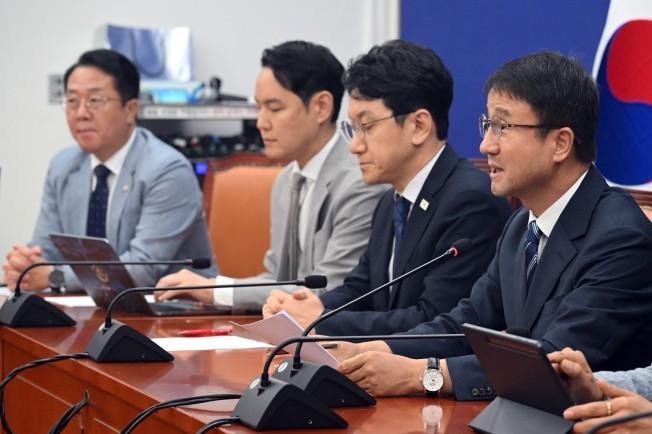
The People Power Party is weighing whether to return to parliamentary committees it has been boycotting. The ruling Democratic Party of Korea is using its majority to push through legislation including prosecution reform. The standoff creates political uncertainty that could affect investor sentiment toward South Korean assets, political observers said.
The Democratic Party has already elected chairs of 11 standing committees on its own, including the Legislation and Judiciary Committee. The opposition has stayed away in protest. Staying away means the opposition cannot block bills during committee review. Returning would still leave them unable to overcome the ruling party's numerical advantage.
The dilemma deepened as the Democratic Party moves ahead with follow-up legislation on prosecution reform. A revision to the Criminal Procedure Act would abolish prosecutors' supplementary investigation authority. That change could affect how corporate crimes are investigated and prosecuted, potentially altering the business environment for companies listed on the KOSPI, legal experts said.
Internal conflict within the People Power Party adds to the uncertainty. Party leader Jang Dong-hyeok has focused on public campaigning outside the National Assembly. He canceled a meeting with the prime minister and visited a police agency. He has also attended voting rights rallies and meetings with young people. Some party members have raised the possibility of a signature campaign to pressure the leadership over disciplinary proceedings.
A People Power Party official said the party's public campaign needs to be paired with stronger internal leadership. "The reality is that even if we return to the standing committees, it is difficult to stop the Democratic Party as the majority party," the official said. "There is a need to support the party leader's efforts to strengthen the offensive against the ruling party by going directly to the field."
The official added that internal conflict must be brought under control for the public campaign to become a source of momentum. "Only then will Jang's leadership gain strength," the official said.
Political observers said the prolonged dispute could drain energy from confronting the ruling party. For investors in South Korean equities, the standoff adds a layer of political risk. The next legislative session will show whether the opposition can unify or whether the ruling party will continue to pass bills unopposed.