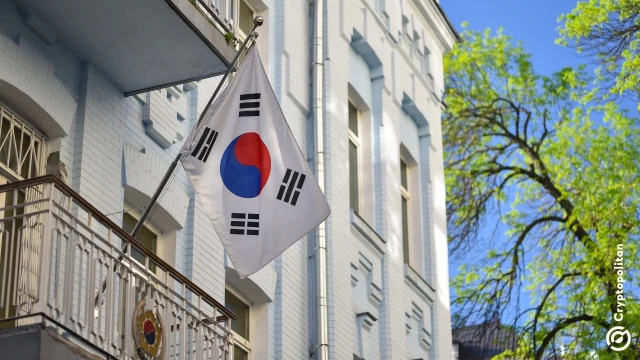
South Korea's 22% crypto tax faces mandatory parliamentary review after a petition surpasses 50,000 signatures. The review could delay or alter the January 2025 start.
A petition against South Korea's planned 22% crypto tax crossed 50,000 signatures in roughly three weeks. That forces a mandatory parliamentary review under the National Assembly Act, creating a third inflection point for the policy.
The tax applies to digital asset gains exceeding 2.5 million won (about $1,900) per year and is scheduled for January 2025. The government delayed it twice before – first from 2023 to 2024, then to 2025. The petition's speed to 50,000 signatures shows retail opposition remains strong ahead of the 2024 general election.
South Korea's petition system requires the National Assembly to consider any petition that exceeds 50,000 signatures within 30 days of submission. The crypto tax petition hit that mark quickly, so lawmakers are now obligated to hold a Strategy and Finance Committee hearing within the next 60 days. The committee, dominated by the Democratic Party that introduced the original tax legislation, will decide whether to recommend a delay, repeal, or amendment.
A full repeal remains unlikely given the party's previous support for the tax. A more probable outcome is a delay to 2026 or an increase in the tax-free threshold. The Finance Ministry has defended the 22% rate as consistent with South Korea's capital gains tax structure. The petition forces a public debate that could shift political calculations despite that defense.
South Korean crypto exchanges face the most direct regulatory exposure. If the 22% tax takes effect, it could compress net returns for frequent traders and reduce trading volumes. South Korea's retail-heavy market has historically traded at a premium relative to global prices – the so-called Kimchi Premium. A tax on gains would narrow that premium by lowering after-tax arbitrage incentives for foreign capital.
Major cryptocurrencies like Bitcoin and Ethereum dominate volumes on Korean exchanges. Any policy-driven volume decline would disproportionately affect these assets in local KRW-denominated pairs. The review period runs through autumn 2024, with actual implementation months away. The petition creates headline risk nonetheless, weighing on Korean crypto flows in the near term. For broader context, see AlphaScala's crypto market analysis.
The naive interpretation is that the petition's success is bullish because it might kill the tax. The better market read is more nuanced. The Democratic Party controls the National Assembly and introduced the legislation. A full repeal is unlikely. A delay to 2026 or a higher tax-free threshold is more plausible.
The practical effect for traders: the 60-day review window creates policy uncertainty. Uncertainty reduces the incentive for large long positions funded by Korean won. Leveraged products on local exchanges may see reduced demand as traders wait for clarity. If the committee recommends a delay, that could spark a relief rally in BTC/KRW and ETH/KRW pairs. If the committee reaffirms the January 2025 start, expect the Kimchi Premium to contract further.
The next concrete catalyst is the Strategy and Finance Committee hearing, expected within 60 days. Key inputs to watch: which lawmakers attend, whether the Finance Ministry submits a revised tax schedule, and whether the committee issues a formal recommendation to delay. A delay recommendation would be a clear positive for volumes. A reaffirmation of the January 2025 start would pressure Korean exchange premiums. The petition's speed to 50,000 signatures shows the temperature is high. The committee's response will determine whether the steam has anywhere to go. For related background, see AlphaScala's coverage of the South Korean petition against the 22% crypto tax.
Prepared with AlphaScala research tooling and grounded in primary market data: live prices, fundamentals, SEC filings, hedge-fund holdings, and insider activity. Each story is checked against AlphaScala publishing rules before release. Educational coverage, not personalized advice.