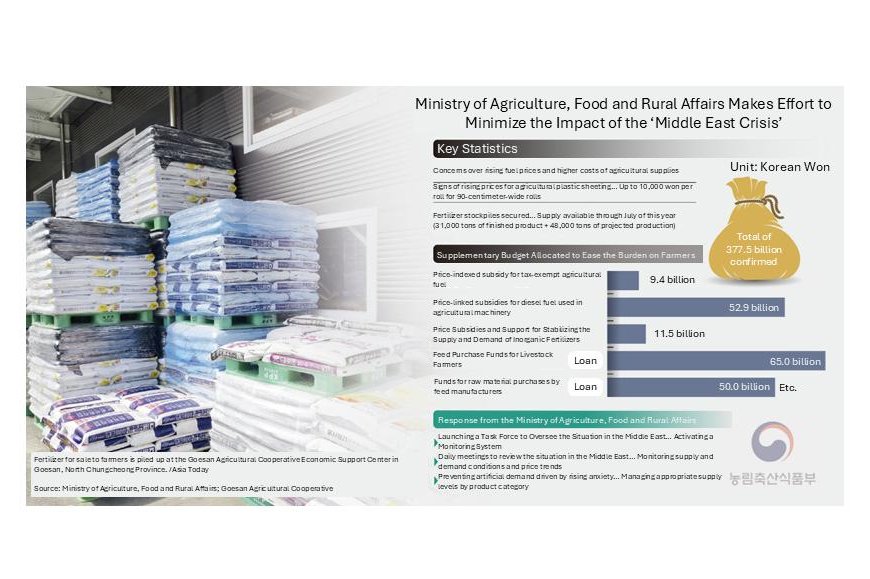
South Korea has finalized supply contracts for agricultural fertilizer through July to mitigate potential price volatility. The government is also expanding subsidy programs to insulate domestic farmers from the rising costs of essential agricultural inputs.
Supply Chain Security and Subsidy Expansion
Securing these inventories serves as a primary defense against the localized food inflation that often follows supply chain disruptions. By locking in volume through mid-year, the administration aims to prevent the inventory shortages that previously spiked production costs for farmers. The subsidy expansion targets the price gap between global material costs and what farmers pay at the retail level, effectively capping the input cost burden for the upcoming planting cycles.
This move reflects a broader regional concern regarding agricultural input security. Relying on imported raw materials for fertilizer production makes the sector vulnerable to price swings in energy and chemical markets. When input costs rise, the downstream effect is higher domestic food prices, which complicates central bank efforts to keep CPI within target ranges. Traders monitoring crude oil profile should note that energy prices remain the primary variable in the cost of nitrogen-based fertilizers.
Market Implications for Agricultural Commodities
For investors, the stability of South Korea's agricultural sector is a proxy for broader food security trends in Asia. When governments intervene to subsidize inputs, they artificially maintain production levels that might otherwise contract during high-cost environments. This strategy prevents supply shocks but can lead to long-term fiscal strain if prices remain elevated for extended periods.
- Input Cost Control: Subsidies help maintain predictable margins for agricultural producers.
- Supply Buffer: Securing inventory through July removes immediate spot-market reliance.
- Inflationary Pressure: Government intervention shifts the burden from the consumer to the state balance sheet.
Traders should watch for shifts in global fertilizer demand, as any sudden change in policy from major exporters could force South Korea to re-evaluate its procurement strategy. If global supply constraints tighten, the cost to maintain these subsidies will rise, potentially impacting the fiscal outlook. Keep an eye on how these local supply measures correlate with broader market analysis on regional food inflation.
Monitoring Future Price Sensitivity
The immediate goal is to prevent a repeat of past cycles where farmers reduced usage due to price spikes, leading to lower yields and higher consumer prices. While the current measures cover the sector through July, the secondary effect will be the government's ability to manage the budget if global prices move higher. Expect the focus to remain on the impact of energy-linked inputs and the government's willingness to absorb higher costs as the season progresses.