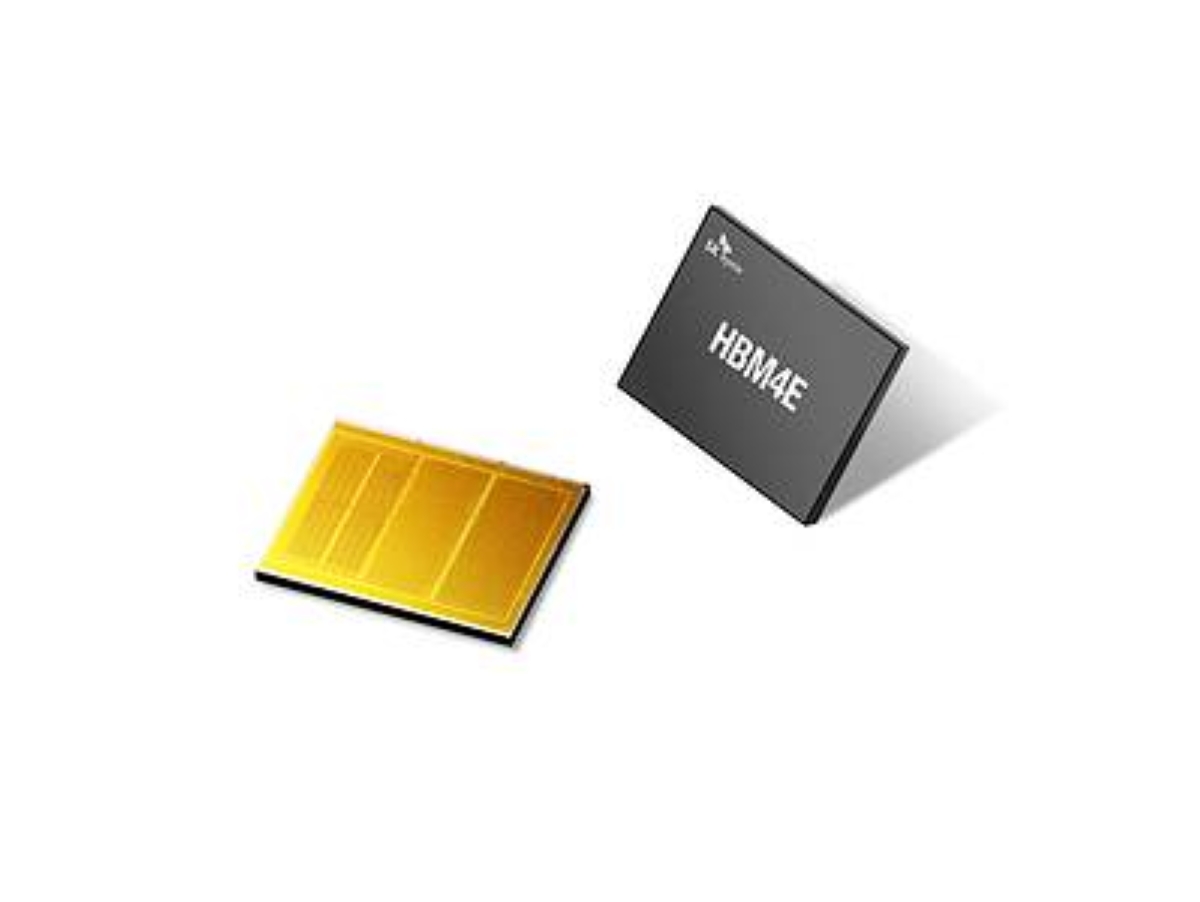
SK hynix shipped samples of its 12-high HBM4E memory to major customers, the company said Thursday. The next-generation DRAM hits a maximum 16Gbps per pin and delivers power efficiency up more than 20% from the previous generation.
The 12-layer stack packs 48GB of capacity using Advanced MR-MUF, the mass reflow molded underfill process that injects liquid protective material between chips. SK hynix said it cut heat resistance by 17% compared to HBM4. That matters for high-performance computing environments where thermal management limits sustained throughput.
Latency is lower too, thanks to a new interface and design optimization that keeps the memory stable in high-bandwidth settings. AI training and inference workloads depend on data transfer speed between GPU and memory. That link is the bottleneck, not compute.
SK hynix has been the dominant supplier across the HBM3, HBM3E, and HBM4 cycles. The HBM4E samples suggest it is pushing the same cadence. The company said its production expertise and supply reliability will help customers build next-generation AI infrastructure.
"SK hynix has laid the foundation to strengthen its AI leadership with HBM4E based on its market-leading technological capabilities and manufacturing expertise," said Ahn Hyun, President and Chief Development Officer. "Through close collaboration with our partners, we will deliver the value needed in the market while reinforcing our technology leadership as a full-stack AI memory creator."
The HBM4E samples arrive as hyperscalers race to deploy larger models that demand more memory bandwidth per accelerator. SK hynix's main rival, Samsung, has been sampling its own 12-layer HBM4. The power-efficiency and thermal improvements in HBM4E could give SK hynix an edge in qualification cycles that start later this year.
For a trader looking at the memory supply chain, the 17% heat-resistance reduction is the number to track. Thermal management is the hard constraint in GPU clusters running at full utilization. A memory stack that runs cooler lets operators push clock speeds higher or pack more accelerators per rack. That translates to better total cost of ownership for hyperscalers, which drives procurement decisions.
The 48GB capacity per stack is also worth noting. Doubling the per-stack capacity from 24GB in earlier HBM generations means fewer memory modules per GPU, which simplifies board design and reduces power draw from the memory subsystem. SK hynix is betting that capacity density and thermal efficiency together will win qualification slots against Samsung's competing HBM4 parts.
Qualification cycles for HBM4E are expected to run through the second half of this year. Volume production would follow in 2027, assuming the samples pass customer validation. The timeline puts SK hynix roughly one generation ahead of its own HBM4 ramp, which started shipping in volume earlier this year.