Macro● Neutral
Singapore’s $50M Bet on Physical AI to Reshape Robotics Talent
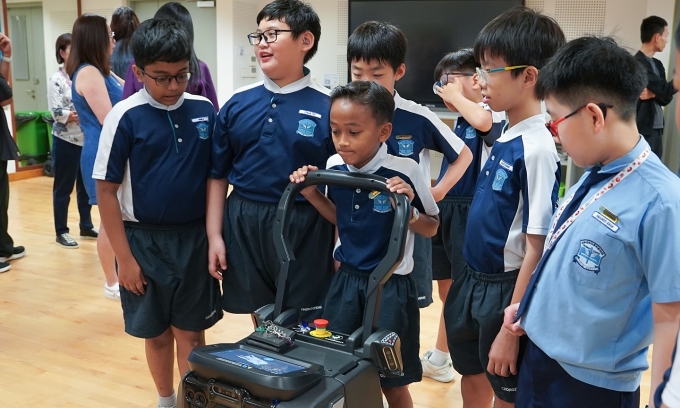
Training 10,000 students in physical AI aims to bridge the hardware-software gap, positioning the city-state as a critical hub for future autonomous systems.
Continue with
A Shift Toward Physical Intelligence
Singapore is signaling a decisive pivot in its national education strategy, aiming to bridge the gap between digital software development and real-world industrial application. The city-state has announced a comprehensive initiative to train at least 10,000 students over the next five years in the field of 'physical AI.' This evolution moves beyond the traditional generative AI models that populate browser windows, focusing instead on embedding artificial intelligence into autonomous drones, industrial robots, and complex mechanical systems.
This initiative marks a departure from the screen-centric AI training currently dominating the global education landscape. By prioritizing the integration of AI with robotics, Singapore is effectively attempting to future-proof its workforce for a manufacturing and logistics sector that is increasingly reliant on autonomous machine interaction.
The Strategic Rationale
For investors and market observers, this move is far from a purely academic endeavor. Singapore’s economy is heavily reliant on high-tech manufacturing, precision engineering, and global logistics hubs—all of which are prime candidates for the deployment of physical AI. As labor costs rise and global supply chains demand greater efficiency, the ability to deploy AI-driven robotics at scale is becoming a primary competitive advantage for nations.
Historically, Singapore has been a top-tier destination for foreign direct investment in automation and robotics. However, the limitation has often been the availability of local talent capable of bridging the gap between hardware architecture and machine learning software. By training 10,000 students, the government is essentially creating a pipeline for local startups and multi-national corporations (MNCs) to tap into a specialized talent pool that understands the nuances of physical machine autonomy.