Stocks● Neutral
Singapore Airlines Profit Down 56% on Air India; CEO Says Long Game
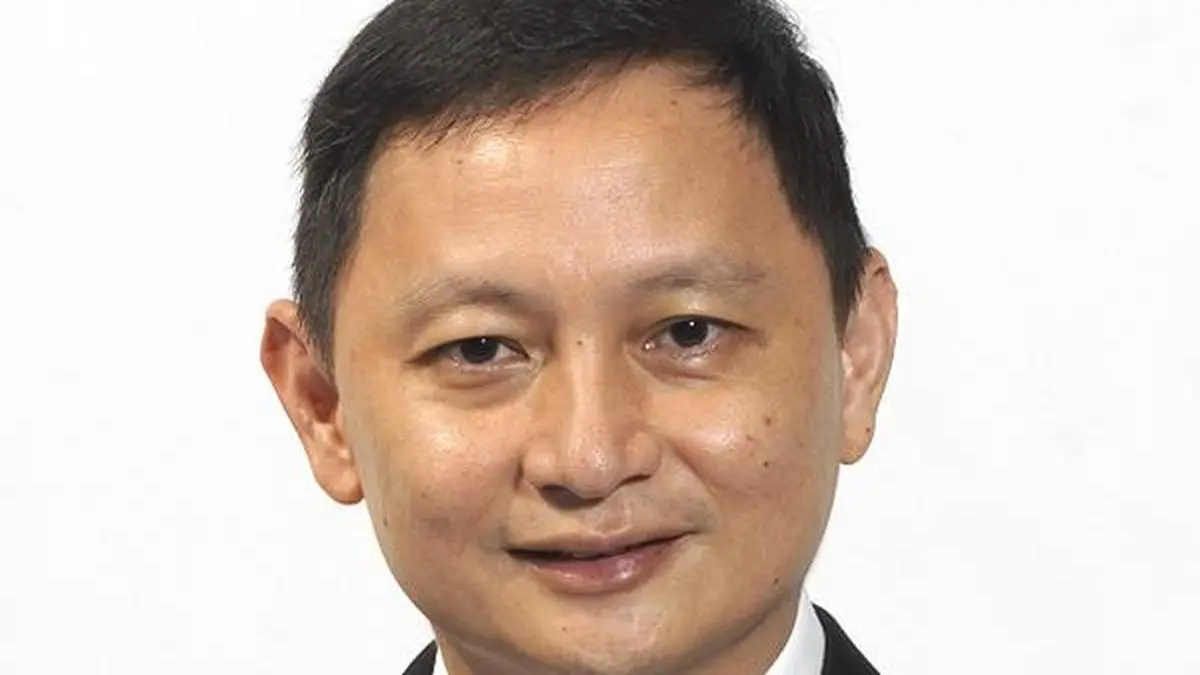
Singapore Airlines net profit slid 56% in FY 2026 as Air India's $2.6 billion loss weighed. CEO Goh Choon Phong called the turnaround a 'long game,' though further capital calls loom.
Continue with
Singapore Airlines net profit fell 56% in FY 2026, weighed down by a $2.6 billion loss at associate Air India, where it holds a 25.1% stake. CEO Goh Choon Phong spent much of the post-results call defending the investment, framing India’s aviation market as a structural growth play and Air India’s transformation as “a long game” with “no short cuts.” For anyone tracking the stock market analysis, the question is whether the operational improvements Goh cited are enough to offset the risk of further capital calls and a prolonged earnings drag.
The 56% Profit Plunge and the Air India Anchor
Singapore Airlines books its share of Air India’s results under equity accounting. The $2.6 billion headline loss at the Indian carrier flows directly into the parent’s bottom line in proportion to its 25.1% holding. The math is straightforward: a large associate loss overwhelms even a solid operating performance at the mainline carrier.
Equity Accounting Magnifies the Associate Loss
Air India’s loss was not a surprise to close observers. The scale of the hit still reshapes the Singapore Airlines investment case. The carrier had already injected an additional ₹1,080 crore into Air India last March. Goh made clear that any further capital injection would have to be discussed with Tata Sons, the majority owner. That conversation is now a live risk for minority shareholders.
External Shocks: Pakistan Airspace and Rupee Depreciation
Goh attributed much of Air India’s poor showing to factors outside management’s control. He singled out the closure of Pakistan airspace and the depreciation of the Indian rupee against the US dollar. Both are genuine headwinds. Rerouting around Pakistan adds fuel burn and block time. A weaker rupee inflates dollar-denominated costs such as lease payments and maintenance. These are not permanent. They are also not within Air India’s power to fix quickly.
Practical rule: When an associate’s losses are driven by airspace geopolitics and FX, the parent’s earnings become a proxy for risks that have nothing to do with the operating airline’s own performance.
Why the CEO Calls It a Long Game
Goh pushed back against any suggestion that the investment thesis is broken. “It is going to be a long game. There will be no short cuts,” he said on the call. He added that the Indian market “holds tremendous potential and is even more obvious today.” The argument rests on two pillars: the structural growth of Indian aviation and early evidence that Air India’s transformation is taking hold where it matters most–the customer experience.
Operational Transformation Through Seconded Executives
Singapore Airlines has seconded two senior executives to Air India to drive the overhaul. Captain Basil Kwauk serves as chief operations officer, and Jeremy Yew Jin Kit as head of engineering. Their presence signals that the parent is not a passive investor. It is attempting to export the operational discipline that made Singapore Airlines a premium benchmark.
Goh pointed to “significant transformation across training, in-flight services and lounges.” Those are precisely the touchpoints that determine whether a full-service carrier can command a revenue premium. If Air India can close the product gap, the revenue payoff would be material given the size of the Indian market.