Stocks● Neutral
Seven-Mile Tank Shot Reshapes European Defense Bets
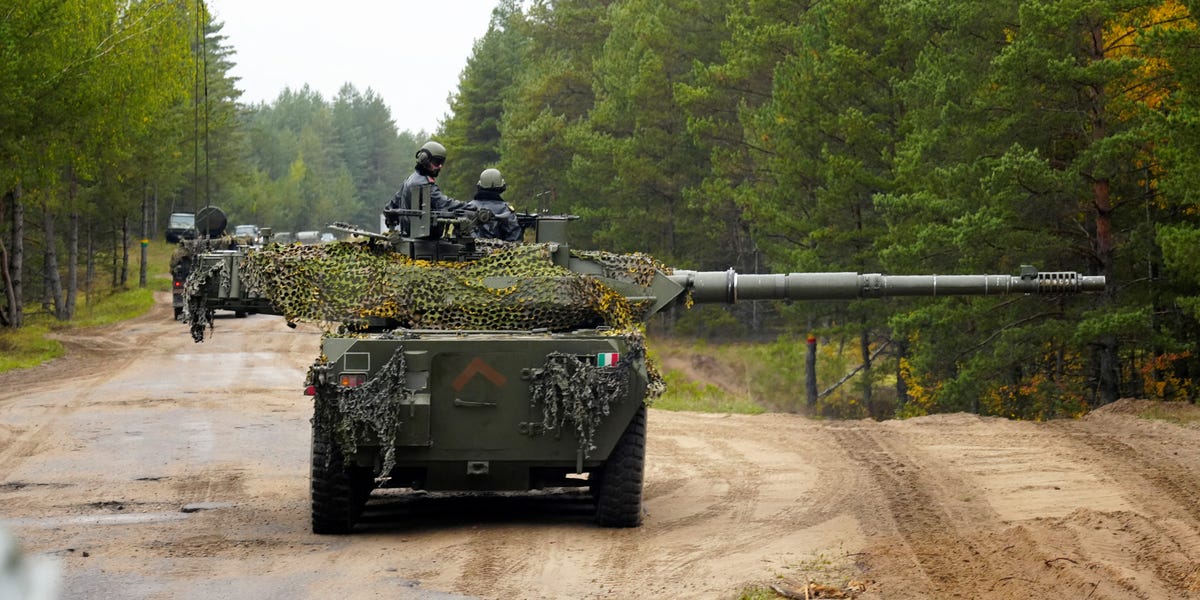
The longest tank gun engagement in the ongoing war provides a live demonstration for European defense procurement budgets, extending the case for higher NATO spending.
Continue with
A Ukrainian vehicle crew reported using an Italian B1 Centauro tank destroyer to strike a house at nearly seven miles – one of the longest indirect tank gun shots documented in the conflict. The shot, fired in an artillery-like trajectory, changes the tactical conversation around Western armored vehicles in Ukraine. For markets, it adds a live demonstration of capability that procurement ministries factor into multi-year budgets.
The B1 Centauro Demonstration and Its Market Read
The B1 Centauro is produced by Consorzio Iveco Oto Melara, a joint venture between Iveco (defence vehicles) and Leonardo (defence electronics). Neither company confirmed the engagement, and the report remains unverified by an independent source. Still, the tactical data point is now public. The simple read is that Ukraine gained a new long-range precision option. The better market read is that this demonstration extends the argument for higher NATO defense spending by providing a real-world proof point for a platform that previously relied on theoretical range tables.
What changed: The reported engagement gives European defense stocks a fresh narrative anchor. The STOXX Europe 600 Aerospace & Defense index has already priced in elevated spending expectations. This shot adds a granular example that can sustain the rally during a news vacuum.
Exposure: Leonardo, Iveco, and the Defense ETF Chain
Direct exposure runs through Leonardo and, to a lesser extent, Iveco. Leonardo shares have rallied on the broader defense cycle. The B1 Centauro engagement reinforces the company's credibility in indirect-fire systems, a capability that procurement agencies increasingly value as artillery shortages persist. The risk event is not the shot itself but the escalation response it invites. A Russian counter-response targeting production sites or supply lines would introduce operational risk for the joint venture. That scenario would hit Leonardo and any supplier traceable to the platform.
Asset list for watchlist decisions:
- Leonardo (defence electronics and artillery)
- Iveco (defence vehicles)
- STOXX Europe 600 Aerospace & Defense as a sector proxy
- Rheinmetall (if confirmed as a shell or component supplier – not sourced here but a common paired trade)
Investors should treat this as a geopolitical risk watch with a three- to six-month timeline for budget read-throughs. The European Union's ongoing debate on defense funding is the macro backdrop that magnifies or mutes this event.