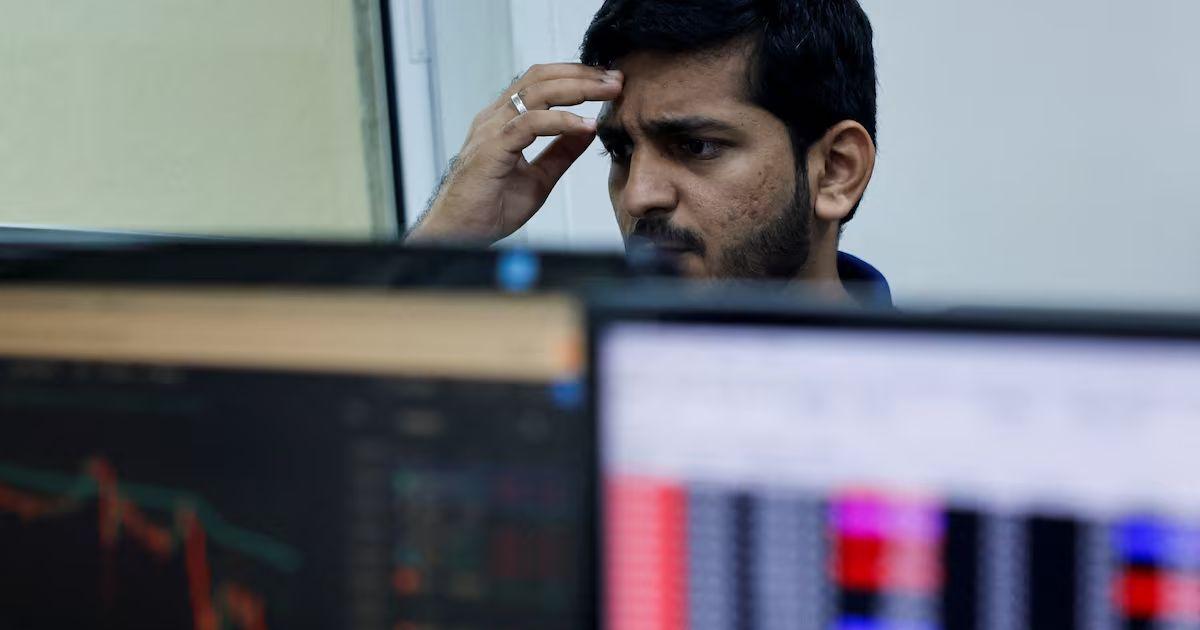
The Indian equity landscape faced a sharp reversal in early trade on Tuesday as geopolitical instability in the Strait of Hormuz triggered a flight from risk, dragging the BSE Sensex down 361.62 points to 76,907.78. The NSE Nifty followed suit, shedding 134.90 points to reach 23,980.60. This sell-off is not merely a reaction to regional headlines but a direct transmission of energy-linked macro pressures into the domestic financial architecture.
The Energy-Currency Transmission Mechanism
The primary catalyst for the current market weakness is the surge in Brent crude, which is trading around the $113 per barrel mark. For an economy heavily dependent on energy imports, this price level acts as a direct tax on corporate margins and a structural headwind for the rupee. The currency’s slide to an all-time low of 95.40 against the US dollar exacerbates this pressure, forcing a repricing of risk for sectors with high import costs or dollar-denominated debt.
When crude oil remains elevated above the $100 threshold, it creates a persistent inflationary bias that limits the Reserve Bank of India’s policy flexibility. The market is currently grappling with the reality that higher energy costs will likely compress operating margins for manufacturing and logistics-heavy firms. This explains the weakness seen in major laggards like Larsen & Toubro, Bajaj Finance, and ICICI Bank, which carries an Alpha Score of 57/100, reflecting a moderate outlook amid these macro headwinds.
Sectoral Divergence and Defensive Positioning
The market’s internal structure shows a clear bifurcation between companies sensitive to input costs and those perceived as defensive or insulated. While the broader index is under pressure, names like Bharti Airtel and Reliance Industries have managed to hold ground, suggesting that institutional capital is rotating toward companies with stronger pricing power or diversified revenue streams. This defensive shift is a standard response to geopolitical shocks, where investors prioritize balance sheet stability over growth multiples.
Geopolitical risk in the Strait of Hormuz introduces a non-linear variable into the valuation models of Indian equities. Unlike domestic policy shifts, which can be modeled with relative precision, the potential for supply chain disruptions in the Hormuz region creates a volatility premium that is difficult to hedge. As noted by VK Vijayakumar of Geojit Investments, the resumption of hostilities acts as a direct headwind, forcing a reassessment of the risk-reward profile for Indian equities in the near term.
Liquidity and Political Catalysts
Despite the bearish sentiment, there is a lingering support structure provided by recent institutional flows. Foreign Institutional Investors (FIIs) turned net buyers on Monday, injecting Rs 2,835.62 crore into the market. This suggests that while the current session is defined by risk aversion, there is a baseline of liquidity that prevents a total collapse in sentiment. Furthermore, the political landscape has seen a significant shift, with the BJP securing a two-thirds majority in the West Bengal assembly polls. While this provides a degree of domestic political clarity, it is currently being sidelined by the more immediate and tangible threat of global energy price volatility.
For those tracking the market analysis, the current setup requires a focus on the $113 Brent crude level as the primary indicator of further downside risk. If oil prices continue to climb, the pressure on the rupee will likely intensify, potentially forcing a further correction in the Nifty. Conversely, any de-escalation in the Strait of Hormuz would provide the necessary relief for a mean reversion in the indices. Investors should monitor the currency pair closely, as a breach of the 95.40 level would likely signal a deeper structural concern regarding capital outflows and import-driven inflation. The current environment remains one of extreme caution, where macro-geopolitical factors override domestic fundamentals until the energy price trajectory stabilizes.