Geopolitical Risk and the Foreign Capital Drain
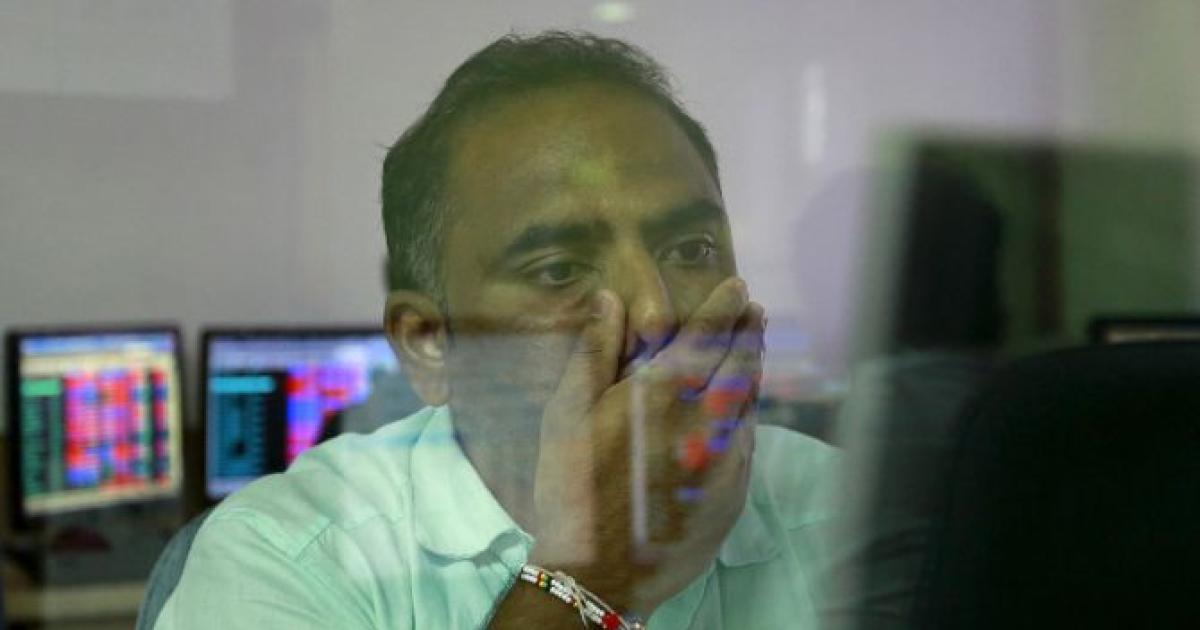
The Indian equity landscape is currently defined by a tug-of-war between domestic resilience and the persistent pressure of foreign institutional selling. On Thursday, the BSE Sensex and NSE Nifty opened in the red, reflecting a market grappling with the dual headwinds of geopolitical uncertainty in West Asia and a sustained exodus of foreign capital. The Sensex shed 160.24 points to trade at 77,798.28, while the Nifty dipped 30.25 points to 24,300.70. This pullback follows a sharp recovery on Wednesday, where the Sensex surged 940.73 points, or 1.22 percent, and the Nifty climbed 1.24 percent. The reversal underscores the fragility of current sentiment, which remains highly sensitive to external shocks.
Foreign Institutional Investors (FIIs) offloaded equities worth Rs 5,834.90 crore on Wednesday alone. This level of selling acts as a structural anchor on index performance, preventing sustained rallies even when global cues are constructive. When institutional liquidity is withdrawn at this scale, the market loses its primary engine for price discovery, leaving indices vulnerable to intraday swings. The current volatility is not merely a reaction to headlines but a reflection of the risk-off positioning adopted by global funds as they recalibrate their exposure to emerging markets amid rising regional tensions.
Crude Oil Dynamics and Sectoral Divergence
The energy complex remains the most immediate transmission mechanism for geopolitical risk. Brent crude is currently trading 0.77 percent higher at $102 per barrel. For the Indian market, which is a net importer of energy, a sustained move toward this price level complicates the macro outlook by pressuring the current account and potentially stoking inflationary concerns. As VK Vijayakumar of Geojit Investments Limited noted, the market is currently caught in a cycle of hope and fear, with price action tied directly to the evolving situation in West Asia. Until there is a definitive conclusion to the crisis, investors should expect this seesaw pattern to persist.
Within the index constituents, the divergence in performance highlights how different sectors are absorbing these shocks. Laggards in the current session include Tata Consultancy Services, Hindustan Unilever, Adani Ports, Power Grid, Tech Mahindra, and Sun Pharma. Conversely, names such as Mahindra & Mahindra, Tata Steel, UltraTech Cement, and ICICI Bank have managed to post gains. The resilience in financial services and industrial-linked stocks suggests that domestic institutional support is attempting to offset the vacuum left by foreign outflows. For a deeper look at how regional firms are navigating these macro shifts, see our market analysis.
Positioning and the Path Forward
For traders, the current environment demands a focus on liquidity and execution rather than directional conviction. The disconnect between the sharp gains seen on Wednesday and the immediate volatility on Thursday indicates that the market is lacking a stable floor. While some analysts point to softer energy prices as a potential buffer, the reality is that the market is currently dominated by the flow of capital rather than fundamental valuation. The AlphaScala proprietary data currently rates ICICI Bank at a moderate 57/100, reflecting the broader caution surrounding the financial sector in this volatile climate.
To confirm a shift in the current trend, market participants should look for a sustained reduction in FII selling pressure and a stabilization of Brent crude prices below the $100 threshold. Conversely, a breach of recent support levels on the Nifty would likely trigger further technical selling, as the lack of foreign participation makes the indices susceptible to deeper corrections. The current environment is one of tactical caution, where the primary risk is not just the geopolitical event itself, but the secondary effect of liquidity withdrawal from the broader stock market analysis framework. Investors should remain attuned to how these variables interact, as the current volatility is unlikely to abate until the geopolitical risk premium is clearly priced or removed from the equation.