Stocks● Neutral
Security Breach Forces Re-evaluation of Event Risk for $T
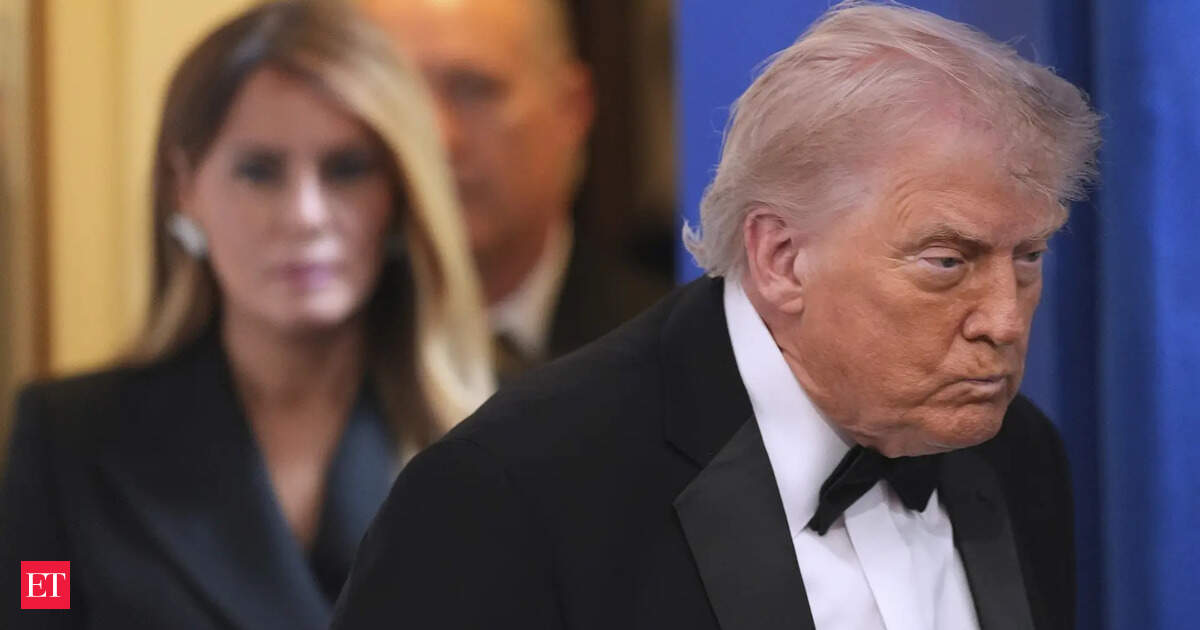
Rising security costs and a 30-day rescheduling window create new operational hurdles. AT&T (T) holds a 58/100 Alpha Score as the sector monitors event risks.
Continue with
Rising security costs and a 30-day rescheduling window create new operational hurdles. AT&T (T) holds a 58/100 Alpha Score as the sector monitors event risks.
The recent shooting at the White House Correspondents' Dinner has introduced a new layer of operational risk for high-profile public gatherings. By publicly downplaying the incident and advocating for a rescheduled gala within a 30-day window, the administration has signaled a push to normalize large-scale media events despite the security failure. This stance creates a direct tension between political optics and the hardening requirements now expected by event organizers and security contractors.
The immediate aftermath of the shooting forces a re-evaluation of how major public events are insured and managed. Security protocols for high-profile galas traditionally rely on a mix of federal protection and private security firms. The push to reschedule the event quickly suggests that organizers will face significant pressure to demonstrate enhanced perimeter control and threat mitigation strategies. If the administration maintains its aggressive timeline, the cost of securing such venues will likely rise as providers account for the heightened risk profile and the logistical complexity of rapid deployment.
The incident highlights the vulnerability of the intersection between media, politics, and public hospitality. Companies operating in the communication services sector, such as News Corp (NWSA), often rely on these high-profile events to maintain industry visibility and influence. A shift toward more restrictive or expensive event environments could impact the frequency and scale of future industry gatherings. For firms like AT&T (T), which maintains a significant footprint in media distribution, the stability of these public-facing events is a component of the broader ecosystem of industry connectivity and corporate engagement.
AlphaScala data currently reflects a mixed outlook for the broader sector. AT&T (T) holds an Alpha Score of 58/100, indicating a moderate position within the communication services sector, while Amer Sports (AS) carries an Alpha Score of 47/100, reflecting a mixed sentiment as the market digests broader consumer cyclical shifts.
The next concrete marker for this narrative is the formal announcement of the rescheduled gala date and the accompanying security plan. Market participants should monitor the involvement of private security firms and the potential for increased insurance premiums for large-scale media events. Any delay in the 30-day timeline or a move to a more restricted, private venue would indicate that the security concerns have outweighed the political desire for a public display of normalcy. The ability of the organizers to secure the venue under these conditions will serve as a bellwether for the future of high-profile political and media events in the current climate of heightened security awareness. This event serves as a reminder of the volatility inherent in stock market analysis when political and public safety narratives collide with corporate event planning.
Drafted by a large language model from the source reporting linked above, then screened by automated publishing checks. It is not read by a journalist before publication. Some articles cite our Alpha Score. Verify prices and figures against the original source. Educational coverage, not personalized advice.