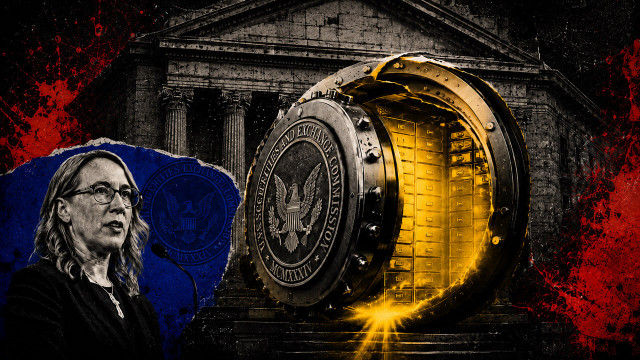
SEC Commissioner Hester Peirce warned on July 22 that some crypto vaults and onchain lending strategies may fall under federal securities laws. The legal risk, she said, depends on the product's structure and who controls investment decisions.
The distinction hinges on whether a vault relies on automated smart contracts or professional managers who choose markets and approve collateral. Vaults that shift from predetermined software to active curation introduce the type of managerial effort considered under securities law, Peirce said.
Larry Florio, deputy general counsel at Ethena Labs, said that distinction sits at the center of the regulatory question. "Vault designs aren't uniform," Florio said. Software executing predetermined functions can resemble an administrative process, while people making allocation decisions introduce the type of managerial effort considered under securities law.
The warning arrived alongside a rush of major firms into the market. Deposits in crypto vaults reached about $131 billion in April 2026, up from $24 billion three years earlier, S&P Global Ratings said. About 94% remained concentrated in crypto-native activities: staked assets and crypto-backed loans. S&P sees a broader opportunity as more traditional assets move onto blockchains, with vaults potentially performing functions associated with private credit and money market funds.
Coinbase expanded USDC lending through Morpho, letting eligible users deposit the stablecoin into onchain vaults directly from its app. Customers can choose between two strategies curated by Steakhouse Financial, each with different collateral and risk profiles. Kraken entered the market in May with a Bitcoin (BTC) profile vault that allocates customer assets across protocols including Aave and Morpho, offering variable returns of up to 2.5% paid in Bitcoin. Bitwise, the $15 billion asset manager, launched its first onchain vault through Morpho in January, with its investment team setting collateral requirements and exposure rules. Bitwise expects assets in professionally managed vaults to double this year and has described the products as potential "ETFs 2.0."
Onchain lending introduces another potential route into securities law, even when the assets being borrowed or lent are not themselves securities. Peirce said managers who set interest rates and determine eligible collateral should examine whether those activities create regulatory obligations. The loans themselves could also come under scrutiny under the Supreme Court's framework in Reves v. Ernst & Young, depending on how they are structured and distributed.
Peirce's statement does not signal a return to the enforcement campaign under former Chair Gary Gensler. Under Gensler, the SEC sued companies including Coinbase over products it alleged involved unregistered securities. The SEC's posture shifted after President Donald Trump returned to office, with the agency creating a Crypto Task Force and pursuing a regulatory framework intended to provide clearer paths for crypto businesses. Peirce's warning draws a boundary around that more accommodating approach as crypto firms offer products that resemble traditional lending and asset management.
"The securities laws do not apply to all crypto assets and activities," Peirce said. The statement does not mean they apply to none. She warned firms against using "headstands, backflips, and other gymnastics" to argue that securities laws do not cover activities already within their scope.
Peirce's view reflects the position of one commissioner rather than a formal Commission rule or staff guidance. Her role as head of the SEC's Crypto Task Force, charged with clarifying regulatory boundaries and developing workable registration paths, gives the intervention added weight. The warning arrives as the SEC faces pressure from transfer agents pushing for restrictions on unaffiliated tokenized stocks, highlighting the broader debate over where securities law applies onchain.
The commissioner left room for the regulatory framework itself to change. She said the SEC must respect limits imposed by Congress and invited firms to engage with the agency when existing rules unnecessarily impede new technology.
Florio described that approach as "an invitation, not a threat."