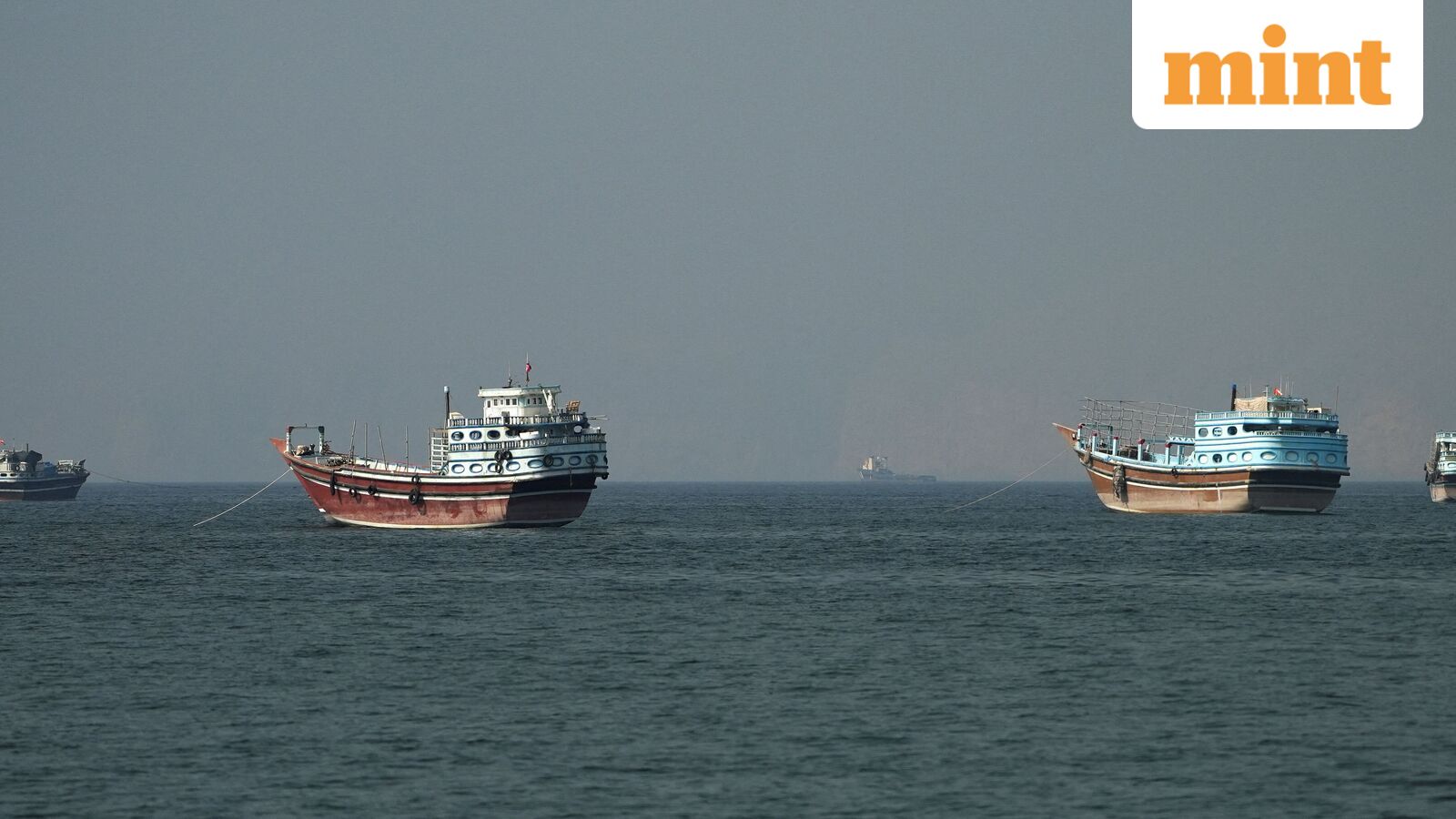
A supertanker carrying Qatari crude was hit by a projectile while transiting the Strait of Hormuz on Saturday. Britain's UK Maritime Trade Operations said the vessel sustained damage to its bridge. No crew were injured and there was no environmental pollution. Shipping analytics firm Vanguard Tech identified the ship as a fully laden supertanker. Kpler data showed its cargo was crude loaded in Qatar.
The attack is the second on a merchant vessel in the strait this week. On Thursday, the Singapore-flagged Ever Lovely was struck in the same waterway. The United States launched retaliatory strikes against Iranian drone storage facilities and coastal radar sites after that attack, according to U.S. officials. Iran then announced its own strikes on targets linked to U.S. forces.
The Joint Maritime Information Center, which coordinates between naval forces and commercial shipping, raised its regional maritime threat level to "substantial" following Saturday's strike.
Washington and Tehran accuse each other of violating the interim peace deal signed two weeks ago. The United States said it struck Iranian military targets because Tehran attacked commercial shipping. Iran called its actions defensive and said Washington failed to uphold commitments, especially a ceasefire in Lebanon.
Iranian state television reported that the Revolutionary Guards fired "warning shots" at vessels using unapproved shipping lanes. Parliamentary national security committee chairman Ebrahim Azizi warned that any ship violating Tehran's navigation instructions would face a decisive response.
The United States encouraged vessels to use a southern corridor near Oman. Iran directed traffic through northern routes under its control and indicated it intended to eventually levy transit fees.
The JMIC expanded the recommended Omani corridor to allow two-way traffic and warned that large sections of the traditional route could contain sea mines. The International Maritime Organization warned Friday that around 80 naval mines may have been laid in the strait. Under the interim agreement, Iran is responsible for mine clearance. Progress is unclear.
US Vice President JD Vance wrote on X: "Iran signed a ceasefire agreement. We have honored it. If they have disagreements about how the MOU is being applied, they can pick up the phone. Violence will be met with violence."
Shipping traffic had recovered gradually after the interim deal. It remains well below pre-war levels. Many tankers now sail with tracking systems switched off.
Oil prices fell sharply over the past week as exports resumed through the Strait of Hormuz. The latest attacks are expected to renew concerns about supply security when markets reopen, traders said.
The JMIC threat level remains at "substantial" as of Monday. No de-escalation path is visible.
The Strait of Hormuz handles roughly a fifth of the world's oil supply. Any sustained disruption affects crude benchmarks directly. Shipping insurers have already widened war-risk premiums for vessels entering the region. For traders watching the oil complex, the immediate question is whether insurance rates or transit volumes crack first.