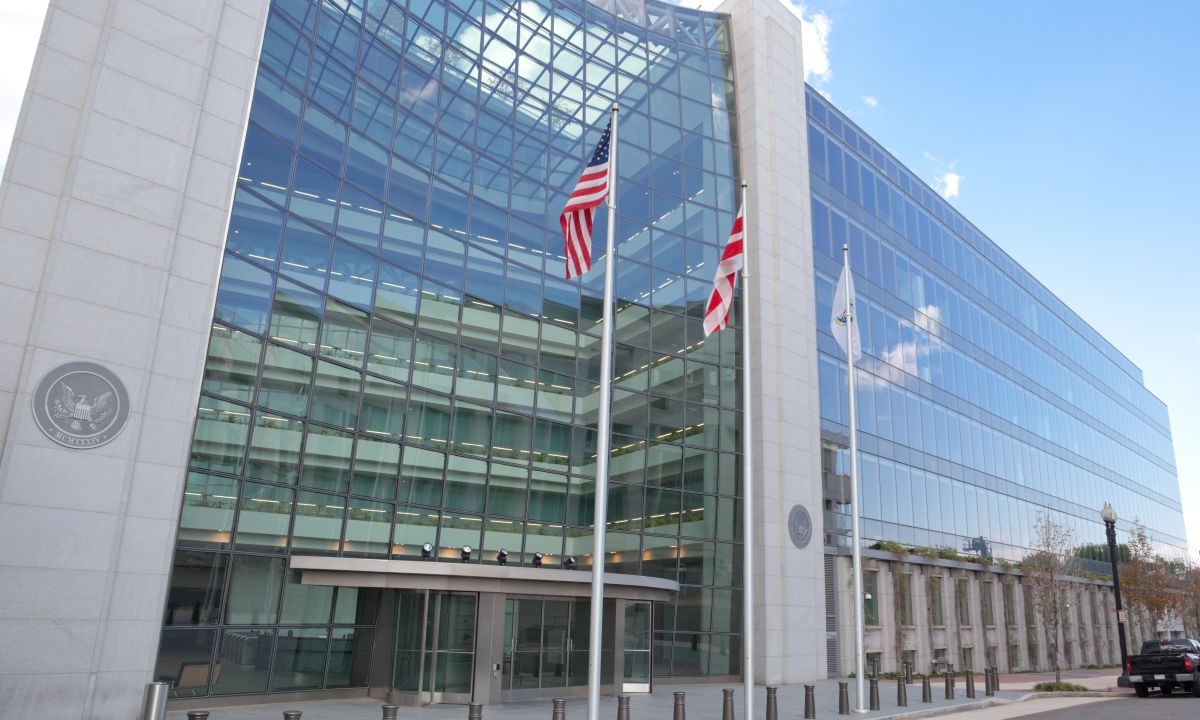
The SEC Pause and the Permissionless Token Problem
The Securities and Exchange Commission has paused its plan to let cryptocurrency companies trade tokenized assets tied to stocks. The SEC had been preparing to introduce an “innovation exemption” for these tokens. That plan is now on hold, Bloomberg News reported Friday (May 22), citing sources familiar with the matter.
The delay came after the SEC considered input from stock-exchange officials and other market participants. A section permitting the trading of third-party tokens – tokens issued without the support or permission of the underlying public companies – has caused the most concern.
What Tokenization Means
Tokenization creates digital representations of real-world assets – such as shares or bonds – on a distributed ledger. Proponents argue the technology streamlines issuance and asset management while lowering costs. The SEC’s paused exemption would have allowed crypto platforms to offer these tokens as trading instruments.
The critical issue is permission: a token created by a third party, with no relationship to the company whose stock it represents, would circulate without corporate oversight. That model raises the most legal and operational questions.
Corporate Executive Concerns
Amanda Fischer, policy director at Better Markets and a former senior SEC official under the Biden administration, said publicly traded companies could face uncertainty. “If I was a corporate executive, I’d be very concerned about the implications,” she told Bloomberg. The concerns cover basic shareholder mechanics: how to handle dividends, how to count shareholder votes, and what happens when tokens carrying those rights appear on the blockchain.
A company that pays a cash dividend must ensure the payment reaches the token holder. The issuer may have no relationship with the token issuer. Voting during proxy season becomes a logistical puzzle when a token can move between wallets at any time. The SEC’s pause signals that regulators recognize the framework lacks answers to these questions.
Operational Risks for Public Companies
Dividends and Voting Uncertainty
Public companies face a practical nightmare if tokens with voting or dividend rights circulate without their control. A dividend payment meant for shareholders recorded on the company’s books might not reach the token holder. The token’s transfer agent may have no duty to forward the payment. Corporate secretaries would need new procedures – procedures that do not exist yet.
The Bad Actor Loophole
A second risk cited in the Bloomberg report: tokens could reach bad actors overseas using blockchain loopholes to bypass U.S. regulations. Tokenized stocks traded on permissionless decentralized exchanges could allow foreign entities to hold U.S. securities without KYC/AML checks. That could violate sanctions or ownership restrictions. The SEC’s concern is not theoretical.
Market Structure Perspectives
Settlement Speed vs. 24/7 Demand
Larry Tabb, director of market structure research at Bloomberg Intelligence, argued that tokenization speeds settlement. “Speeding settlement allows traders and investors to more effectively control their cash and collateral,” he wrote in a report Thursday. Faster settlement frees capital trapped in T+1 or T+2 cycles. That is a genuine efficiency gain.
Joe Saluzzi, a partner at brokerage firm Themis Trading, offered a different view. He told Bloomberg he has seen “zero interest” among his clients in the 24/7 markets that tokenized securities can offer. Liquidity could fragment across time zones. The risk of illiquid overnight markets is real.
The Core Trade-Off
Key insight: The delay does not kill tokenization. It brackets the permissionless version as the hardest problem. A permissioned model – where companies or their transfer agents issue tokens themselves – would face fewer objections. That model would lose the “decentralized” appeal driving crypto-native interest.
Affected Assets and Exposure
Crypto-Equity Infrastructure
- Coinbase (COIN): The largest U.S. crypto exchange would be a natural venue for tokenized stock trading. A delayed exemption removes a near-term revenue catalyst. Coinbase’s core business does not depend on it.
- Circle (USDC issuer): Circle is raising $30 million for agentic-driven finance, per the same source block. Tokenized securities align with that vision. The delay pushes that timeline out.
- Crypto-native tokens: Tokens that trade on the premise of tokenized real-world assets – such as Ondo, Pendle, or Polymath – saw no material price action on the report. The delay is one data point in a long regulatory saga.
Traditional Custodians and Clearers
Firms like DTCC and BNY Mellon that clear and settle equity trades face disruption only if tokenization reaches scale. The SEC delay buys them time to prepare or resist. The risk is asymmetric: a fast approval would hurt their business model; a slow approval protects it.
Timeline and Confirm/Weaken Factors
What Would Reduce the Risk
- A permissioned model emerges: If the SEC reopens the exemption with a requirement that token issuers obtain corporate consent, legal uncertainty drops sharply.
- Industry self-regulation: If exchanges and token issuers agree on standards for dividends, voting, and sanctions compliance, the agency may feel comfortable moving forward.
- A pilot programme: The SEC could allow tokenized stock trading in a controlled sandbox, limiting exposure to bad actors and letting operational kinks surface.
What Would Make It Worse
- Permissive rules with weak KYC: If the SEC eventually allows permissionless tokens without robust identity checks, the bad actor risk materialises and could trigger enforcement actions.
- Corporate lawsuits: If a company sues a token issuer for infringing its stock symbol or creating confusion, courts could rule tokenization illegal, chilling the entire industry.
- International divergence: If the U.K. or Singapore approves tokenized stocks while the U.S. delays, liquidity migrates offshore, reducing the urgency for U.S. reform.
Practical Rule for Traders
Bottom line for traders: The SEC is not saying no to tokenized stocks. It is saying no to unapproved tokenized stocks. That distinction matters. Any future exemption must reconcile the crypto ethos of permissionless innovation with the fundamentals of corporate law. The pause is the market’s cue to watch for issuer-led tokenization pilots, not third-party tokens.
For more on equity market structure, see stock market analysis. For the broader crypto-regulatory context, see Anthropic’s $900B Valuation Bet: Q2 Revenue Hits $10.9B.