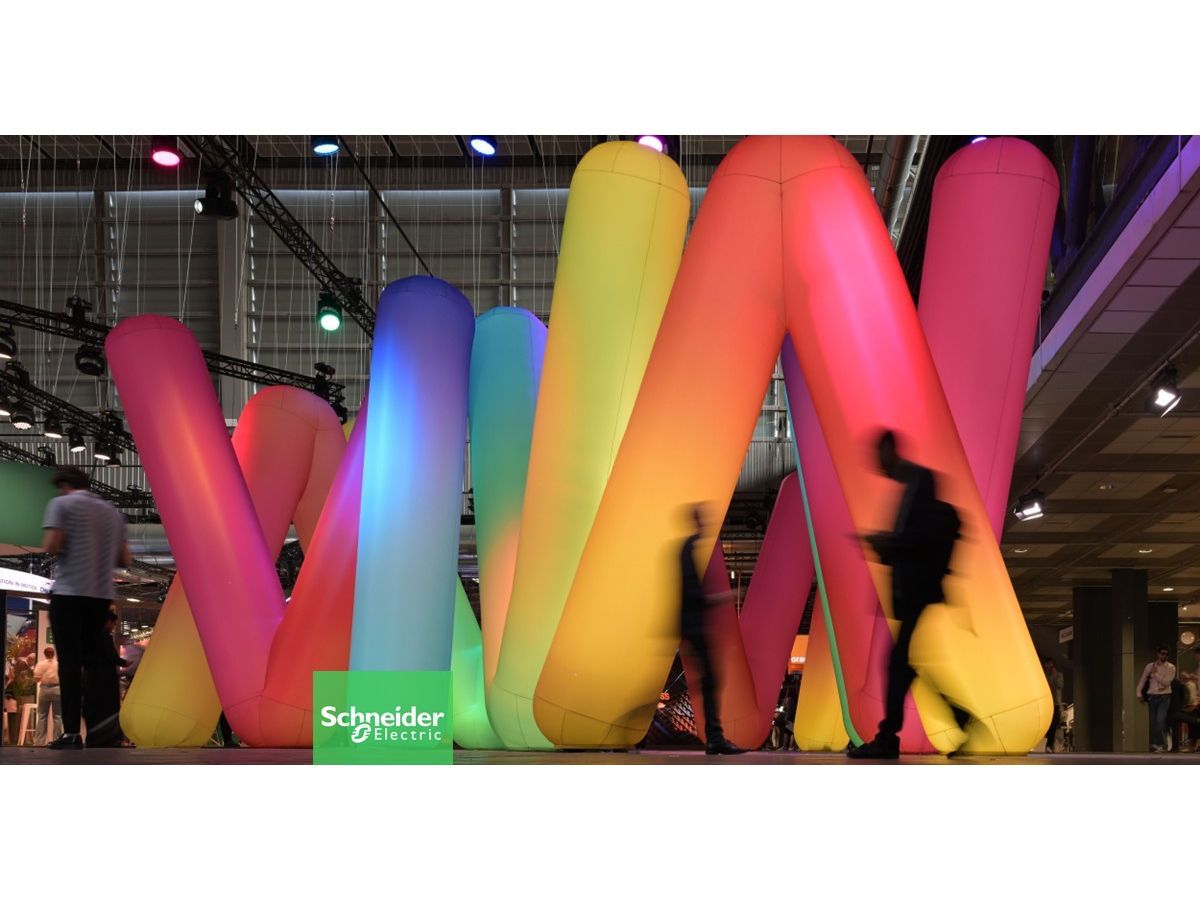
Schneider Electric used its VivaTech 2026 platform to argue that adding more power plants is not the primary solution to AI's growing energy appetite. The company's top executives, including Chief AI Officer Philippe Rambach and Energy Management EVP Frederic Godemel, will spend the week making the case for demand-side efficiency – cutting consumption through smarter building management, grid integration, and industrial automation.
A case study on Credit Human, a Texas credit union, serves as the proof of concept. The building's energy demand was rethought from the ground up, using Schneider Electric's technology to reduce load without sacrificing performance. The message: the same approach can scale to data centers and AI infrastructure.
“Mindset is one of the biggest barriers to change,” Godemel said in a statement. “Too often, people assume that the solution to ‘not enough energy’ is simply to add more. The reality is that we also need to consider demand-side efficiency. Misconceptions around cost, complexity, and payback are holding back progress on resilient AI-powered infrastructure and electrification.”
Rambach joins the International Energy Agency and Engie to explore AI's energy implications. Godemel appears with leaders from Electrolux Group and EY. SAP is also on the panel. The German software giant, which carries an Alpha Score of 38 out of 100 at AlphaScala, is itself a major consumer of computing power for its cloud and AI products. SAP's presence on the stage underscores the intersection of enterprise software and energy management. (Read more on the SAP stock page.)
Esther Finidori, Schneider Electric's Chief Sustainability Officer, participates in a Roland Berger-led discussion with CEOs from La Poste and Safran AI, examining how sovereignty considerations influence business decisions from investment priorities to technology deployment.
The readthrough for the energy technology sector is straightforward. Companies that sell hardware and software for energy efficiency – building management systems, smart grids, industrial automation – stand to benefit as AI-driven demand forces enterprises to optimize. Schneider Electric is the largest pure-play in this space. Siemens and ABB are also positioning. The risk is that efficiency gains only delay the need for new generation capacity rather than replacing it entirely.
No specific product announcements are expected at VivaTech, which runs through June 18. The company's messaging, however, is clear: efficiency is the next frontier in AI infrastructure.