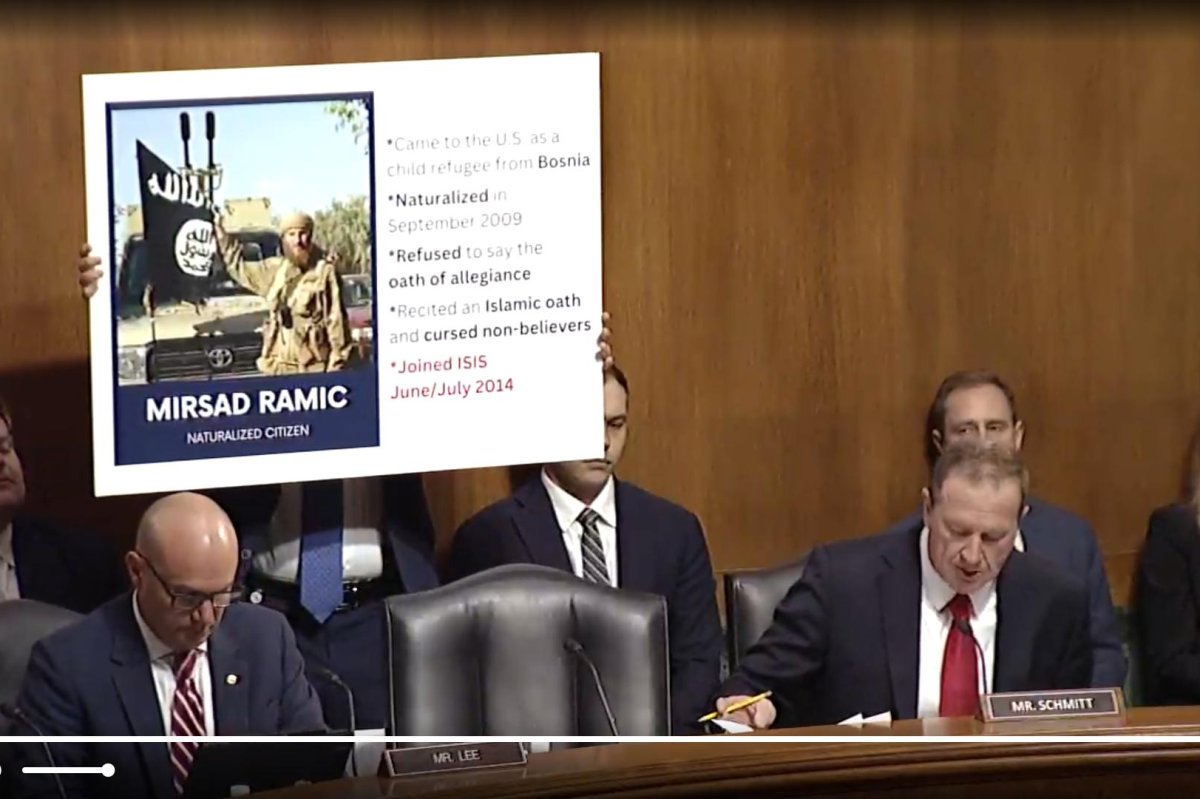
WASHINGTON (AlphaScala) – The Trump administration opened 34 denaturalization cases since January and revoked citizenship of 11 people, a sharp acceleration from the historical average of 11 cases per year. Senators debated the constitutionality of this push on Wednesday, with the proposed SCAM Act threatening to double the statute of limitations for revoking citizenship from five to 10 years.
For investors, the debate marks a measurable shift in political risk that can alter labor supply, consumer sentiment, and regulatory exposure for companies with large immigrant workforces, cross-border operations, or government contracts tied to enforcement.
Why the Denaturalization Surge Matters for Markets
Between 1990 and 2017, the government averaged 11 denaturalization cases annually, according to the Immigrant Legal Resource Center. Since January, the government has opened 34 cases and revoked citizenship of 11 people. The United States Citizenship and Immigration Services now reviews 100 to 200 denaturalization cases per month.
The June 2025 memo from the Department of Justice expanded the campaign beyond terrorism and war crimes to include fraud, sex crimes, and a broad catch-all for cases the division deems sufficiently important. This opens the door to enforcement against a wider population of naturalized citizens.
The mistake: treating this as a niche legal issue
A simple read says denaturalization affects only a tiny fraction of the 23 million naturalized U.S. citizens. That is a naive framing. The more practical read is that the expansion creates chilling effects on labor mobility, consumer spending by immigrant households, and corporate hiring practices in sectors reliant on foreign-born talent.
David Leopold, an immigration attorney and former president of the American Immigration Attorney's Association, described the administration's strategy: "This administration has succeeded in doing what a lot of authoritarian governments do, and that is spreading fear." That fear can alter economic behavior before any individual case reaches a courtroom.
Technical Context: The Policy Catalyst Path
The SCAM Act – introduced by Senator Eric Schmitt and supported by Majority Whip Tom Emmer – would amend the Immigration and Nationality Act to clarify the denaturalization process. The bill's most material change for market analysis is lengthening the statute of limitations from five to 10 years.
The mechanism: retroactive risk
A longer statute of limitations means that any naturalized citizen who made an error in their application – even a non-fraudulent one – could face revocation up to a decade after approval. For companies that perform background checks or rely on government clearance, the expanded window increases hiring friction.
Who is exposed
- Technology firms with large numbers of foreign-born engineers on H-1B visas who later naturalize.
- Healthcare providers dependent on immigrant nurses and doctors.
- Government contractors requiring security clearances for naturalized staff.
- Consumer-facing companies serving immigrant communities that may reduce discretionary spending under fear of scrutiny.
The better read: reaction, not first-touch
The naive take is that denaturalization cases are too few to move GDP or sector earnings. The better read tracks secondary effects: reduced applications for naturalization, slower green-card processing times as resources shift to enforcement, and increased legal costs for companies sponsoring permanent residency.
Senator Peter Welch, the top Democrat on the subcommittee, said the administration's goal is "mass deportation of immigrants from our country." Even if denaturalization itself stays at 34 cases, the signal changes hiring calculus for employers in construction, hospitality, and agriculture.
Confirmation and Invalidation Levels
Market confirmation signals
- Passage of the SCAM Act through either chamber. The bill has yet to face votes.
- A ruling from the Supreme Court that clarifies the scope of denaturalization for post-citizenship crimes.
- A public statement from a major employer (e.g., Apple, Microsoft, or Amazon) on the impact to their workforce.
Invalidation triggers
- A sharp decline in case openings after the administration's next policy memo.
- Bipartisan pushback that stalls the SCAM Act in committee.
- A court ruling that blocks the expanded DOJ memo.
Next Decision Point: The SCAM Act Vote
Schmitt and Senator Mike Lee are co-sponsors of the bill. Lee said, "I believe citizenship must be grounded in conduct that confirms rather than contradicts the promises made in connection with the naturalization process." The bill's progress through the Judiciary Committee is the next concrete catalyst.
Risk check
- Legal risk: Law professor Cassandra Robertson warned that the expansion normalizes denaturalization against universally condemned groups, then "it'll be a smaller step to start using denaturalization against other people."
- Political risk: Democrats, including naturalized Senator Mazie Hirono, argue the effort is unconstitutional. Hirono said, "It's more than astounding, it should be unconstitutional. This is all about terrorizing immigrant communities."
For investors, the denaturalization debate is not a fringe legal matter. It is a policy catalyst that changes the regulatory baseline for every company with exposure to immigration, labor supply, or cross-border talent. The SCAM Act vote will be the first test of whether this expansion becomes law or stalls in committee.
AlphaScala will track the bill's legislative path and secondary market effects as the debate moves forward.