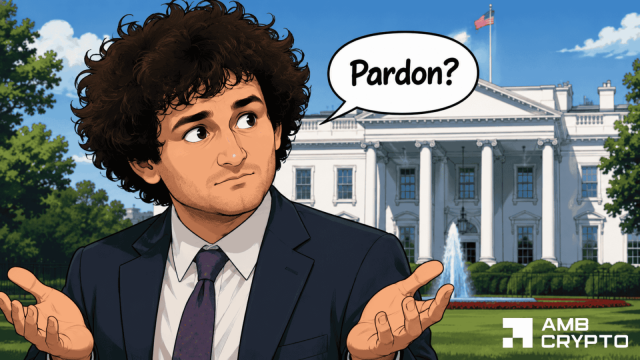
Sam Bankman-Fried has a pending clemency case in the U.S. Department of Justice’s pardon database, according to records reviewed Monday. The entry, filed under case number P338490, lists the relief as a “Pardon after Completion of Sentence” and carries a status of “Pending.”
The former FTX CEO is serving a 25-year prison sentence after a conviction for defrauding customers and investors in one of the largest financial fraud cases in crypto history. The DOJ entry does not indicate that the White House has approved the request or placed it under active review. Clemency applications routinely remain pending for years without any action.
Yet the mere appearance of the filing in a government database adds a new layer of political risk to an industry already fighting for regulatory legitimacy. Any discussion of clemency for Bankman-Fried – whether initiated by him, his lawyers, or outside supporters – will draw far more scrutiny than prior crypto-related pardon controversies.
Why This Is a Political Risk, Not a Legal One
The clemency mechanism is straightforward: the DOJ Pardon Attorney reviews petitions and makes recommendations to the White House. A “Pending” status means the request has been logged but not yet adjudicated. It does not signal White House interest, let alone approval.
The political exposure is real. The crypto industry has spent the past two years pushing for a regulatory framework that separates digital assets from the fraud legacy of FTX. Every major bill – from stablecoin legislation to the FIT21 market structure proposal – depends on at least moderate bipartisan goodwill. A clemency debate around Bankman-Fried threatens to collapse that goodwill.
Anti-crypto lawmakers and consumer advocacy groups will use any visible pardon process to argue that the industry still lacks accountability. The narrative becomes: “FTX was not an isolated failure; it was a symptom of a culture that expects impunity.” That framing hurts the entire asset class, not just FTX-related tokens.
The Comparison with Changpeng Zhao
Changpeng Zhao, founder of Binance, received a pardon after pleading guilty to anti-money laundering compliance failures tied to his exchange’s operations. That pardon attracted sharp criticism from ethics groups and lawmakers. Zhao’s case involved regulatory violations, not fraud.
Bankman-Fried was convicted of fraud – wire fraud, securities fraud, and money laundering conspiracy – directly connected to the misuse of billions of dollars in customer funds. A pardon or even active White House consideration would carry far greater political cost. The industry’s opponents would not distinguish between “pardon after completion of sentence” and “pardon now.” The association would stick either way.
What the SBF Pardon Bid Means for Crypto Regulation
The second-order effect is on regulatory momentum. The SEC and CFTC have used the FTX collapse to justify aggressive enforcement actions. Lawmakers on both sides of the aisle have cited customer losses to demand tighter rules. Any development that reopens the FTX wound slows the push for a clear legal framework.
What This Changes Next
- Legislative calendar: Bills like stablecoin and market structure legislation require floor time and political capital. A clemency controversy competes for that bandwidth.
- SEC posture: Agency leadership can argue that crypto firms remain a fraud risk, citing the pending pardon as evidence that even convicted executives expect leniency.
- Industry messaging: Trade groups such as the Blockchain Association will struggle to argue for responsible innovation while a convicted fraudster seeks a pardon.
The Role of Election Year Timing
The article notes that the filing arrives at a “politically sensitive moment.” The 2024 presidential election is months away. Clemency decisions often cluster at the end of a presidential term. If the White House engages with the Bankman-Fried case at any level – even to deny it – opponents will use the engagement to criticise the administration’s handling of crypto.
For traders, the relevant catalyst is not the database entry itself. The trigger is any subsequent White House statement or media report that the request is under active review. Until then, the filing is noise in a system that processes thousands of pending cases annually.
Timeline: What to Watch
What Would Reduce the Risk
- Silence from the White House for the remainder of the administration.
- The DOJ marking the case as “Closed – No Action” or “Denied.”
- A quiet withdrawal of the request by the filer, if the filer is not Bankman-Fried personally.
- Media focus shifting to other issues before the election.
What Would Make the Risk Worse
- The White House publicly acknowledging the request, even to say it is under review.
- A Trump pardon (the article references prior reports of a Trump pardon bid). The former president has signalled sympathy for crypto industry figures. If a second Trump term includes a Bankman-Fried pardon, it would be the highest-impact political event for crypto regulation since the FTX collapse.
- A related scandal, such as evidence of donations or lobbying connected to the clemency request.
Checklist for Traders
- Track the DOJ Pardon Attorney database for status changes on case P338490.
- Monitor White House press briefings for any question about Bankman-Fried. A non-answer is still an answer.
- Watch for congressional letters to the Department of Justice or White House counsel.
- Review crypto trade group statements – silence or discipline signals internal concern.
- Assess risk to regulatory stocks ( COIN, MSTR ) and tokens with high institutional exposure ( SOL, LINK ) as proxy for regulatory sentiment.
The Broader Lesson for Crypto
The FTX collapse remains the defining regulatory failure of the last cycle. Every attempt to rebuild crypto’s reputation in Washington must navigate around it. A pending pardon request – even one unlikely to succeed – keeps the wound open.
For traders, the near-term signal is simple: if the White House stays silent, the political cost is zero. If the White House engages, the cost is immediate and measurable in regulatory delay and legislative friction. The watchlist should focus on official statements, not database entries alone.
For deeper context on the pardon process and its odds, see Why Bankman-Fried's Trump Pardon Bid Is a Long Shot and the earlier Sam Bankman-Fried Formally Seeks Trump Pardon for FTX Fraud.