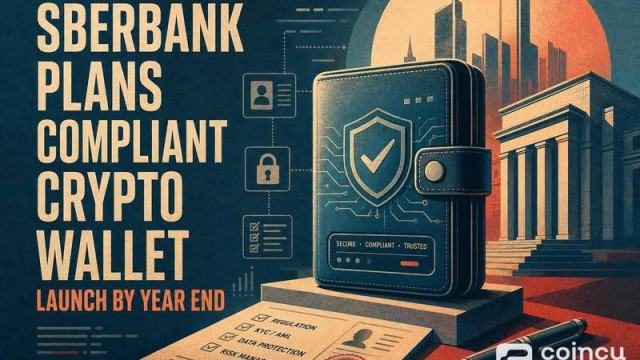
Russia's largest bank plans a compliant crypto wallet by end of 2026, targeting retail users through existing banking infrastructure. Key details on custody model and supported assets remain undisclosed.
Sberbank, Russia's largest bank, plans to launch a compliant crypto wallet before the end of 2026, the bank said in a statement reported by CoinDesk. The product is designed to operate within Russia's emerging digital asset regulations, distinguishing it from offshore or unregulated alternatives.
The wallet would be one of the most significant moves by a state-backed bank into regulated digital asset services. Sberbank serves tens of millions of domestic customers, giving it an immediate distribution advantage over crypto-native competitors. The bank previously issued Bitcoin-linked bonds for Russian investors and has been an early institutional mover in the space.
Compliance language reduces legal risk for the bank itself. Operating within a clear regulatory perimeter protects Sberbank from the enforcement uncertainty that has affected crypto businesses in multiple jurisdictions. The bank's approach suggests it is building the wallet as a regulated financial product rather than a standalone crypto tool.
For retail users in Russia, a Sberbank-branded wallet carries implicit guarantees around custody, consumer protection, and regulatory accountability. Users who have avoided crypto due to perceived legal gray areas may find a bank-backed product more approachable.
The year-end timeline aligns with anticipated regulatory milestones in Moscow. Russian lawmakers have been advancing legislation to formalize how banks and licensed entities can interact with digital currencies. Sberbank appears to be timing its product launch to coincide with those legal foundations taking effect.
This development puts pressure on crypto-native platforms operating in or serving Russian users. A wallet integrated into Sberbank's existing banking infrastructure, with direct fiat on-ramps and customer support, would compete directly with standalone exchanges and wallet providers.
Several critical details remain undisclosed. Sberbank has not specified which cryptocurrencies or digital assets the wallet will support, whether the product will be custodial or offer users direct control of private keys, or whether it will be available to all Sberbank customers at launch. The custody model is particularly important. A fully custodial wallet would keep Sberbank in control of user funds, consistent with traditional banking but at odds with crypto's self-sovereignty ethos. A hybrid model offering optional self-custody could appeal to a broader user base.
Rollout scope is another open question. Sberbank may initially limit the wallet to qualified investors or specific account tiers before expanding access. The bank's press center has not yet published detailed product specifications.
Regulatory clarity is the final variable. The wallet's launch depends on Russia's digital asset legislation reaching a workable form by year-end. Any delays in the legislative process could push the product timeline into 2027.
Prepared with AlphaScala research tooling and grounded in primary market data: live prices, fundamentals, SEC filings, hedge-fund holdings, and insider activity. Each story is checked against AlphaScala publishing rules before release. Educational coverage, not personalized advice.