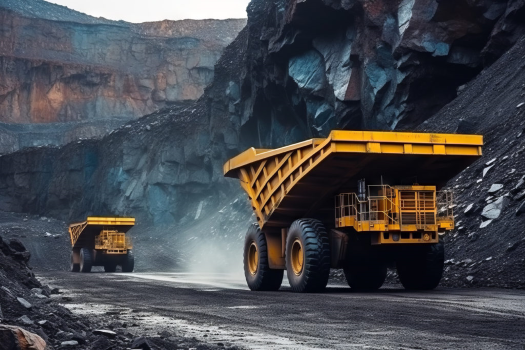
The Saudi Arabian mining sector has transitioned from a secondary industrial contributor to a central pillar of the Kingdom's economic diversification strategy. This shift is characterized by a rapid expansion in exploration and extraction activities, positioning the sector as a primary engine for long-term industrial growth. The transformation is anchored in the broader objectives of Vision 2030, which seeks to leverage the nation's untapped mineral wealth to reduce reliance on hydrocarbon exports.
Structural Expansion and Resource Development
The current momentum in the mining sector is driven by a systematic effort to map and monetize the Kingdom's geological assets. By prioritizing the development of mineral-rich regions, the government is creating a new industrial base that integrates upstream extraction with downstream processing capabilities. This integration is designed to capture more value within the domestic economy rather than exporting raw materials for refinement elsewhere.
This industrial evolution mirrors the broader shifts observed in Saudi Private Sector Expansion Hits 51% Milestone Under Vision 2030. As the private sector takes a larger role in national output, the mining industry serves as a critical testing ground for public-private partnerships and foreign investment integration. The sector is currently defined by several key operational priorities:
- Accelerated geological surveying to identify high-value mineral deposits.
- Implementation of streamlined regulatory frameworks to facilitate faster licensing for exploration companies.
- Development of specialized industrial zones dedicated to mineral processing and manufacturing.
Capital Allocation and Regional Integration
The influx of capital into the mining sector is fundamentally altering how regional stakeholders approach industrial investment. As the sector matures, it is attracting significant interest from international firms looking to secure supply chains for critical minerals. This trend is closely tied to Saudi Arabia’s FDI Surge Shifts Regional Capital Allocation, as global investors increasingly view the Kingdom as a stable hub for long-term industrial projects.
For investors and industrial partners, the primary challenge remains the transition from exploration to full-scale commercial production. While the initial phase of geological mapping has yielded promising results, the next stage requires massive infrastructure deployment to connect remote mining sites to export terminals and domestic processing hubs. The success of these logistics projects will determine the speed at which the sector can contribute to the national GDP.
AlphaScala Market Context
AlphaScala data indicates that the mining sector is currently experiencing a decoupling from traditional commodity price volatility, as state-backed infrastructure investments provide a floor for operational continuity. This stability is attracting a new class of institutional capital that prioritizes long-term industrial capacity over short-term price fluctuations.
The next concrete marker for the sector is the release of updated production capacity figures for the upcoming fiscal cycle. These figures will provide the first clear indication of how effectively the current exploration successes are converting into tangible export volumes. Market participants should monitor upcoming announcements regarding the completion of rail and power infrastructure projects, as these are the primary bottlenecks for scaling operations in the interior regions.