Saudi Arabia’s Urban Transformation: Eight Cities Secure Spots in 2026 IMD Smart Cities Index

Eight Saudi cities have earned spots on the prestigious 2026 IMD Smart Cities Index, with Riyadh leading the pack as the Kingdom accelerates its digital and urban transformation under Vision 2030.
A New Benchmark for Urban Innovation
Saudi Arabia’s aggressive push toward digital modernization and infrastructure overhaul has reached a significant milestone. The International Institute for Management Development (IMD) has unveiled its 2026 Smart Cities Index, revealing that eight Saudi Arabian cities have successfully secured rankings on the prestigious global list. This inclusion serves as a tangible validation of the Kingdom’s Vision 2030, which prioritizes technological integration, environmental sustainability, and the digitalization of public services as core drivers of economic diversification.
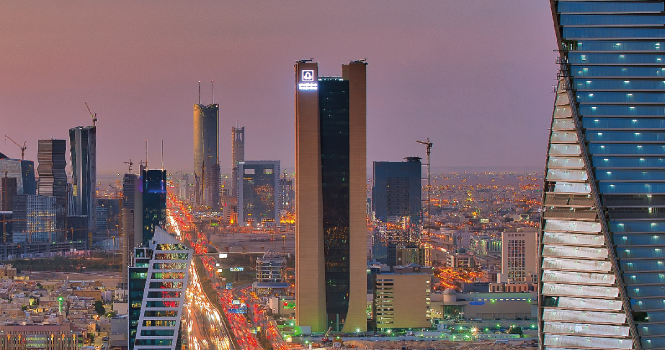
Leading the charge for the Kingdom is Riyadh, which has demonstrated impressive momentum by advancing its position in the rankings. The capital’s climb reflects a broader trend of rapid adoption of AI-driven urban management and smart infrastructure projects designed to optimize everything from traffic flow to energy consumption.
The Data Behind the Transformation
The IMD Smart Cities Index is a highly regarded barometer for how inhabitants perceive the scope and impact of 'smart' policies in their cities. It balances 'hard' infrastructure data with 'soft' sentiment analysis, measuring how well a city leverages technology to improve the quality of life for its residents.
For investors and market analysts, the inclusion of eight distinct Saudi hubs—beyond the primary centers of Riyadh and Jeddah—signals a decentralized approach to development. By spreading smart infrastructure across multiple regions, the Kingdom is effectively lowering the barrier to entry for foreign direct investment (FDI) in secondary markets. The data points provided by the IMD highlight that these cities are no longer just construction sites; they are evolving into interconnected digital ecosystems capable of supporting high-tech industries and global logistics networks.
Why This Matters for Global Investors
From a macroeconomic perspective, the significance of this ranking cannot be overstated. Smart cities inherently attract human capital. By improving urban efficiency—reducing commute times, minimizing carbon footprints, and streamlining administrative processes—Saudi Arabia is creating a more attractive environment for international talent and corporate headquarters.
For traders and institutional investors, the 'Smart City' designation acts as a proxy for long-term fiscal stability and technological readiness. Cities that rank highly on the IMD index typically exhibit higher transparency in digital governance and a greater propensity for public-private partnerships (PPPs). As Saudi Arabia continues to pivot away from oil-dependency, these smart cities act as the engines of the non-oil economy, providing the physical and digital architecture necessary for the growth of the financial, tourism, and technology sectors.
Historical Context and Future Trajectory
Historically, the transition from traditional urban centers to smart cities requires a gargantuan commitment of capital and regulatory reform. Saudi Arabia’s performance in the 2026 index suggests that the structural reforms initiated over the last several years are beginning to bear fruit at the municipal level.
The momentum behind Riyadh’s advancement, in particular, points to a sustained focus on capital-intensive projects that prioritize long-term utility over short-term gain. As these eight cities continue to climb the index, we can expect to see an increase in activity within the local real estate, telecommunications, and cybersecurity sectors.
What to Watch Next
As the data from the 2026 IMD Smart Cities Index is assimilated by global markets, the focus will shift to the sustainability of these rankings. Investors should monitor upcoming quarterly reports from major Saudi municipal developers and infrastructure firms, as well as any new regulatory frameworks aimed at further incentivizing the 'Smart City' initiative.
Looking forward, the ability of these eight cities to scale their digital infrastructure while maintaining operational efficiency will be the primary metric for success. For the investment community, the question remains: which of these secondary cities will follow Riyadh’s lead to become the next major regional hub for digital innovation?