Crypto▲ Bullish
Russia's Putin Signs Crypto Law with Investment Cap, Bank Oversight
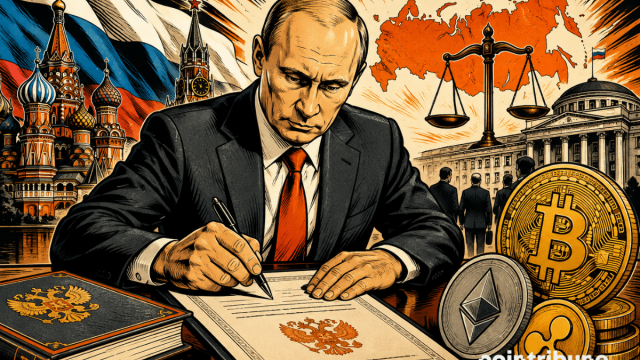
Russia legalizes crypto investment from September 2026 but bans payments; unqualified investors face a 300,000 ruble annual cap and a mandatory knowledge test.
Continue with
President Vladimir Putin signed the law "On Digital Currency and Digital Rights" on Monday, establishing Russia's first complete set of rules for cryptocurrency transactions. The legislation takes effect September 1, 2026, with additional provisions rolling out in July 2027.
The law allows residents to buy, hold and sell Bitcoin and other digital assets for investment. It does not legalize crypto payments. The ruble remains the only legal tender for settlements inside Russia.
A mandatory knowledge test now applies before any resident can invest. The test assesses a user's understanding of crypto risks. People who fail the test – deemed "unqualified investors" – face an annual purchase cap of 300,000 rubles (roughly $3,400). They can buy only through a single authorized broker.
Financial brokers and management companies will serve as intermediaries, linking investors to platforms that may be based abroad. The Central Bank of Russia must authorize every platform that handles ruble-denominated crypto trades.
Central Bank Oversight and Custody Rules
The law creates a new category of licensed entities called digital custodians. These organizations must hold capital between 50 million and 250 million rubles, depending on their activity, and register with the central bank. Custodians must keep full transaction histories and flag suspicious movements.