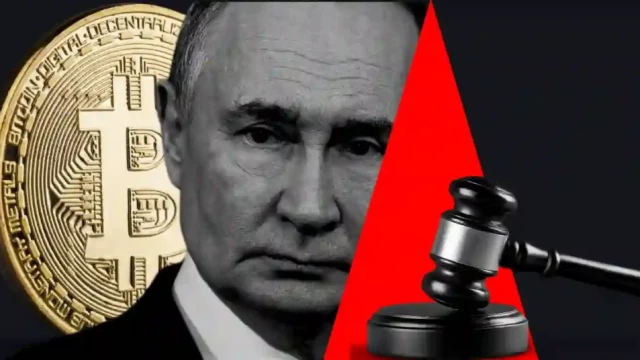
Putin signed Russia's first full crypto law on Aug. 4. Retail purchases capped at 300,000 rubles ($3,750); exchanges must register by July 1, 2027.
President Vladimir Putin signed Russia's first broad crypto law on Aug. 4. The Digital Currency and Digital Rights Law bans digital currencies as a domestic means of payment and forbids advertising them for that purpose. The law also permits digital currency in foreign trade and cross-border settlements, a carve-out aimed at bypassing Western sanctions. Most provisions will take effect Sept. 1, 2026; full licensing and compliance are due by July 1, 2027.
The law splits crypto users into retail and professional investors. Retail investors can buy no more than 300,000 rubles ($3,750) worth of crypto per year, and only through licensed intermediaries. The permitted list is limited to highly liquid assets: Bitcoin (BTC) and Ethereum (ETH) are on it, and the Tether stablecoin is permitted as well. Professional investors face no limits on amounts or asset types. Both groups must pass a mandatory knowledge and risk assessment; the test for professional investors is more advanced.
Investor-held digital assets are now recognized as legal property. The classification gives them judicial protection even when the holdings were never declared in tax reports.
Crypto exchanges, brokers, digital depositories and clearing houses must register with the Central Bank by July 1, 2027. Anyone whose monthly crypto activity involves two or more transactions and exceeds 3.5 million rubles ($43,700) is treated as operating a business. Licensed operators need to hold at least 15 million rubles ($187,000) in equity and join a financial market self-regulatory organization. Commercial banks can block or freeze funds linked to unauthorized crypto entities.
Mining now counts as a legal economic activity. Mining companies must register with the relevant authorities; individuals can mine without registration as long as their household electricity use stays below government-issued caps. Prime Minister Mikhail Mishustin has separately banned crypto mining around Moscow and in parts of Kursk from Aug. 15, 2026, to Dec. 31, 2032, to prevent a severe power-grid failure.
Drafted by a large language model from the source reporting linked above, then screened by automated publishing checks. It is not read by a journalist before publication. Some articles cite our Alpha Score. Verify prices and figures against the original source. Educational coverage, not personalized advice.