Crypto▼ Bearish
Russia's Crypto Bill Hits Western Tokens with New Fees
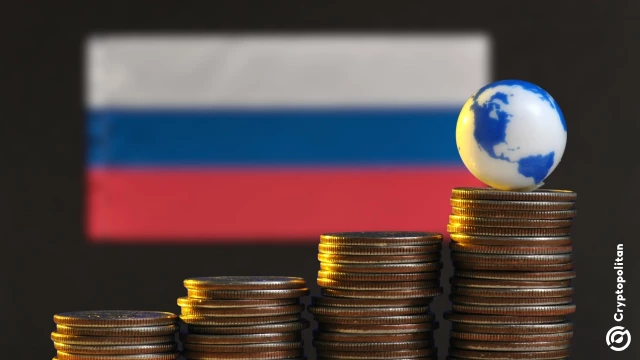
Russia's crypto bill would limit retail investors to BTC, ETH, and USDT, impose fees up to 3% on Western tokens, and license exchanges by July 2026.
Continue with
Best crypto insights delivered straight to your inbox.
The Russian government is preparing fees and trade restrictions on cryptocurrencies issued by Western-based entities. The move could redirect billions of dollars in annual crypto transaction volume from international exchanges to domestic state-linked platforms.
Russian Deputy Minister of Finance Ivan Chebeskov said the new cryptocurrency bill will include “economic incentives, such as commissions or recommendations” to discourage use of tokens the government considers “unfriendly” – those whose issuers can freeze assets at the request of a foreign authority. The bill is expected to pass the State Duma in June and take effect July 1, 2026.
The proposal creates a two-tier access system. Retail investors face a narrow whitelist and annual caps. Professional and institutional investors retain broader access. The stakes extend beyond Russia’s borders. Chainalysis estimated Russia received roughly $376 billion in crypto transactions between July 2024 and June 2025, the largest volume in Europe. Legal expert Yuriy Brisov told DL News that Russian traders pay an estimated $15 billion annually in fees to overseas exchanges – revenue Moscow now wants flowing to licensed domestic platforms.
The Whitelist and the Unfriendly Tokens
The source contains two versions of the retail whitelist. One passage states unqualified investors would be allowed only Bitcoin (BTC), Ethereum (ETH), and USDT. Another says they would be limited to the five largest by market capitalization – BTC, ETH, USDT, BNB, and USDC – with additional fees and restrictions applied to the latter three. The Russian Central Bank First Deputy Governor Vladimir Chistyukhin said there were no immediate plans to expand beyond BTC, ETH, and USDT, so the narrower version appears more likely.
Whichever list passes, the mechanism is identical. Tokens issued by firms capable of complying with foreign asset-freeze orders are treated as higher risk. Tether (USDT issuer) has frozen funds at law enforcement request, including a $344 million freeze flagged by U.S. authorities, according to Izvestia. Circle (USDC issuer) holds the same power. Binance has already banned Russian users from its service.
USDT carries that same freeze risk. Chebeskov said regulators were initially ready to prohibit it entirely. Industry pushback led to keeping access open while adding protections.
Fee Structure and Transaction Costs
There is no official fee rate yet. Freedom Global analyst Vladimir Chernov estimated it could range between 0.5% and 2% for unfriendly tokens and up to 3% for unfriendly stablecoins. Chernov warned that excessively high fees might drive people toward illegal transactions.
Beyond per-transaction fees, the bill is expected to introduce mandatory investor tests, an annual transaction-volume limit, a cool-down period for withdrawals, and restrictions on transferring assets to other wallets, according to Denis Astafyev, founder of the SharesPro fintech platform.
Checklist: What Confirms the Thesis
- Fee rates published in final bill above 2% for stablecoins – that would increase the incentive to shift volume to domestic platforms.
- Roskomnadzor begins DNS-level filtering of unlicensed foreign exchanges, similar to YouTube blocks.
- Russian Central Bank explicitly excludes additional foreign tokens from retail whitelist.
Checklist: What Would Weaken It
- Fee rates below 0.5%, making evasion not worthwhile.
- Continued ability to use VPNs and non-custodial wallets to bypass platform licensing.
- USDT issuer Tether voluntarily restricts Russian users, removing the “allowed” status.