Back to Markets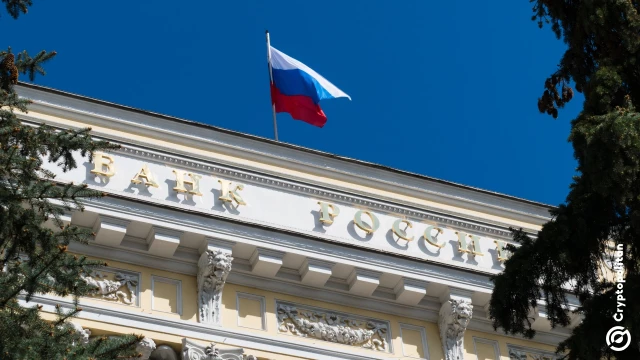
Crypto▲ Bullish
Russia's Amended Crypto Bill Opens Payments, Tightens Coin Access
Russia's Duma committee approved crypto bill amendments expanding payments. Coins must meet a 5 trillion ruble market cap and 1 trillion ruble daily volume, narrowing eligibility to Bitcoin and Ethereum.
Continue with
Russia's State Duma financial markets committee approved a revised draft of the long-awaited “digital currency” bill for second reading on Wednesday. The amendments, reported by Interfax, allow crypto to be used as payment for securities outside public offerings, permit swaps between cryptocurrencies, and legalize paying blockchain transfer fees with crypto. The ruble remains the sole legal tender. The original bill already allowed mining rewards and international settlements under sanctions. The new version adds these domestic use cases.
Access is not equal. To circulate in the regulated Russian market, a cryptocurrency must meet three thresholds: average market capitalization above 5 trillion rubles (roughly $65 billion) over the past two years, average daily trading volume above 1 trillion rubles ($13 billion) over the same period, and at least five years of trading history on a licensed foreign exchange. Only Bitcoin and Ethereum currently satisfy all three. Major stablecoins like Tether's USDT and Circle's USDC may not even be classified as digital currencies under the law because they lack an obliged issuer – a definition that excludes tokens without a central counterparty.
The Central Bank of Russia's Board of Directors can grant exceptions, letting in coins that miss the criteria. Trading platform operators can also offer professional investors access to virtually any cryptocurrency without prior CBR consent. Non-qualified investors face a cap of 300,000 rubles (under $4,000) per year on whitelisted coins, bought through a single intermediary.
The practical effect is a bifurcated system. The regulated pool available to retail investors will be tiny – effectively just BTC and ETH, and only in small amounts. Professional investors, by contrast, can access the full spectrum of tokens through licensed platforms. That creates a clear line between the official market and the unofficial one.