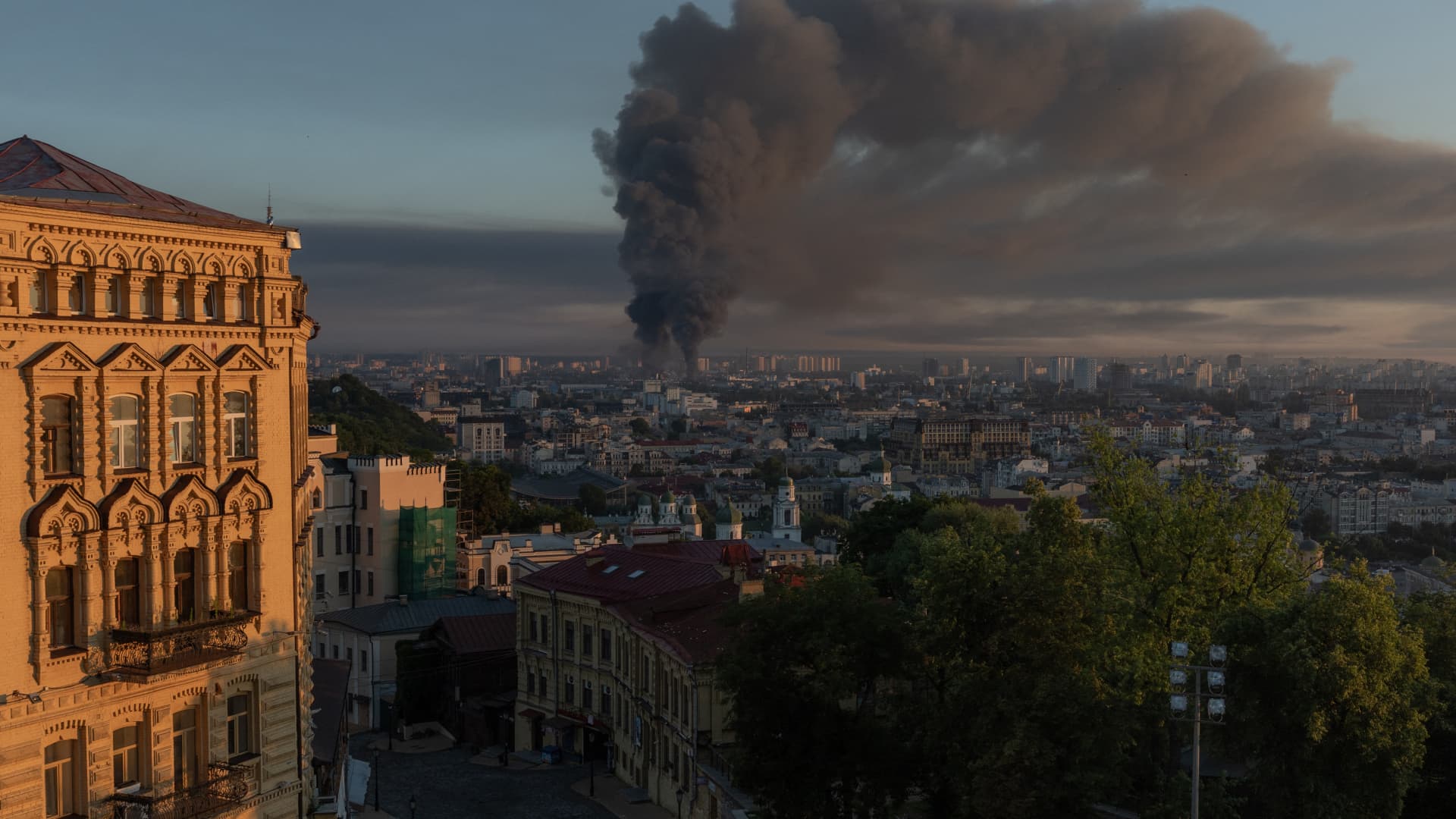
Russia's massive missile and drone attack on Ukraine triggered Poland to scramble jets and Finland to restrict airspace. The escalation raises geopolitical risk for energy and defense markets.
Russia launched a large-scale missile and drone attack on Ukraine early Thursday, targeting Kyiv and multiple regions across the country. Poland scrambled fighter jets in response, and Finland temporarily imposed an aviation restriction zone in the eastern Gulf of Finland before lifting it later in the day.
Moscow said the strikes hit military-industrial facilities and fuel and energy complexes in the Kyiv region, as well as military airfields in the Dnipropetrovsk, Poltava, Cherkasy and Chernihiv regions. Kyiv Mayor Vitali Klitschko reported 10 dead and 34 injured from ballistic missiles and drones, adding that the capital was under attack.
Poland's operational command said on X that fighter jets had begun operating and ground-based air defense systems and radar reconnaissance had reached a state of readiness. The command described the actions as preventive, aimed at securing and protecting airspace, especially in areas adjacent to threatened regions. Finland's airspace restriction was temporary, and the country lifted it after the immediate threat passed.
Olga Stefanishyna, Ukraine's ambassador to the U.S., said on X that residents spent the night in shelters. Fires and destruction of residential buildings were reported in several districts of Kyiv, she said.
It was not immediately clear how many missiles and drones were launched or how many Ukraine intercepted. Russia's defense ministry did not immediately respond to a request for comment beyond its initial statement.
The attack is one of the largest aerial assaults in recent weeks, continuing a pattern of Russian strikes on Ukrainian energy infrastructure and military targets. Poland's jet scramble and Finland's airspace restriction highlight the proximity of the conflict to NATO territory and the alliance's heightened alert posture. Energy markets remain sensitive to any disruption of Ukrainian transit routes for Russian gas, though flows have been reduced significantly since the war began. The escalation adds to geopolitical uncertainty that typically supports safe-haven assets and defense-sector equities, traders said.
Previous large-scale strikes have prompted similar responses from Poland, which regularly scrambles jets when Russian missiles approach its border. Finland's decision to restrict airspace, however, is less common and reflects its new status as a NATO member. The country joined the alliance in 2023 and has since increased vigilance along its eastern border.
The attack also comes as Ukraine presses its allies for more air defense systems and long-range weapons to counter such barrages. Ukrainian officials have repeatedly warned that Russia is stockpiling missiles for winter strikes on the power grid. The full extent of the damage was still being assessed as rescue operations continued.
Prepared with AlphaScala research tooling and grounded in primary market data: live prices, fundamentals, SEC filings, hedge-fund holdings, and insider activity. Each story is checked against AlphaScala publishing rules before release. Educational coverage, not personalized advice.