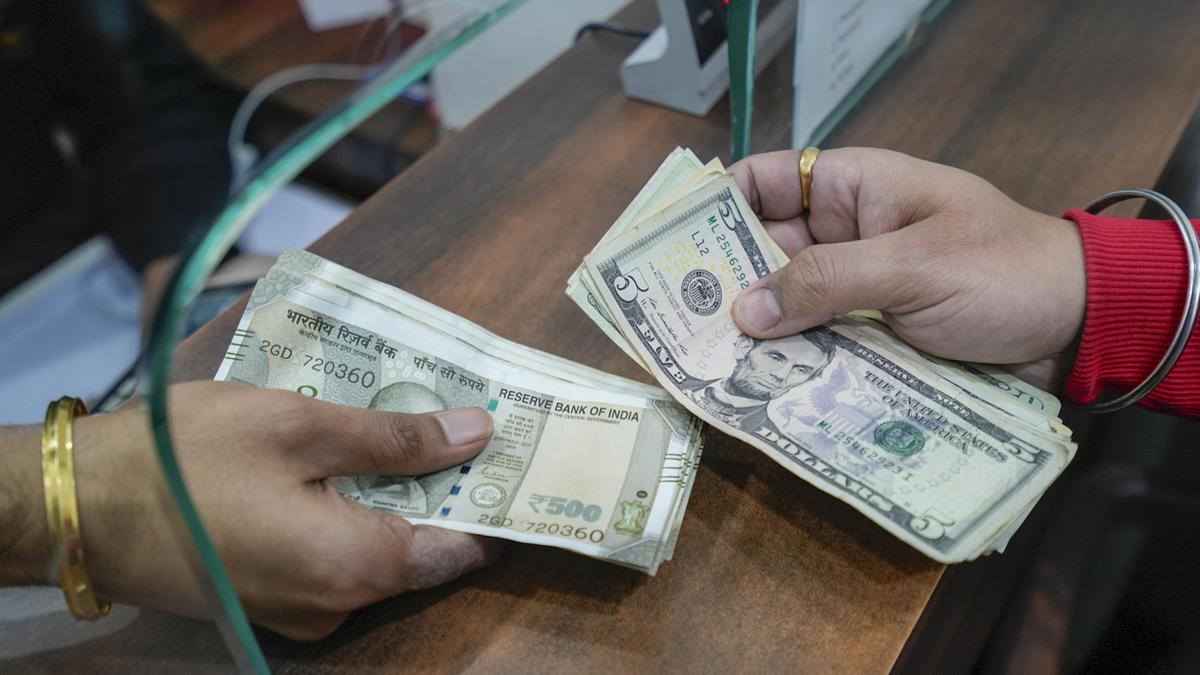
The rupee hit a five-week high of 94.4625 as oil sank on the US-Iran deal and RBI's capital flow measures drew inflows of $40-55 billion.
The rupee hit a five-week high on Monday, climbing 40 paise to close at 94.71 per dollar. The move came after the US and Iran reached an agreement to end the West Asia conflict, sending crude oil prices to three-month lows. In intraday trade, the currency touched 94.4625, its strongest level since early March.
The rally extends a 65-paise gain from Friday and marks the rupee's best run in weeks. Two forces are driving it, according to Anindya Banerjee, head of commodity and currency research at Kotak Securities.
First, the government and the Reserve Bank of India earlier this month announced a sweeping set of capital-flow measures. Full tax exemption for foreign investors on government bond interest and capital gains. The Fully Accessible Route opened to long-tenor 15-, 30- and 40-year bonds and green bonds. Equity access widened to a broader class of non-resident individuals. And the RBI is bearing the entire hedging cost on fresh three-to-five-year FCNR(B) deposits until Sept. 30.
Banerjee said the FCNR(B) move lets banks offer NRIs close to 7% on dollar deposits with no exchange-rate risk, and the September deadline creates a strong incentive to bring those dollars in quickly. The market estimates these measures could draw inflows of $40 billion to $55 billion.
Second, the oil equation is turning in India's favour. "If the Hormuz agreement holds – and this morning's developments suggest it will – and Brent moves down towards $70–73, that materially eases our import bill and current account, which only amplifies the inflow story," Banerjee said. Lower crude prices reduce India's import bill directly, since the country buys roughly 85% of its oil from abroad. A $10 drop in Brent saves about $15 billion annually on the import bill, by rough industry math.
Banerjee also expects equity inflows to improve as global risk sentiment recovers. "Taken together, this is a decisively positive setup for the rupee," he said.
He assessed that over the next one to two weeks, the rupee is likely to strengthen toward 94. A decisive break of that level would open the door to 93, and potentially 92.5, over the following two to three months.
The rupee's gains have implications beyond the currency market. A stronger rupee lowers input costs for oil importers – airlines, refiners, and petrochemical companies – and reduces the rupee-denominated cost of foreign debt for companies with dollar borrowings. It also makes imported electronics and machinery cheaper, which helps manufacturers. On the other side, exporters of goods and services face margin pressure, especially IT firms that earn in dollars and report in rupees.
For now, the market's focus is on whether the Iran agreement holds and whether Brent can sustain below $75. If it does, the combination of lower oil and strong capital inflows could keep the rupee on an upward path through the next quarter.
Prepared with AlphaScala research tooling and grounded in primary market data: live prices, fundamentals, SEC filings, hedge-fund holdings, and insider activity. Each story is checked against AlphaScala publishing rules before release. Educational coverage, not personalized advice.