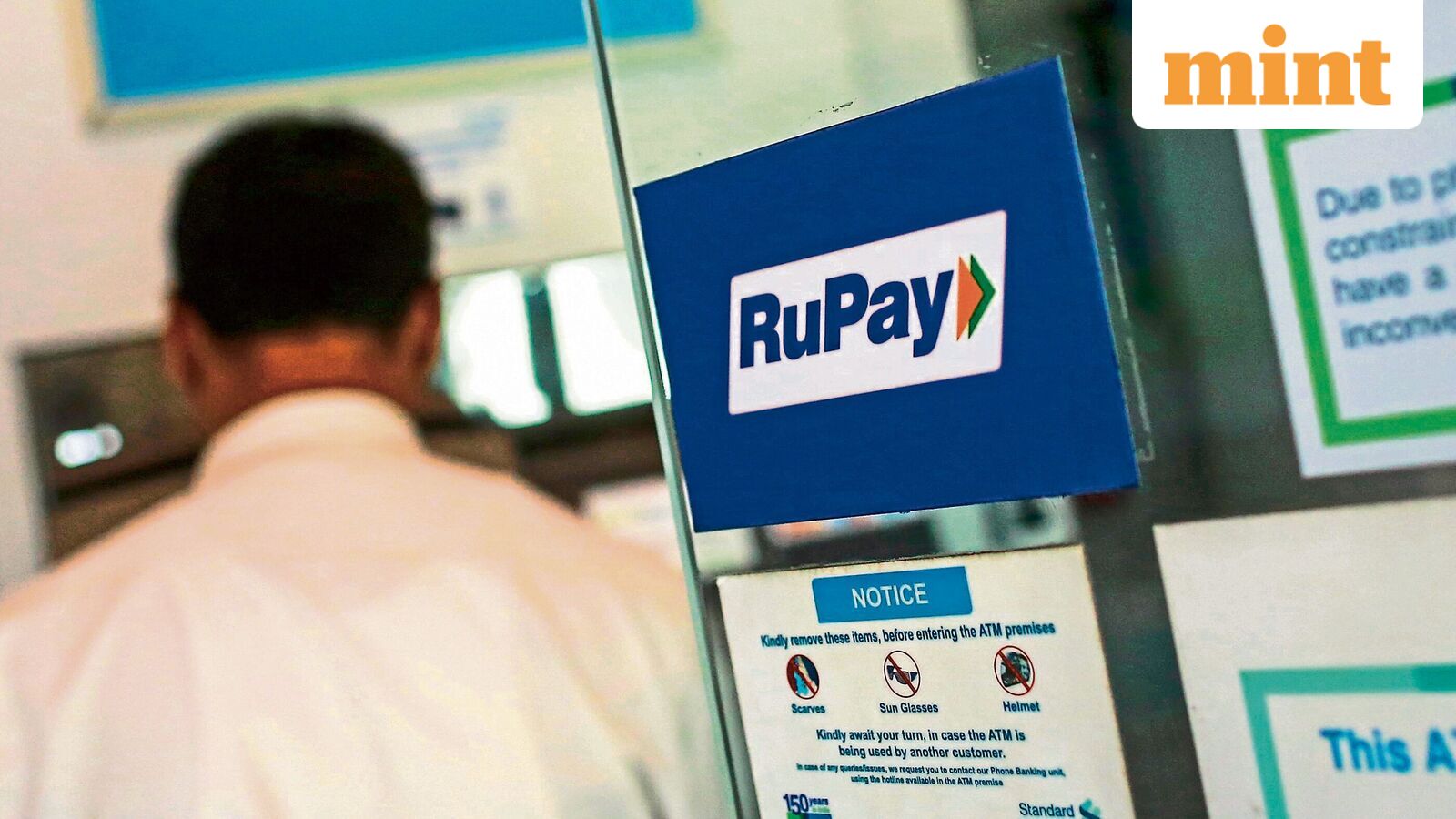
RuPay credit cards linked to Unified Payments Interface have cracked one of digital payments' trickiest challenges: turning credit into an everyday payment tool. The fix has created a new problem. High engagement has arrived without a clear path to profit.
Cards on the network now account for nearly 40% of all credit card transactions in India, according to a Bernstein estimate cited by Mint in October 2025. That figure masks a stark split. The same cards represent only about 8% of total spending. Data from the finance ministry showed RuPay credit card holders made 750 million transactions worth ₹63,825.8 crore between April and October of fiscal 2025.
The economics are the reason. UPI operates under a zero-merchant-discount-rate regime for most transactions. Merchants pay nothing to accept the payment. That keeps costs low for users but squeezes banks, fintechs, payment processors, and card networks that build and maintain the system. The National Payments Corporation of India has tried to offset this with issuer incentives. It now pays banks 10 to 12 basis points on transaction value depending on volume, according to industry estimates reported by Mint in July 2025.
"Banks typically pay 25 to 50 paise to the core card vendor for each transaction," said Ramanathan R.V., co-founder of credit cards-as-a-service platform Hyperface. "If customers start using the card for ₹50 or ₹100-rupee payments daily, the economics get squeezed even before the issuer has had time to monetize the account."
Low-value credit-on-UPI transactions are not inherently damaging. They become operationally expensive at scale because even a small per-transaction vendor fee adds up over millions of transactions, Ramanathan said.
Higher frequency, smaller tickets
Siddharth Mehta, co-founder of fintech Kiwi, said credit-on-UPI is already changing how cards are used. Customers transact more than 20 times a month versus four or five for a normal card. The average ticket size is lower. Monthly spend per user stays in the ₹15,000 to ₹20,000 range because frequency offsets the smaller size, he said.
Mehul Mistry, senior vice president at banking technology company Zeta, said RuPay cards linked to UPI are seeing about 3.5 to 4 times as many monthly transactions as traditional cards. The average ticket size is far lower. The product has shifted the card from occasional big-ticket use to everyday spending.
"The long-term upside is not just migration from bank-account UPI and debit cards," Mistry said. "It is incremental credit consumption as UPI-linked credit reaches merchant categories that historically saw little card usage."
The path to profit
Card issuers still earn through interchange, interest, annual fees, late-payment charges, equated monthly installment conversion fees, and cross-selling loans or insurance. The real challenge is not the transaction alone. It is whether the account matures into a profitable customer relationship. Zero-MDR can be absorbed only if the card starts generating enough downstream revenue to offset the thin economics of frequent small-ticket usage.
Chinmaya Desai, co-founder and chief business officer of CCaaS platform Falcon, said the thin economics of the low-value merchant segment and the clutter in the card statement with a high number of small-ticket transactions could be a hygiene concern.
Market share shift
RuPay's biggest advantage over Visa and Mastercard is that it is currently the only credit card network that can be linked to UPI. That allows banks to extend credit card acceptance to millions of QR-code merchants beyond conventional card infrastructure. Industry estimates peg RuPay's share of new credit card issuances at nearly 40%.
Industry executives estimate RuPay now accounts for roughly 20% of the domestic credit card market. Visa continues to hold the largest share. Mastercard makes up most of the remainder. The country's credit card market has expanded dramatically over the past decade. The number of active cards has crossed 120 million as of May 2026, up from fewer than 30 million a decade ago. Monthly spends have touched around ₹2.02 trillion.
Ramanathan said banks are not loyal to any one network because they respond to incentives and the need to offer customers choice. In his experience, RuPay is closing in on Mastercard and Visa fast among new credit card customers.
Mistry said the payoff for banks comes from higher engagement, interchange fees on eligible transactions, interest income, and cross-selling into loans, deposits, and insurance. Fintechs make money through distribution, partner revenue sharing, and keeping users active within their ecosystems.