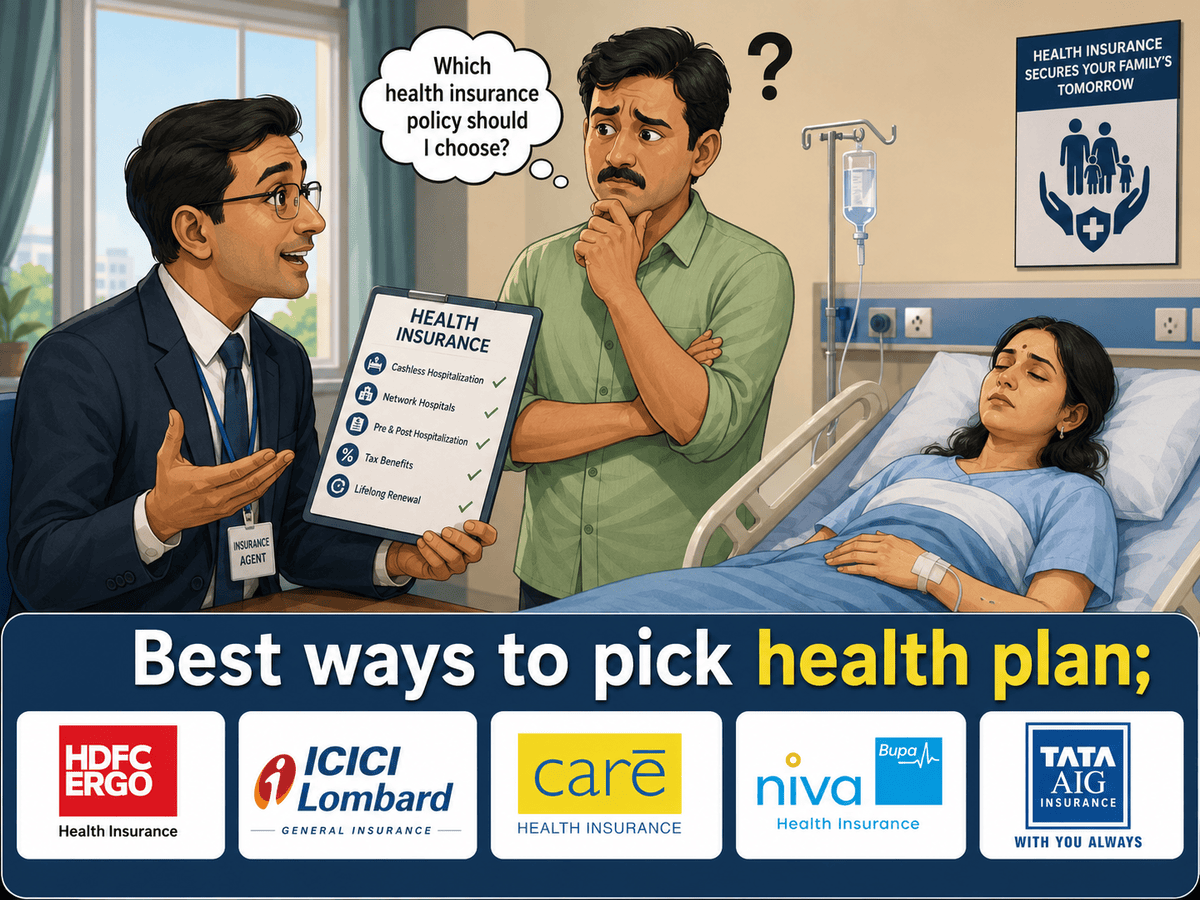
A newly published side-by-side comparison of individual health insurance plans from ICICI Lombard, HDFC Ergo, Care Health, Niva Bupa, and Tata AIG has refocused investor attention on product features that directly shape claims payouts. The review, which appeared in early 2026, moves beyond simple premium stickers to examine room rent caps, restoration benefit triggers, and claim settlement ratios. These variables can add tens of thousands of rupees in out-of-pocket costs during a hospitalization, altering the effective coverage for policyholders and the competitive standing of insurers.
For listed carrier ICICI Lombard General Insurance ($ICICIGI), differentiation on structural features can shift market share faster than brand spending. Insurance distributors increasingly steer customers toward plans with lower hidden cost burdens, making product design a direct growth lever.
Room Rent Caps and Restoration Clauses Drive Real Claims Cost
The comparison highlighted wide variation in room rent limits. Several plans cap daily room charges at 1% of the sum insured or a fixed rupee amount. When a policyholder selects a higher-category room, insurers typically apply a proportionate deduction to all hospital expenses, not only the room difference. That mechanism can turn a modest room upgrade into a 30–40% co-pay on the entire claim. Other insurers offer no room rent cap, eliminating this source of surprise bills.
Restoration benefits, which automatically reinstate the sum insured after it is exhausted for an unrelated illness, showed similar divergence. Some policies replenish the cover only once per year. Others allow multiple restorations, effectively doubling or tripling the protection available in a single policy period. A minority limit restoration to a percentage of the base sum insured, reducing its value during back-to-back medical events.
These design choices influence policyholder retention and agent recommendations more directly than headline premiums. A plan with a low premium but a restrictive room rent clause can leave a family with a large unpaid bill; word-of-mouth and online reviews increasingly surface those gaps.
Claim Settlement Ratios Cement the Moat for ICICI Lombard and HDFC Ergo
IRDAI’s annual disclosures consistently rank ICICI Lombard and HDFC Ergo among the leaders in claim settlement ratio. The new comparison reinforces that pattern, showing that the two groups pay a higher percentage of claims received than peers with lower ratios. A high settlement ratio reduces friction for policyholders at the time of claim, supporting renewal persistency and agent loyalty. For $ICICIGI, the main listed entity, that operational metric translates into a lower lapse rate and a stickier premium book.
While HDFC Ergo is not separately listed, its performance feeds into HDFC Bank’s non-interest income. Sustained claims leadership would strengthen the bank’s insurance franchise. Unlisted competitors Care, Niva Bupa, and Tata AIG face a steeper climb on trust metrics, which can slow their growth despite aggressive digital distribution.
Listed Read-Through and the 2026 Policy Renewal Cycle
Among the five insurers reviewed, ICICI Lombard is the only pure-play listed stock. A consumer pivot toward plans with room-rent flexibility and multiple restorations could pressure the market share of insurers that rely on tighter clauses to control claims cost. Analyzing the product disclosures in the comparison therefore resets the watchlist decision ahead of the upcoming policy renewal season, when corporate and retail buyers re-evaluate coverage.
In contrast, global insurance giant AIG displays an Alpha Score of 37 out of 100 on AlphaScala (AIG stock page), signaling mixed sentiment across the broader financials sector. The reading suggests that even established insurers are navigating uncertain underwriting cycles, a headwind that could moderate enthusiasm for insurance stocks overall. Broader sector dynamics are tracked in AlphaScala’s daily market analysis (stock market analysis).
The direct-product spotlight makes the next renewal cycle a catalyst. For ICICI Lombard, visible strength on room rent and restoration terms, paired with a high claim settlement ratio, would support premium growth and its valuation premium. Any indication that the company is tightening these benefits, however, could prompt a multiple compression. Investors tracking insurance exposure can monitor policy filings and IRDAI data to confirm whether the comparison’s findings translate into sustained competitive advantage.