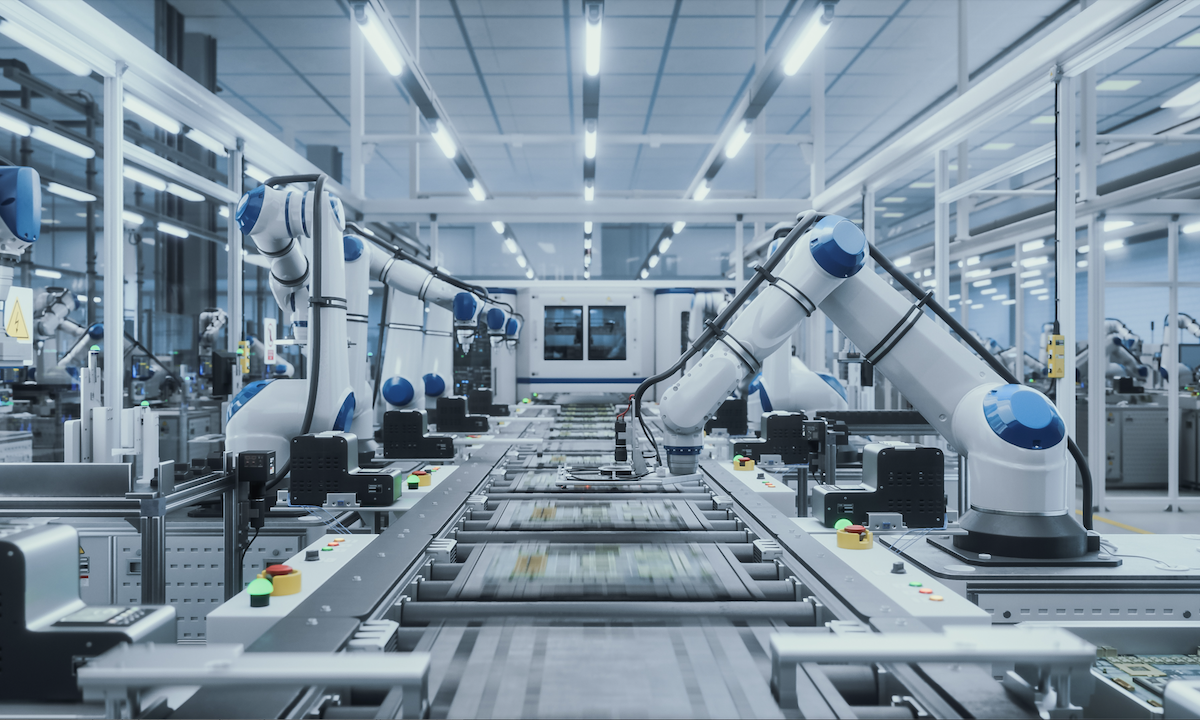
Global industrial robot installations hit 542,000 units in 2024, more than double the level a decade ago, the International Federation of Robotics (IFR) reported in its World Robotics 2025 report. China alone accounted for 295,000 units, 54% of the global total and the highest annual figure on record for any country. The IFR projected 10% average annual growth in the Chinese market through 2028.
China's 15th Five-Year Plan places robotics at the center of industrial strategy, with a shift "from traditional industrial automation to high-end, intelligent robotics integrated with artificial intelligence," according to Takayuki Ito, who was IFR president at the time. Leadership for the IFR changed July 2.
For years, apparel and footwear resisted automation because fabrics shift, stretch and fold unpredictably, and designs change seasonally. Final sewing is still done by hand in most factories, Shanghai Garment noted. AI-powered vision systems and simpler programming interfaces are beginning to remove those barriers, making robots easier to train and redeploy across variable production lines.
South Korean fashion company Baba Fashion, which operates the Eyeiz Baba and Jigott women's apparel brands, deployed autonomous AI robots at its Yeoju logistics center, Seoul Economic Daily reported. The robots scan barcodes, cross-reference order data and transport products to sorting locations without human involvement. The system processes up to 3,500 garments per hour, about four times the rate of manual operations.
Swiss sportswear company On uses its LightSpray manufacturing technology, in which a robotic arm sprays a continuous thermoplastic filament around a shoe last to create a one-piece shoe upper in about three minutes, according to the company.
The economics of automated garment factories are still selective. A modern facility requires expensive equipment, integration, maintenance and specialized staff. Utilization must be high and demand steady to justify the capital investment. Automation works best for basics and repeat orders. A system built for T-shirts may perform poorly on garments with multiple sizes, frequent design changes and varied stitching requirements. The outcome is selective deployment, not a wholesale transformation of garment manufacturing.
Chinese domestic suppliers are expanding into food processing, textiles and wood products for the first time, sectors where they face little foreign competition, according to the CSIS ChinaPower Project. In China's textiles and apparel sector, Chinese firms supply 100% of the robots deployed domestically, compared with 31% in automotive and 59% in electronics. The data points to a broader pattern: Chinese robotics companies face virtually no foreign competition in newer automation markets, while they still compete with established global suppliers in industries where automation is more mature, CSIS found.
China filed 7,705 humanoid patents over five years, five times the U.S. total, according to Morgan Stanley data that PYMNTS reported. Manufacturers that deploy robots earliest in a new sector accumulate operational data that feeds back into model training, making subsequent deployments faster and cheaper. The same dynamic shaped electric vehicles.
PYMNTS reported that the manufacturing question has shifted from whether machines can perform physical work to whether they can do so safely and reliably alongside people. In apparel and footwear, that is the question now being answered.