Rio2 (TSXV: RIO; OTCQX: RIOFF) has filed an independent NI 43-101 technical report on its Kalzas tungsten project in central Yukon, the company said Tuesday. The report, prepared by RUMI Geoscience Consulting, consolidates decades of historical exploration data into a single geological model for the first time.
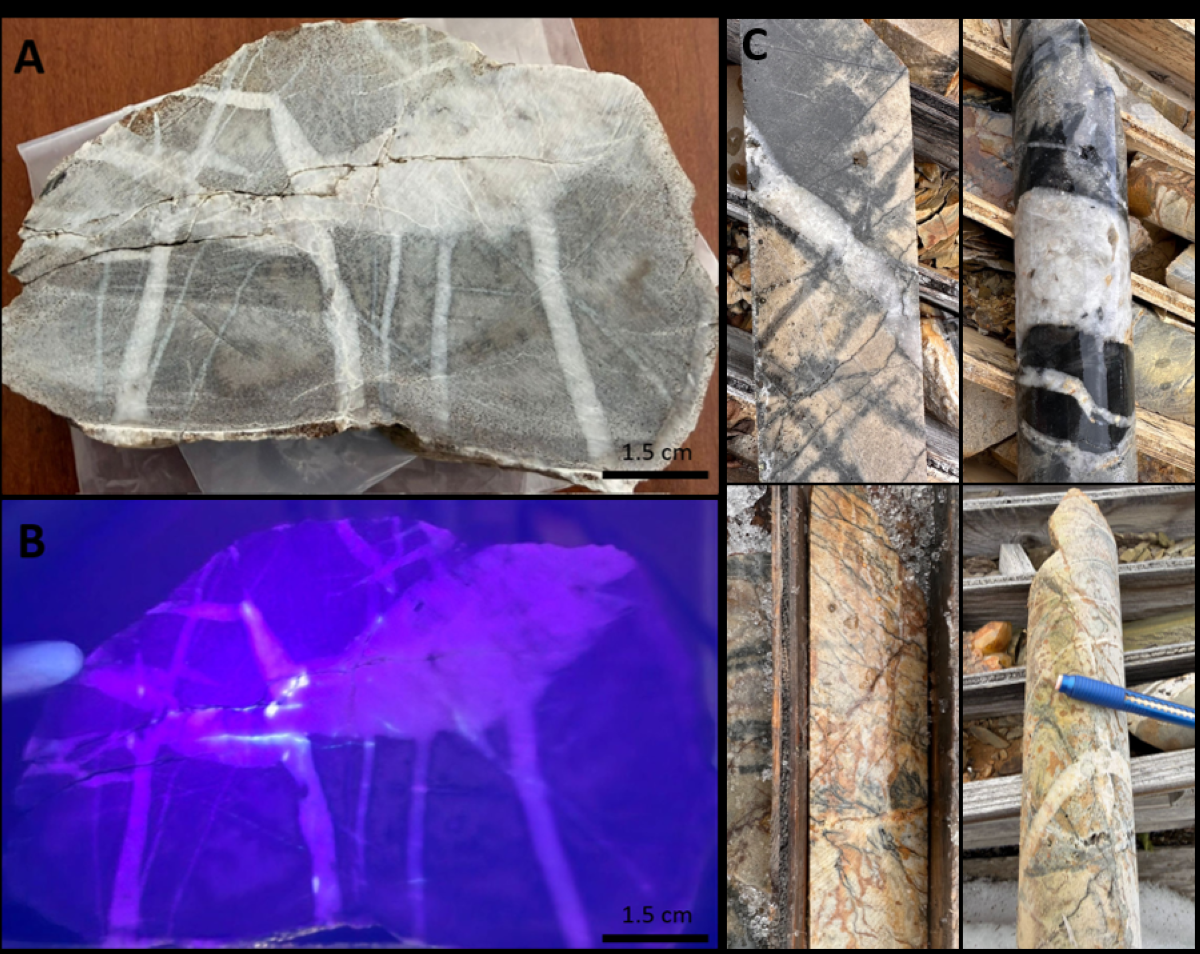
The Kalzas property covers 155 hectares on the Kalzas Plateau, about 70 km southeast of Mayo. It sits within the Selkirk First Nation settlement land block SFN-R-16A. The project hosts a porphyry-style wolframite vein-stockwork system, with wolframite making up about 90% of the tungsten mineralization and scheelite the rest.
The system is part of the Selwyn Tungsten Belt, one of Canada's most established tungsten provinces. Canada classifies tungsten as a critical mineral for defence, aerospace, electronics and energy transition applications.
The property was discovered in 1978 and staked by prospector J.D. Randolph. Union Carbide optioned it in 1980 and conducted the first systematic exploration through 1983, including geological mapping, geochemical sampling, trenching, airborne geophysics and diamond drilling. Union Carbide dropped the option in 1984 after a tungsten market downturn.
Copper Ridge Exploration acquired the property in 2001 and drilled five holes totaling 397.4 m in 2005. Prospector Resources Corp. optioned it in 2007 and drilled four holes totaling 505.5 m in 2008. Prospector Resources later changed its name to Rio2 in 2017.
Across all three campaigns, 11 diamond drill holes have been completed, totaling 1,570.29 m. No exploration has been documented since fall 2008.
Surface geochemical programs by Union Carbide and Copper Ridge delineated a contiguous tungsten-in-soil and talus-fines anomaly exceeding 1,000 ppm W. The anomaly measures roughly 1,500 m northeast-southwest by 300 to 900 m wide. Trench sampling highlights include 1.04% WO₃ over 150 m (Union Carbide) and up to 3.165% WO₃ over 0.4 m (Copper Ridge).
Drill highlights from the 2005 program include hole KZ05-01, which returned 1.122% WO₃ over 1.9 m within a broader 48 m intersection averaging 0.153% WO₃. Hole KZ05-05 returned two 0.5 m intervals grading 1.220% and 1.390% WO₃ within a broader 24.4 m interval averaging 0.304% WO₃. From the 2008 program, hole K-08-09 returned 0.287% WO₃ over 15 m, within a broader 101.36 m intersection averaging 0.224% WO₃ – the best higher-grade sub-interval from that campaign.
The full extent of the anomaly remains open in several directions and has not been tested at depth beyond roughly 180 m. The geological model predicts mineralization extends both along strike and at depth, especially on the western flank of Kalzas Mountain.
Rio2 cannot start field work until three sequential conditions are met: completion of a Selkirk First Nation-mandated site remediation program, acceptance of a Class 1 exploration permit filed April 13, 2026, and execution of a formal exploration agreement with the Selkirk First Nation. The company said it is committed to advancing these requirements in a collaborative manner.
A two-phase exploration program is planned. The pre-requisite phase, site reclamation budgeted at C$60,875, is scheduled to begin in July 2026. Yukon-based geological consultants Archer Cathro have been retained to manage the reclamation and the subsequent exploration.
Phase 1, budgeted at C$66,830, includes data compilation, 1:5,000-scale geological mapping, 50 rock samples for multi-element ICP-MS, and re-sampling of talus material around the anomaly margins. It is planned for late July or August 2026, subject to permit acceptance and Selkirk First Nation engagement.
Phase 2, a 1,500-2,000 m diamond drilling program, will be designed after Phase 1 results. The budget is C$1.305 million to C$2.05 million. Drill targets will focus on depth extensions below the 180 m vertical limit of historical drilling, along-strike continuity guided by the 1,500 m surface geochemical anomaly, the untested western flank of Kalzas Mountain, and twinning of selected historical holes to validate assay data.
Total recommended expenditure across all phases is about C$1.4 million to C$2.2 million, exclusive of taxes.
If Phase 1 mapping and geochemical sampling extends the known anomaly footprint, and Phase 2 drilling intersects mineralization at depth or along strike at grades comparable to historical intercepts, the project would move toward a maiden resource estimate. The 2008 hole K-08-09's 101 m intersection at 0.22% WO₃ suggests bulk-tonnage potential, the system needs modern systematic drilling to confirm continuity.
A failure to secure a formal exploration agreement with the Selkirk First Nation, or rejection of the Class 1 permit, would stall the project indefinitely. Drilling results that fail to replicate historical grades, or that show the system is narrower or more discontinuous than the model predicts, would reduce the exploration upside.
The technical report, with an effective date of June 19, 2026, was prepared by Tatiana Alva Jimenez, M.Sc., P.Geo., of RUMI Geoscience Consulting, who is independent under NI 43-101. The scientific and technical content was also reviewed by Enrique Garay, MSc P.Geo/FAIG, Rio2's SVP Geology, who is a qualified person under the same standard.
Rio2 is a diversified precious metals and copper producer, currently operating the Fenix Gold heap leach mine in Chile and the Condestable copper-gold-silver underground mine in Peru. The Kalzas project is its only tungsten asset.
Site reclamation is scheduled to begin this month. The company expects to start Phase 1 field work shortly after permit acceptance and Selkirk First Nation engagement.