Commodities● Neutral
Rhine at Kaub Hits Record Low, Threatening German Industry Supply Chains
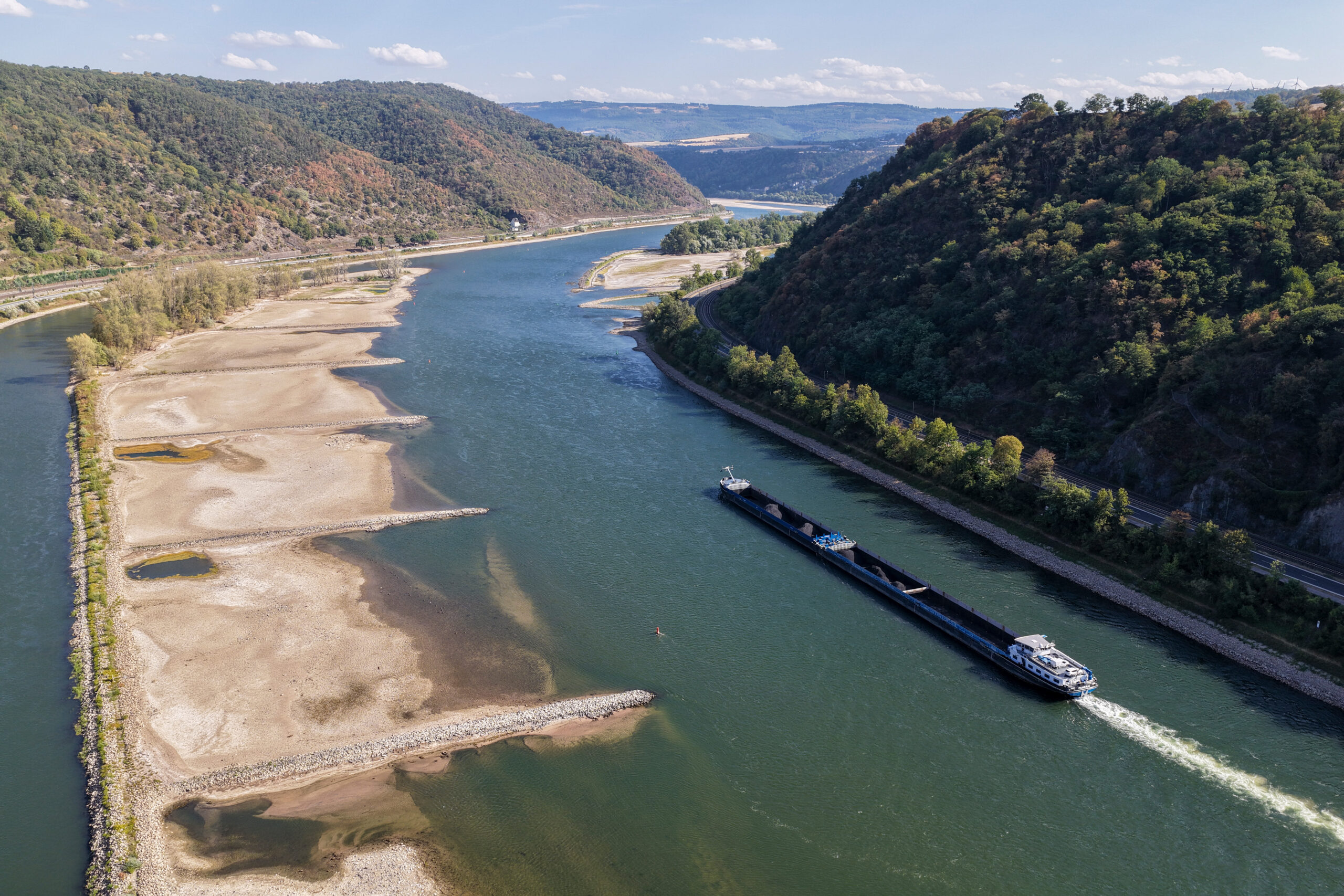
Water levels at Kaub hit a record low, forcing companies like BASF and Lanxess to shift from barges to rail and road. Commerzbank estimates a 0.35 ppt GDP hit if levels stay low through mid-September.
Continue with
Water levels at Kaub, the shallowest point on the Rhine, fell to the lowest since records began in 1880. Another heat wave is baking Europe this week, and forecasters say it would take weeks of sustained rain to lift the river toward normal levels. The crisis could drag on into October.
The Rhine is the backbone of Europe's industrial supply chain, running from Switzerland to Rotterdam, the continent's busiest port. The disruption is hitting companies that rely on the waterway for raw materials and finished goods. Thyssenkrupp AG, BASF SE, Lanxess AG and Evonik Industries AG all reported restrictions.
“Shipments by ship are severely restricted, with vessels carrying significantly lighter loads than usual,” Lanxess said Tuesday. “As certain loading and unloading points are no longer accessible, we are switching to rail and road transport where possible. The situation is highly dynamic.”
Shipping broker Riverlake warned that the river has effectively become impassable at Kaub. “Barges positioned on the Upper Rhine are unable to return to the ARA region,” the firm said in a note, referring to the Antwerp-Rotterdam-Amsterdam hub. “Barges from the ARA are unable to proceed further upstream.”
The low water puts at risk supplies of diesel, heating oil, coal, grains and cocoa. German utility EnBW normally relies on coal shipments from Rotterdam. Germany's Miro oil refinery exports gasoline on barges. EnBW on Friday estimated the disruption will reduce its earnings by a low double-digit-million-euro figure.
Evonik said it is reacting “with extensive precautionary measures” and shifting freight to rail and road. BASF reported isolated bottlenecks. The company said it has kept shipping by using more vessels designed for low-water conditions. When necessary, it uses land transport.
Germany's Inland Waterway Transport Cooperative maintains that barges can still pass at Kaub, with vessels able to get through when the clearance level drops to around 10 centimeters. It is currently at 14 cm. The clearance level is a reference point, not actual depth. Based on German federal waterways calculations, 14 cm corresponds to a navigable fairway depth of about 1.27 meters. Forecasts from the Federal Waterways and Shipping Administration show the level could fall to 9 cm by Friday.
Sparse rainfall and unrelenting heat have strangled the basin that feeds the Rhine, which has also been depleted by reduced runoff from Alpine snow and glaciers, said David Hannah, a professor of hydrology at the University of Birmingham.