Macro● Neutral
Why Rothbard’s Austrian Economics Still Predicts Market Cycles
Applying Austrian Business Cycle Theory to modern fiscal policy reveals how state-led market distortions create long-term risks for today's portfolios.
Continue with
The Intellectual Bedrock of a Movement
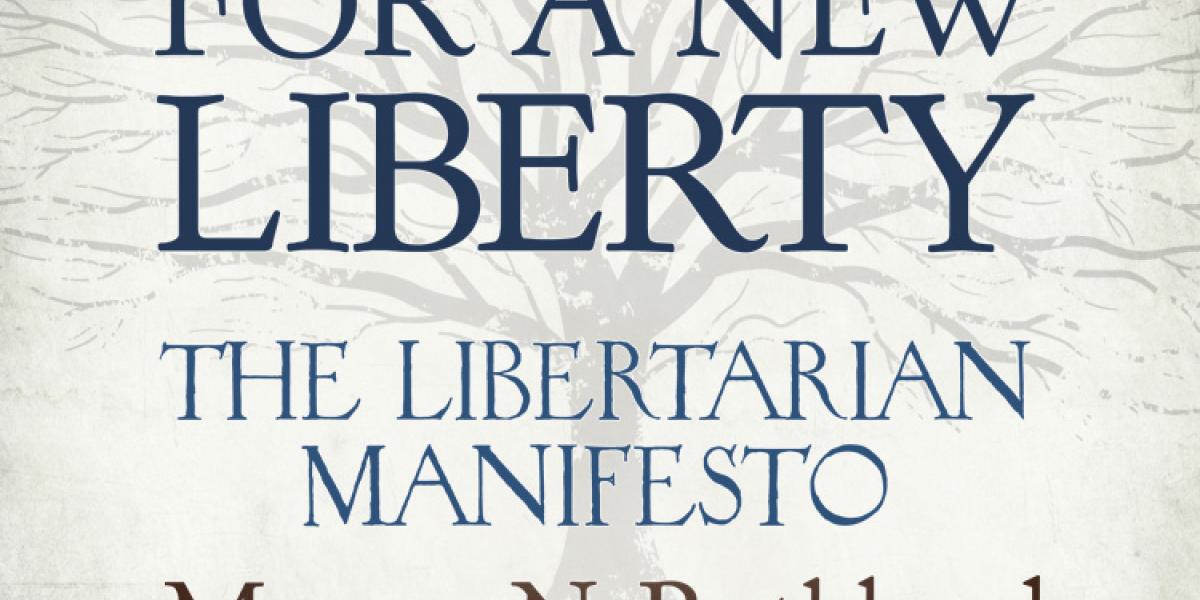
In the landscape of political philosophy, few works have managed to bridge the gap between rigorous economic theory and radical political advocacy as effectively as Murray Rothbard’s For a New Liberty. Originally published in 1973, the text remains a seminal point of reference for those seeking to understand the intersection of Austrian Economics and the libertarian tradition. As today’s markets grapple with unprecedented levels of government intervention and central bank expansion, Rothbard’s systematic approach to individual liberty and property rights offers a lens through which modern traders and institutional analysts can re-examine the foundations of fiscal policy.
Rothbard’s work is not merely a political manifesto; it is a reconstruction of the social order based on the principles of the Austrian School of Economics. By synthesizing the contributions of predecessors like Ludwig von Mises and Friedrich Hayek, Rothbard provided a comprehensive framework that challenges the necessity of the state in managing economic activity. For the modern observer, this "Rothbardian" perspective provides a historical counter-narrative to the Keynesian consensus that has dominated global economic policy for the better part of a century.
Economic Foundations and the State
At the core of Rothbard’s argument is the concept of self-ownership and the non-aggression principle. By framing economic liberty as a natural extension of property rights, Rothbard argues that any state-imposed regulation or tax is essentially an infringement on the individual's ability to trade freely. In an era of increasing regulatory scrutiny, global trade tensions, and fiscal deficits, the Rothbardian critique of the "monopoly of power" remains highly relevant.
Traders often focus on the immediate impact of central bank interest rate decisions or quarterly GDP reports. However, Rothbard’s analysis encourages a deeper inquiry into the long-term systemic risks created by state-managed monetary policy. By viewing the economy through the prism of Austrian Business Cycle Theory, investors can better understand how artificial credit expansion—often discussed in the context of current quantitative easing or tightening cycles—leads to the boom-and-bust patterns that define modern market volatility.