Back to Markets
Commodities● Neutral

Retail Real Estate Disputes Rise Over Click-and-Collect Revenue Attribution

Retail Real Estate Disputes Rise Over Click-and-Collect Revenue Attribution
ONASHASEL

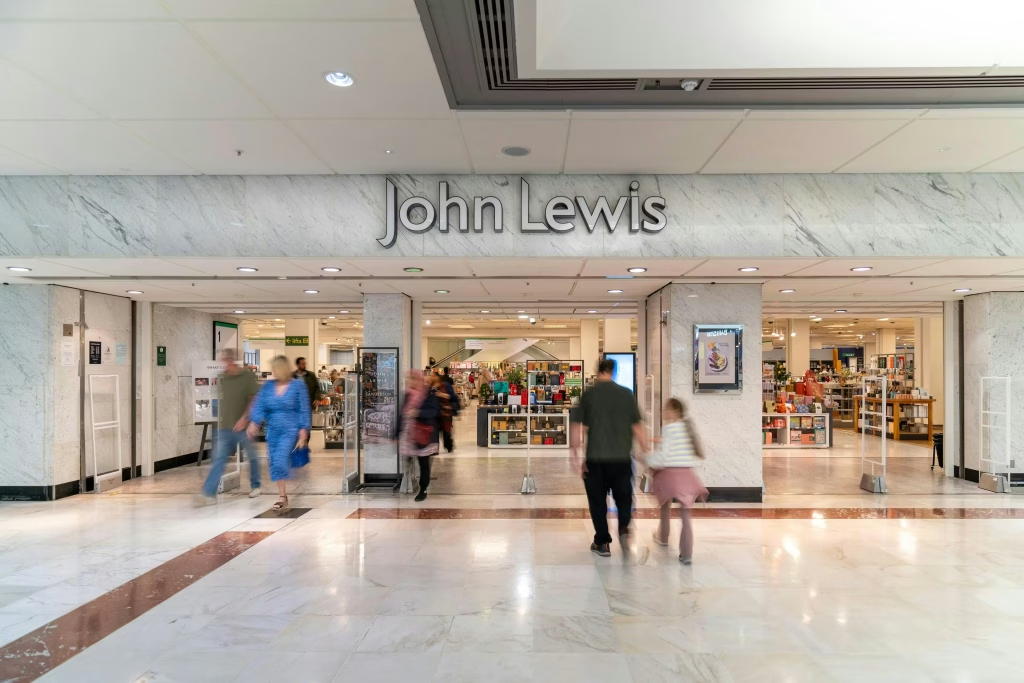
A High Court dispute between John Lewis and the owners of Brent Cross over click-and-collect revenue highlights growing friction in commercial lease agreements.

AlphaScala Research Snapshot
Live stock context for companies directly referenced in this story
Alpha Score
46
Weak

Alpha Score of 46 reflects weak overall profile with strong momentum, poor value, poor quality, moderate sentiment.

Consumer Cyclical
Alpha Score
47
Weak

Alpha Score of 47 reflects weak overall profile with moderate momentum, poor value, moderate quality. Based on 3 of 4 signals — score is capped at 90 until remaining data ingests.

Consumer Cyclical

HASBRO, INC. currently screens as unscored on AlphaScala's scoring model.

Consumer Staples
Alpha Score
25
Poor

Alpha Score of 25 reflects poor overall profile with weak momentum, poor value, poor quality. Based on 3 of 4 signals — score is capped at 90 until remaining data ingests.

This panel uses AlphaScala-native stock data, separate from the source wire linked above.

The legal dispute between John Lewis and the owners of the Brent Cross shopping centre highlights an escalating tension in commercial real estate regarding how digital commerce is accounted for in physical lease agreements. Hammerson and Standard Life Investments have initiated High Court proceedings to determine whether revenue generated from online orders collected at the Brent Cross location qualifies as store turnover for rent calculation purposes. This case centers on the definition of turnover in an era where the distinction between physical retail space and digital fulfillment centers has blurred.

Lease Definitions and Digital Fulfillment

At the heart of the conflict is the interpretation of turnover rent clauses. Historically, these clauses were designed to capture a percentage of sales generated within the physical footprint of a store. As retailers shifted toward omnichannel models, the physical store evolved into a hub for inventory management and customer service. The landlords argue that the use of store space to facilitate the handoff of online purchases constitutes a commercial activity that should be reflected in the rent paid for that space. Conversely, retailers often maintain that click-and-collect transactions are digital sales processed through central e-commerce platforms rather than local point-of-sale systems.

Impact on Retail Property Valuation

This litigation carries significant implications for the broader retail property sector. If the court rules that click-and-collect volume must be included in turnover rent, it could lead to a widespread reassessment of lease agreements across the UK. Landlords are increasingly looking to capture value from the high foot traffic generated by digital fulfillment, while retailers are protective of margins already squeezed by rising operational costs. The outcome will likely influence how future lease renewals are structured, potentially leading to more granular definitions of what constitutes reportable revenue.

AlphaScala data currently reflects a mixed outlook for the broader industrial and technology sectors that support these retail supply chains. For example, ON stock page holds an Alpha Score of 46/100, while BE stock page also maintains an Alpha Score of 46/100. These scores reflect the ongoing volatility in sectors that provide the infrastructure for modern retail, including semiconductor components for inventory tracking and energy solutions for logistics centers.

As the retail sector continues to integrate digital and physical operations, the following factors remain critical for market observers:

  • The specific language regarding turnover definitions in existing legacy leases.
  • The potential for a precedent-setting ruling that forces a industry-wide renegotiation of commercial property contracts.
  • The impact of digital fulfillment costs on the net operating income of shopping center owners.

The next concrete marker in this dispute will be the High Court's interpretation of the specific lease language at Brent Cross. A ruling in favor of the landlords could trigger a wave of similar claims across the retail landscape, while a decision favoring John Lewis would likely force property owners to seek alternative methods to capture value from the omnichannel retail shift. Investors should monitor subsequent filings for clarity on how these revenue streams are categorized in future financial disclosures.

How this story was producedLast reviewed Apr 29, 2026

AI-drafted from named sources and checked against AlphaScala publishing rules before release. Direct quotes must match source text, low-information tables are removed, and thinner or higher-risk stories can be held for manual review.

Editorial Policy·Report a correction·Risk Disclaimer