Commodities● Neutral
Resolution Minerals Drills Golden Gate as Gold Recoveries Hit 95%
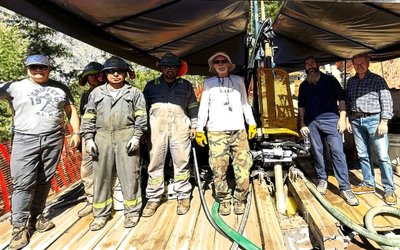
Up to 13,700m of drilling across 45 holes targets gold and tungsten at Golden Gate North and South. Oxide leach tests return 94-95% gold recovery. First assays from the 2026 program are the next catalyst.
Continue with
Resolution Minerals (ASX: RML) has started diamond core drilling at the Golden Gate area of its Horse Heaven antimony-tungsten-gold-silver project in Idaho, USA. An MP1500 diamond core drill rig is turning on the first hole of a 2026 program that could reach 13,700 metres across as many as 45 holes. The program launch coincides with initial metallurgical test work that returned gold recoveries of 94% to 95% from oxide leach tests and 86% to 88% from sulphide flotation tests.
The drill program is designed to define the scale and extent of gold mineralisation at Golden Gate North and Golden Gate South, test extensions of the broader system, and assess tungsten mineralisation around historical mine workings. The metallurgical results give Resolution a processing pathway for both oxide and sulphide material, reducing one layer of technical risk at a project that sits immediately adjacent to Perpetua Resources' Stibnite gold project.
2026 Golden Gate Drill Program: 13,700m Across 45 Holes
The 2026 program is the most aggressive drill campaign Resolution has run at Golden Gate. The planned 13,700 metres across 45 holes will test two distinct target areas and follow up on historical tungsten production.
Golden Gate North: Extending the 189.2m Intercept
A key follow-up target is hole HH-GG25-001C, which previously returned 189.2 metres at 1.30 grams per tonne gold from 34.1m to 223.4m. That intercept started from surface and ended in mineralisation, leaving the system open at depth. The 2026 holes will step out from that collar to test the lateral and vertical continuity of the gold zone. Success here would move Golden Gate North toward a maiden resource estimate.
Golden Gate South: A 500m by 600m Coincident Anomaly
At Golden Gate South, a 500-metre by 600-metre target hosts a coincident gold and tungsten soil anomaly. Drilling here will test both metals simultaneously. The area has not been systematically drilled before, making it a genuine discovery target rather than a resource-definition exercise. The presence of tungsten adds a second revenue stream, though it also introduces metallurgical complexity.
Tungsten Extensions Around Historical Workings
Golden Gate has a history of tungsten production, with the most recent mining in 1980. The 2026 program will drill around the old mine workings to identify extensions of tungsten mineralisation. Composite samples from stockpiles stored at the Johnson Creek mill site have assayed 1.85% tungsten trioxide, confirming that high-grade tungsten material exists on the property.
Metallurgical Results: Oxide Leach vs. Sulphide Flotation
Independent Metallurgical Operations in Perth conducted the initial test work on two composite samples prepared from 2025 diamond core. The results provide a clear processing route for both material types.
| Material | Test Type | Grind Size (µm) | Gold Recovery (%) | Concentrate Grade (g/t Au) | Residue Grade (g/t Au) |
|---|---|---|---|---|---|
| Oxide | Cyanide Leach | 150 | 94.2 | N/A | 0.04 (after 48h) |
| Oxide | Cyanide Leach | 75 | 95.5 | N/A | 0.04 (after 48h) |
| Sulphide | Rougher Flotation | 106 | 86.4 | 49 | N/A |
| Sulphide | Rougher Flotation | 75 | 88.7 | 26.4 | N/A |