RBI draft requires banks and NBFCs to inventory every AI model and install kill switches. The broad definition catches spreadsheet calculators. Feedback deadline is July 24.
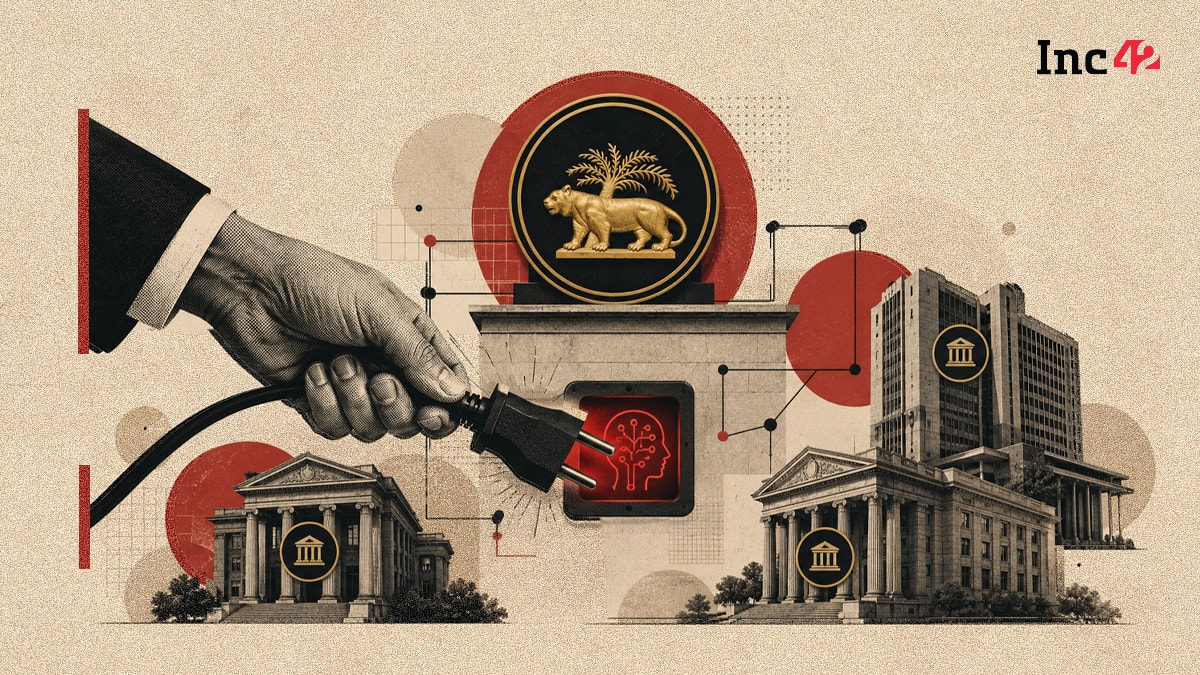
The Reserve Bank of India wants every bank and NBFC to be able to flip a switch and kill an AI model in real time. The draft guidance, released Wednesday, requires regulated entities to maintain override, suspension or deactivation mechanisms – a kill switch – for any AI system that drives decisions.
The rule goes deeper than GenAI chatbots. The RBI defines "model" broadly enough to catch a spreadsheet-based loan-pricing calculator or a decades-old credit scorecard. Every system that makes or materially influences a decision now needs a documented entry in a formal inventory. No model runs until it is registered.
Shashank Karincheti, cofounder of Redacto, said the scope caught the industry off guard. "The draft defines a 'model' so broadly that a spreadsheet pricing calculator counts if it drives decisions. This isn't a GenAI rule; it pulls in every legacy scorecard and rule engine, and most institutions don't have a complete model inventory today. That inventory is the real day one work."
The framework applies to commercial banks, small finance banks, payment banks, cooperative banks, NBFCs, asset reconstruction companies and credit information companies. Third-party models are included. Independent validation, stress testing and continuous monitoring are required across the full lifecycle.
The RBI has invited feedback by July 24. That date is a hard deadline for an industry that, by its own admission, does not know how many models it runs.
Why the inventory is the hard part
A kill switch is the fail-safe: pull the lever, the model stops generating output, the system reverts to a human fallback or a safe state. That is the part that gets headlines. The part that will consume the most internal resources is the inventory requirement.
Banks and NBFCs built decision engines over decades. Some are in Excel files sitting on a credit officer's desktop. Some are rule-based approval trees written in COBOL. The RBI now demands a comprehensive catalogue of every one of them, regardless of origin. Sajeev Viswanathan, CEO of New Street Technologies, said the draft shows a nuanced approach but that the board-level accountability clause changes the conversation. "Rather than imposing blanket restrictions on AI, the RBI has proposed a tiered risk framework that differentiates between low- and high-risk use cases. Combined with board-level accountability and human oversight mechanisms, the framework seeks to enable innovation while preserving financial stability."
Customer-facing AI systems must also disclose that a user is interacting with an AI and offer a human alternative on request.
Where the risk builds
The biggest exposure is execution risk. Institutions that cannot produce a model inventory by the compliance deadline face regulatory scrutiny. The cost of building the inventory, validating models, and installing kill switches is material – especially for smaller NBFCs and cooperative banks that rely on off-the-shelf third-party software with unknown governance.
What would confirm the risk thesis: Any bank that discloses a gap in its model inventory or asks the RBI for an extension. A major outage where a kill switch failed to activate. A public audit finding bias in an underwriting model that was never catalogued.
What would weaken the risk thesis: The industry meets the July 24 deadline with credible inventories. The RBI softens the scope to exclude legacy systems once they are replaced. Large banks demonstrate that their model risk frameworks already cover the new requirements.
The RBI has indicated it may add AI-specific rules later. For now, the message is straightforward: inventory everything, explain every decision, and be ready to kill the model if it goes sideways.
The comment period closes July 24.
Prepared with AlphaScala research tooling and grounded in primary market data: live prices, fundamentals, SEC filings, hedge-fund holdings, and insider activity. Each story is checked against AlphaScala publishing rules before release. Educational coverage, not personalized advice.