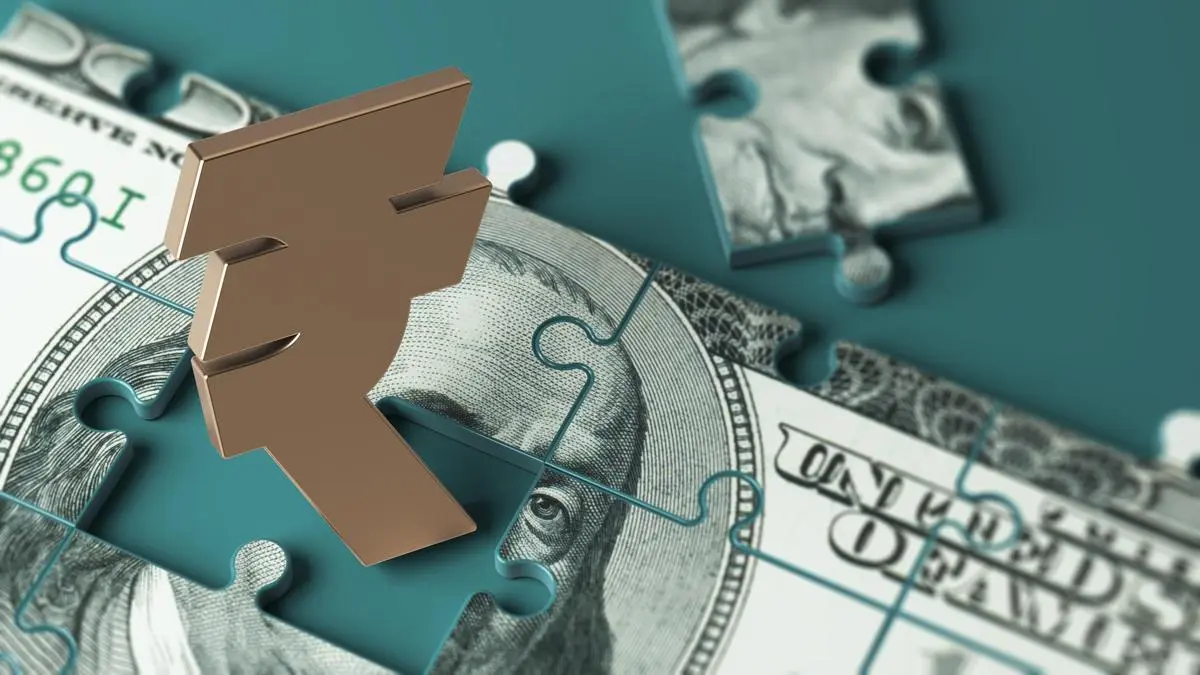
The Reserve Bank of India is preparing a multi-pronged response to defend the rupee. Top officials have held internal meetings covering a rate hike, a deposit scheme targeting non-resident Indians that could draw $50 billion, additional currency swaps, and a potential sovereign dollar bond, according to people familiar with the matter. The rupee touched almost 97 per dollar this week, its lowest level ever.
The next scheduled monetary policy decision is June 5. The RBI has previously made an out-of-cycle adjustment in May 2022, raising rates 40 basis points between meetings. The present environment – with the rupee at 97, foreign outflows accelerating, and the one-year forward market breaching 100 per dollar – could prompt a similarly aggressive posture.
Rate Hike Mechanism and the Wider Carry
Widening the US-India Differential
Raising the repo rate from its current 5.25% would directly widen the interest rate differential between India and the United States, which has narrowed to a decade low. Larger differentials attract foreign bond inflows, supporting the rupee. Standard Chartered Plc expects 50 basis points of rate increases in the current fiscal year, with the first move likely in June.
Inflation Pressure Beneath the Surface
Consumer-price inflation remains below the RBI's 4% target. Wholesale inflation more than doubled to 8.3% in April from the previous month, latest figures show. That builds the case for a rate hike on domestic grounds even if the primary motivation is currency stability.
Some economists advise caution. “An emergency rate hike may be too steep, and may impose a large cost on the economy,” said A. Prasanna, an economist with ICICI Securities Primary Dealership Ltd. “Some form of interest rate tightening in small steps may be needed sooner rather than later.”
Bond Yields Surge on Policy Speculation
Short-End Bears the Brunt
The 5-year yield rose as much as 14 basis points to 7.01%. The 10-year yield climbed 5 basis points to 7.13%. The steeper selloff in the front end reflects the market pricing imminent rate action. The rupee itself gained 0.5% on the session, outperforming Asian peers. That is a short-term relief rally driven by policy expectations. It does not remove the structural pressure from widening current account deficits and record foreign outflows.
The Taper Tantrum Playbook
The options under discussion mirror the measures India deployed during the 2013 taper tantrum. Back then, the RBI offered a deposit scheme for NRIs through local banks, drawing about $30 billion. This time the estimate is $50 billion. On Wednesday, the RBI announced a $5 billion swap auction to infuse liquidity and boost dollar reserves. More swaps could follow.
| Measure | 2013 Taper Tantrum | 2026 Proposal |
|---|
| NRI deposit scheme target | ~$30 billion | ~$50 billion |
| Additional action | – | $5 billion swap auction plus potential sovereign bond |
Gold Import Exposure Adds to Currency Pressure
India is one of the world’s largest gold importers. A weaker rupee makes gold purchases more expensive in local terms, adding to current account pressure. The source notes that a rate hike would curb demand for imports of gold and consumer electronics, something the government has been trying to achieve.
A higher repo rate could cool gold buying by raising the opportunity cost of holding non-yielding assets. For traders tracking the metal, the RBI's tightening bias shifts the macro backdrop. AlphaScala's gold profile covers the broader macro drivers.
The RBI's stance contrasts with the US Treasury Secretary Scott Bessent calling high yields “transient” after the Iran war ended, as covered in Bessent Calls High Yields 'Transient' as Iran War Ends. The divergence in policy direction between India and major economies adds another layer of complexity for cross-asset positioning.
Outflows and the Forward Market Signal More Weakness
Foreign fund outflows from Indian stocks have already surpassed last year's record $19 billion in 2026. That selling pressure reinforces rupee depreciation, which in turn prompts more outflows from foreign investors concerned about currency losses. A rate hike could slow the outflow by improving the carry trade. That same move would hit growth-sensitive sectors such as consumer electronics and discretionary goods.
The one-year dollar-rupee forward breached 100 for the first time on Wednesday. DBS Group Holdings Ltd revised its dollar-rupee forecast range to 95-100 from 90-95. Aberdeen Investments and MetLife Investment Management see the rupee testing 100. The consensus estimate compiled by Bloomberg shows 94.75 by year-end.
“RBI will need to use a plethora of measures,” Batra said. That could include raising dollars overseas through a deposit scheme for NRIs and selling a sovereign dollar bond. The latter would be decided by the government.
MPC Decision on June 3-5 Holds the Key
The six-member monetary policy committee is scheduled to meet June 3-5. The committee kept the benchmark rate unchanged at 5.25% in its previous meetings this year. Most economists now expect a hike as inflation accelerates.
The RBI's top priority, according to one person familiar with its thinking, is to stop the depreciation of the currency. “The RBI is ready to do whatever it takes to achieve that,” that person said.
The next concrete decision point is the June 3-5 MPC meeting. Whether the RBI moves on that date or acts sooner with an emergency adjustment, the direction is clear: tighter policy, delivered through a mix of rate hikes, deposit schemes, swaps, or a dollar bond. For ongoing coverage of currency intervention and cross-asset transmission, see AlphaScala's market analysis.