Privacy4Cars' DisconnectedCar Targets a $1B Dealer Liability
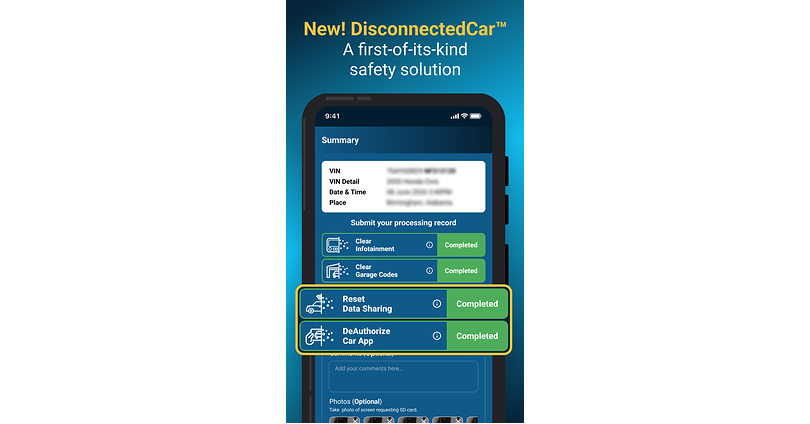
Privacy4Cars' DisconnectedCar severs remote access between a used connected car and its prior owner. Dealers, lenders, and rental companies carry the liability. The sector read-through is direct.
Privacy4Cars launched DisconnectedCar, a tool that severs the digital link between a connected vehicle and its previous owner. The product addresses a risk most dealers have not fully priced: every connected car that changes hands may still be accessible – and remotely controllable – by the prior user through the manufacturer's app.
That prior user can locate, unlock, and start the vehicle. They can activate cameras and microphones. The car also keeps collecting personal data under the old owner's consent, which is legally invalid once that person no longer owns or leases the vehicle. Dealers, lenders, remarketers, and rental companies carry that liability every time a connected car moves through their inventory.
DisconnectedCar sits alongside Privacy4Cars' existing AutoCleared (in-vehicle data deletion) and Vehicle Privacy Report (data disclosure) tools. The company calls the trio a Disclose-Delete-Disconnect framework for the vehicle lifecycle. Coverage currently spans major automakers and is expanding.
Andrea Amico, Privacy4Cars' founder and CEO, said documented cases of abuse through stealth remote control have increased, with national media coverage raising awareness. The early feedback and interest on DisconnectedCar exceeded expectations, he said.
The product is rolling out to Privacy4Cars' Privacy Care dealerships and wholesalers in the U.S. and Canada. International partners can join a waitlist.
The read-through for the sector
The launch highlights a liability that touches every business that touches a used connected car. Dealerships face the most direct exposure: a vehicle on the lot that a prior owner can still remote-start is a safety and reputational risk. Lenders and captives that repossess or remarket vehicles carry the same problem. Rental companies that cycle cars through hundreds of drivers per year have the highest volume exposure.
Insurers are the second-order read. A policyholder whose car was remotely accessed by a prior owner and used in a crime could trigger a coverage dispute. The question of who bears the liability – the dealer that did not disconnect, the manufacturer that did not revoke access, or the insurer – is not settled. Privacy4Cars is betting that the market will eventually demand proof of disconnection as a standard step in vehicle handover, much as odometer disclosures became standard.
What would confirm the thesis
If a major captive finance company or a top-10 dealer group mandates DisconnectedCar or a competing solution as part of its reconditioning workflow, the liability is moving from theoretical to priced. If state regulators or plaintiff firms start citing the failure to disconnect as a factor in data-breach or safety lawsuits, adoption accelerates.
What would weaken it
If manufacturers themselves build a reliable account-transfer and access-revocation process into their apps – and make it mandatory at sale – the third-party solution loses urgency. That is possible but not imminent: automakers have little incentive to surface a process that highlights the security gap they created.
Privacy4Cars is privately held and does not disclose revenue. The company says AutoCleared has been used to safeguard over 3 million drivers and passengers. DisconnectedCar is the bet that the number of vehicles that need disconnecting is orders of magnitude larger.
Drafted by a large language model from the source reporting linked above, then screened by automated publishing checks. It is not read by a journalist before publication. Some articles cite our Alpha Score. Verify prices and figures against the original source. Educational coverage, not personalized advice.