Crypto▲ Bullish
Powell's Fed Term Ends in 3 Days: The Liquidity Dial Changes Hands
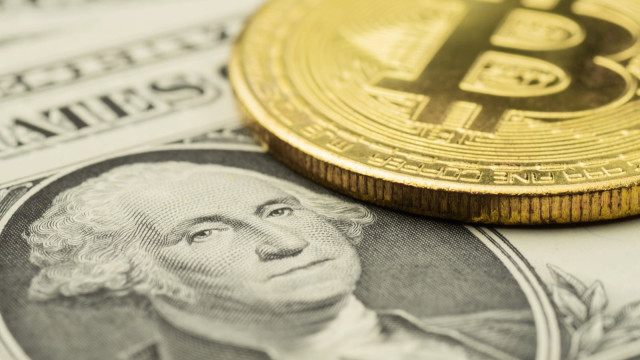
Bitcoin enters the post-Powell era near $80,000 after a tenure that tied crypto's fate to Fed liquidity. The next chair inherits the same lever, and the market is watching.
Continue with
On May 15, Jerome Powell's second term as chair of the Federal Reserve will end. For the crypto market, the transition removes a known quantity whose influence on digital assets was never about public statements. The real transmission mechanism was liquidity. Powell's tenure spanned a full cycle: a tightening-induced crash, a pandemic liquidity flood, an inflation shock, and a historic rate-hiking campaign that triggered a cascade of crypto failures. Bitcoin enters the post-Powell era near $80,000, a level that reflects both the ETF-driven recovery and the market's persistent sensitivity to macro conditions. The next chair inherits the same lever that drove Bitcoin from $3,000 to $69,000 and back again.
The Transition Risk: A New Hand on the Liquidity Dial
The end of Powell's term introduces a policy discontinuity. The market has priced in a certain Fed reaction function under Powell. A new chair could shift the balance between inflation control and growth support, directly affecting the liquidity environment that drives crypto prices. The uncertainty is not about Powell's personal views–he consistently called for regulation rather than prohibition. It is about the policy direction a successor might take.
Why the Fed Chair Matters for Crypto
Bitcoin's price history under Powell maps almost perfectly onto the Fed's balance sheet and rate decisions. The asset behaved as a high-beta play on global liquidity, not a decoupled safe haven. When the Fed tightened, crypto crashed. When it eased, crypto soared. A new chair who prioritizes inflation fighting could extend restrictive conditions. A more dovish chair could ease financial conditions and reignite risk appetite. The historical record leaves little room for doubt: the Fed chair's policy stance is the single most important macro driver for crypto.
The Powell Cycle: Three Episodes That Defined Crypto's Macro Sensitivity
Powell took office on February 5, 2018, and began a second four-year term on May 23, 2022. His chairmanship bookended two extremes: the 2018 risk-off unwind and the 2022-2023 tightening. In between, the Fed's emergency response to the COVID-19 crisis created the liquidity conditions for Bitcoin's 2021 surge.
2018: Tightening Crushed Bitcoin from $20,000 to $3,000
When Powell became chair, the Fed was already shrinking its balance sheet and raising rates. Bitcoin had peaked near $20,000 in December 2017 and was already declining. The continued tightening in 2018 accelerated the selloff. By December 2018, Bitcoin traded around $3,000, an 85% drawdown from the peak. The mechanism was straightforward: higher rates and reduced liquidity pulled capital away from speculative assets. Powell's early tenure demonstrated that a hawkish Fed is a hostile environment for crypto.
2020: Zero Rates and a $60,000 Rally
The pandemic changed everything. In March 2020, the Fed cut rates to near zero and launched massive asset purchases. Bitcoin initially crashed below $4,000 in the panic. The liquidity injection that followed fueled a historic rally. Cheap money, stimulus checks, institutional adoption, and speculative appetite combined to push Bitcoin above $60,000 by 2021. Powell's Fed did not target crypto. Its actions created the perfect conditions for a risk-asset boom. This period cemented the view that Bitcoin behaves as a high-beta play on global liquidity.
2022: Rate Hikes Exposed Leverage, Bitcoin Fell Below $16,000
In 2022, inflation forced the Fed into one of the fastest rate-hiking cycles in modern U.S. history. Crypto paid the price. The tightening collided with excessive leverage across the ecosystem. The collapse of Terra, Three Arrows Capital, Celsius, and FTX was not directly caused by the Fed. The withdrawal of cheap money exposed the fragility. Bitcoin fell from its 2021 peak near $69,000 to less than $16,000. Powell's pivot from dove to hawk showed that when the liquidity tide goes out, crypto's leveraged structures break.
Key insight: Powell's tenure proved Bitcoin is a high-beta liquidity instrument, not a decoupled safe haven. The asset's price history under his watch is a case study in macro sensitivity.