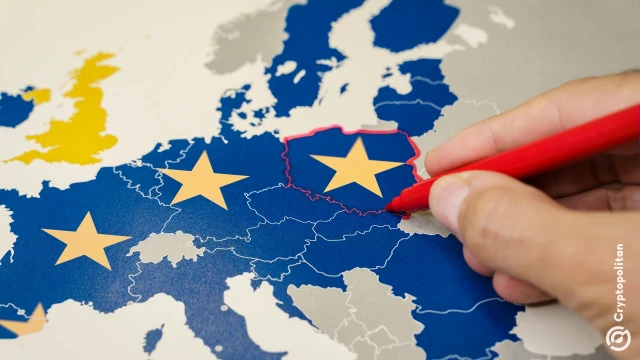
Poland's Crypto-Asset Market Act aligns with EU MiCA rules after an exchange collapse. The law mandates KNF registration, capital reserves, and AML protocols for crypto firms.
Polish lawmakers approved the government-proposed Crypto-Asset Market Act, a law regulating cryptocurrency transactions under European rules. The vote follows the collapse of a major coin trading platform, though the source does not name the specific exchange. The act aligns Poland with the EU's Markets in Crypto-Assets (MiCA) regulation, which sets uniform licensing, disclosure, and consumer-protection standards across member states.
Poland had previously lagged in transposing MiCA into national law, leaving local exchanges and custodians in a regulatory gray zone. The new act closes that gap. It requires crypto-asset service providers to register with the Polish Financial Supervision Authority (KNF), maintain capital reserves, and follow anti-money laundering protocols. The law also defines legal treatment of digital assets for tax and bankruptcy purposes.
The simple read is that Poland is catching up to EU standards. The better market read is that the collapse of a major trading platform – likely FTX or a similar failure – created a political window for stricter oversight. Lawmakers in Warsaw used the event to push through a bill that had stalled for months. The timing matters because regulatory clarity is a prerequisite for institutional capital to enter the Polish crypto market.
Without a clear legal framework, Polish banks refused to serve crypto firms, and local exchanges operated under legal uncertainty. The act removes that uncertainty. It also imposes compliance costs that smaller players may struggle to meet. The KNF will now have enforcement power to suspend or revoke licenses, which raises the bar for entry.
The act covers all crypto-assets, including Bitcoin and Ethereum, and applies to any firm offering custody, trading, or exchange services to Polish residents. The immediate effect will be a consolidation among Polish crypto exchanges. Firms that cannot afford the licensing fees, audit requirements, and ongoing reporting will either exit the market or merge with larger EU-licensed entities.
For traders, the law introduces mandatory identity verification for all transactions above a threshold, which will reduce anonymity. It also provides legal recourse if an exchange fails – a direct response to the collapse that catalyzed the bill. Polish users who lost funds on the failed platform now have a clearer path to claim assets in insolvency proceedings.
From a broader market perspective, Poland's move adds to a growing list of EU countries adopting MiCA. The Senate Vote Turns Crypto Regulation Into a Market Catalyst in the US earlier this year showed that regulatory clarity can drive price action. Poland's act is unlikely to move global crypto prices on its own. It does remove a key jurisdictional risk for European crypto funds that allocate to Central and Eastern Europe.
The act now moves to the Polish Senate for a final vote, which is expected to pass given the parliamentary majority. The next concrete catalyst is the implementation timeline: the KNF must publish licensing guidelines within 90 days of the law taking effect. Exchanges will then have six months to apply for registration. Firms that fail to comply by the deadline will face fines and potential criminal liability.
Traders and investors should watch for which Polish exchanges announce compliance plans and which exit the market. The act also sets a precedent for other EU laggards – such as Hungary and Romania – to accelerate their own MiCA transposition. For now, Poland has turned a crisis into a regulatory milestone, and the market will test whether the new rules actually protect users or simply raise barriers to entry.
Prepared with AlphaScala research tooling and grounded in primary market data: live prices, fundamentals, SEC filings, hedge-fund holdings, and insider activity. Each story is checked against AlphaScala publishing rules before release. Educational coverage, not personalized advice.