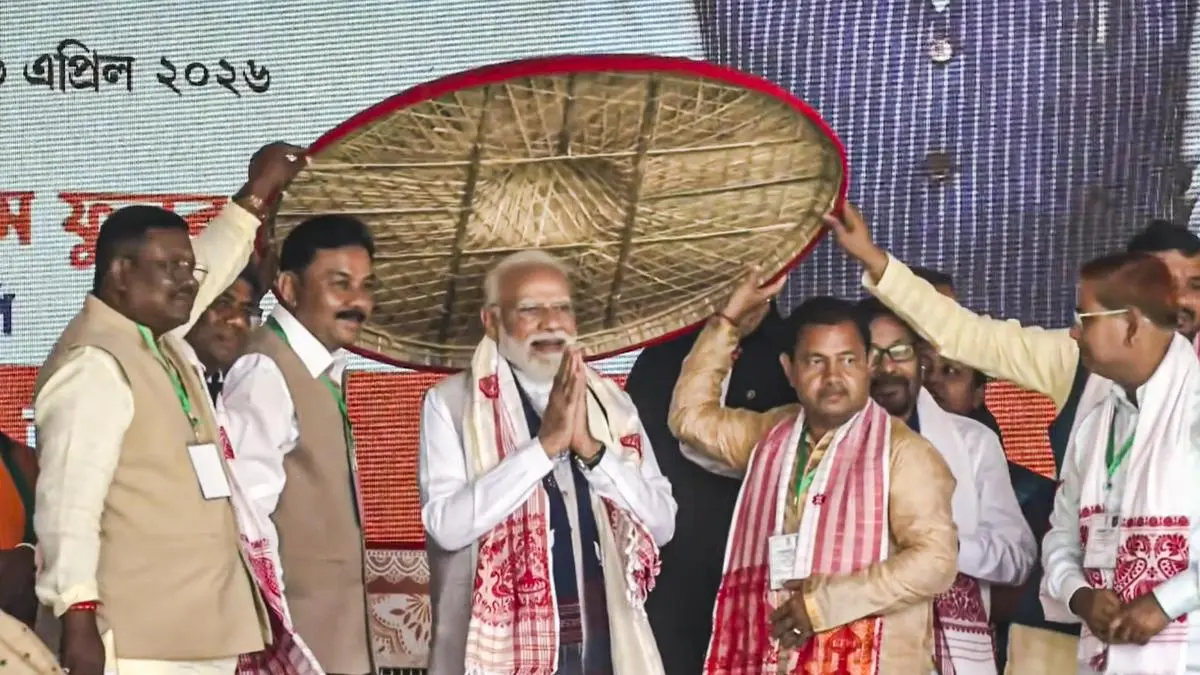
Prime Minister Narendra Modi visited Assam this week to spotlight the Bharatiya Janata Party’s (BJP) developmental achievements over the past decade. During his address, the Prime Minister emphasized the administration's commitment to transforming the state into a model of self-reliance, positioning this economic objective as a central pillar of his party’s platform heading into the 2026 assembly elections.
In his remarks, Modi leveraged the visit to contrast the BJP’s current governance record with the previous leadership under the Congress party. He claimed that the BJP’s tenure has been defined by infrastructure expansion and socio-economic progress, contrasting these efforts with what he described as the shortcomings of his political opponents. The Prime Minister underscored that the path toward a self-reliant Assam—or 'Atmanirbhar Assam'—requires a continuation of the current policy trajectory.
With the 2026 state assembly elections on the horizon, the visit served as a strategic push to consolidate voter support. Modi reiterated that the state has entered a new phase of growth and stability, urging the public to maintain the momentum established by his government. The Prime Minister’s rhetoric focused heavily on the long-term vision for the region, framing the upcoming electoral cycle as a critical juncture for the state’s economic future.