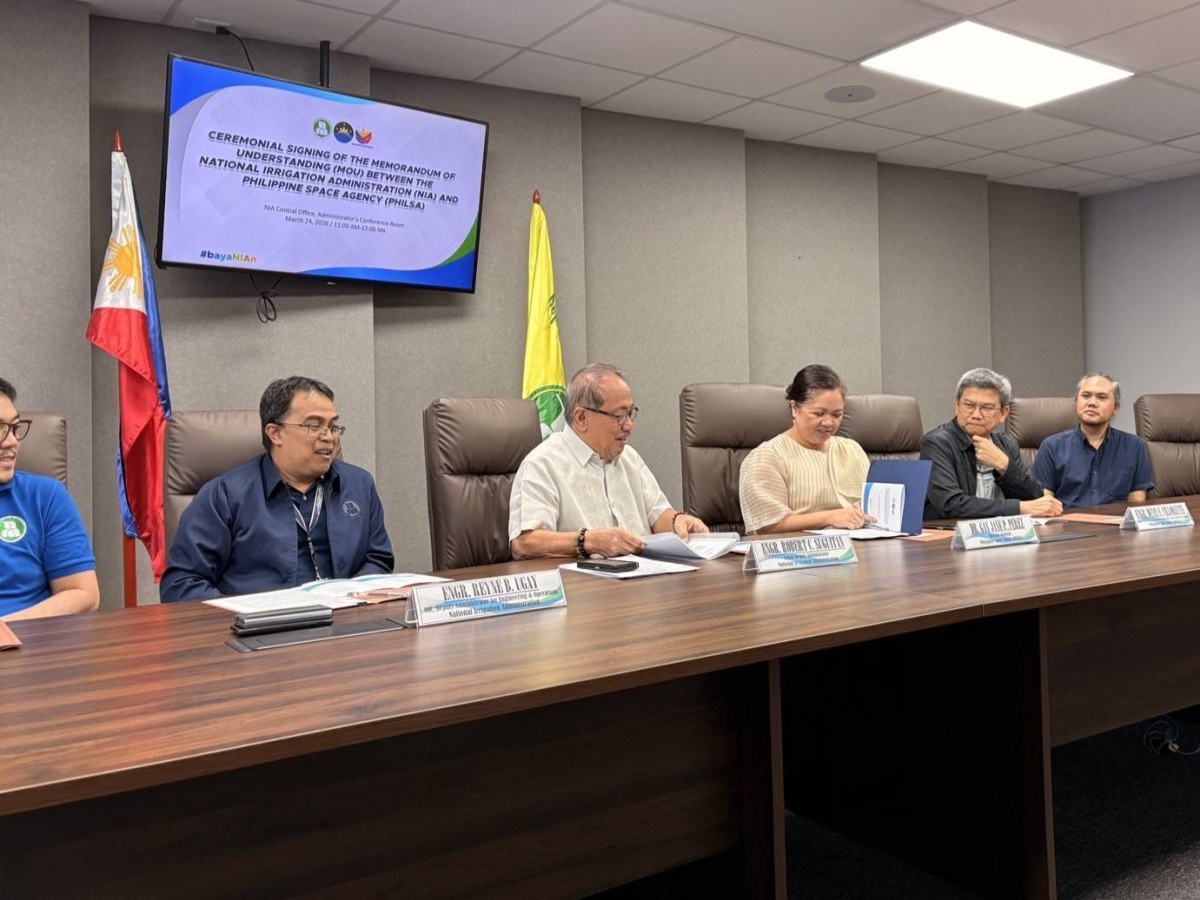
The Philippine Space Agency (PhilSA) and the National Irrigation Administration (NIA) have formalized a memorandum of understanding to integrate space-based data into the nation's irrigation and water management infrastructure. This collaboration marks a transition from traditional ground-based monitoring to a high-resolution, satellite-enabled framework for agricultural resource oversight. By leveraging orbital assets, the agencies aim to improve the precision of water distribution and the maintenance of irrigation networks across the archipelago.
Integrating Orbital Data into Agricultural Infrastructure
The core objective of this partnership is to utilize satellite imagery and remote sensing to monitor water levels, land use, and the physical integrity of irrigation systems. For the NIA, this represents a shift toward predictive maintenance and real-time resource allocation. The use of space data allows for the identification of water stress in crops and potential leaks or blockages in canals that are often difficult to detect through manual inspection alone. This technological integration is expected to reduce operational inefficiencies that have historically plagued large-scale irrigation projects.
Beyond immediate maintenance, the data stream will likely inform long-term planning for water security. By mapping historical water usage against satellite-derived weather and soil moisture patterns, the agencies can optimize the timing of water releases. This is particularly critical in a region where seasonal climate variability significantly impacts agricultural output. The transition to data-driven management suggests a broader trend in stock market analysis where government-led infrastructure projects increasingly rely on geospatial intelligence to justify capital expenditures.
Sectoral Read-Through and Resource Management
The move by PhilSA and NIA highlights the growing utility of space-tech applications in non-aerospace sectors. As public agencies adopt these tools, the demand for specialized data processing and satellite-derived analytics is likely to increase. This creates a downstream requirement for software and hardware solutions capable of handling large-scale geospatial datasets. While the immediate impact is localized to Philippine agricultural policy, the methodology serves as a case study for how developing economies are utilizing space assets to mitigate climate-related risks to food security.
AlphaScala currently tracks Agilent Technologies, Inc. (A stock page) with an Alpha Score of 55/100, reflecting a moderate outlook within the broader healthcare and analytical instrumentation sector. The firm's focus on high-precision measurement tools often intersects with the types of environmental and analytical data collection required for modern infrastructure projects of this nature.
The Path Toward Operational Implementation
The next concrete marker for this initiative will be the publication of the specific technical protocols and the selection of pilot irrigation sites. Stakeholders should monitor subsequent announcements regarding the procurement of data processing software or hardware upgrades necessary to ingest satellite feeds. The success of this partnership will be measured by the ability of the NIA to demonstrate measurable improvements in water delivery efficiency and a reduction in the time required to respond to irrigation infrastructure failures. As these agencies move from the memorandum phase to active deployment, the integration of these systems will provide a clearer picture of the scalability of space-tech in national resource management.