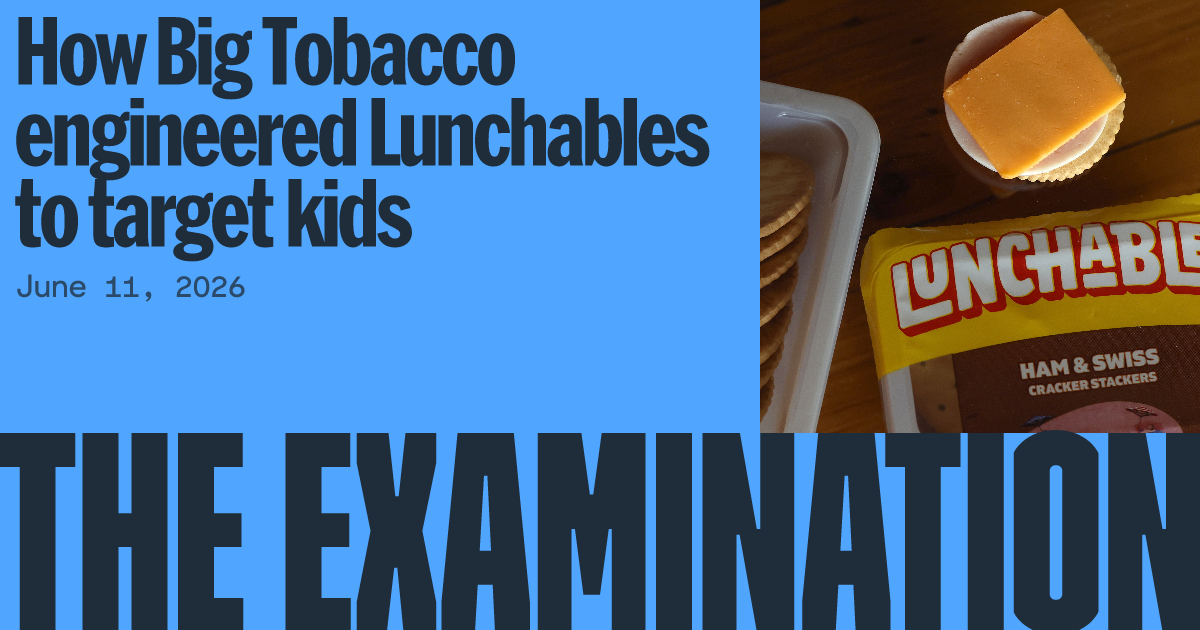
The Lunchables that hit store shelves in 1989 – yellow boxes of crackers, cheese, and deli meat – became a $200 million hit in year one. The product solved a problem for working moms and gave kids a DIY lunch experience. A new study claims the real innovation came from Philip Morris, not Oscar Mayer.
Philip Morris Companies owned General Foods after the 1980s acquisition. The tobacco giant applied its cigarette development playbook to the kids' meal line, according to research published in a special issue of the American Journal of Public Health. Author Laura Schmidt, a professor at the University of California, San Francisco, drew on previously undisclosed company documents to trace the connection.
Schmidt said the product team embedded consumer research into the engineering of Lunchables in a way that mirrored cigarette development. They knew mothers felt guilty about feeding kids processed food. So they wrapped the packaging like a gift, added transparent windows so moms could see the food, and packed in familiar Kraft cheese singles branding. The box looked and felt like a toy.
Tobacco companies thought in decades. Lock a child into a brand at age three, and you save marketing dollars for the rest of that consumer's life. “They used that same model for ultraprocessed foods during the 1980s and '90s,” Schmidt told The Examination, which first published the study's findings.
The Consumer Brands Association pushed back. Packaged food manufacturers follow government nutrition policy, the group said, and “deliver safe, affordable and convenient products that consumers depend on every day.” Kraft Heinz, which now owns Lunchables and split from Philip Morris in 2007, said its portfolio includes “affordable options with more protein, more whole grains, less sugar and sodium, and no artificial dyes.” Philip Morris did not respond to requests for comment.
Schmidt's work adds to a growing pile of research linking Big Tobacco's methods to a wave of ultraprocessed foods – products like Oreos and Kraft Mac and Cheese that now saturate grocery aisles. About 70% of packaged foods in U.S. stores meet the definition of ultraprocessed, she said. Eight multinational companies control most of the global food supply.
“There is actually very little choice,” Schmidt said. “Companies intentionally create an illusion of choice so they can absolve themselves of responsibility.”
Kraft Heinz faces the same structural tension today. The company can reformulate – it did with low-fat Lunchables in the early 2000s after childhood obesity spiked – but each shift costs margin. The bigger unknown is whether regulators pick up the antitrust thread Schmidt recommends.
She pointed to tobacco litigation as a blueprint. “It worked hand-in-glove with regulatory strategies to dramatically lower rates of lung cancer,” Schmidt said. “We should follow that as the blueprint for getting ourselves out of these commercially driven epidemics.”
A few concrete regulatory markers sit on the horizon. The FDA has signaled interest in front-of-package nutrition labels. Several states are weighing soda taxes and restrictions on cartoon characters aimed at children. The Federal Trade Commission has flagged child-directed marketing as a priority.
Kraft Heinz has a balance sheet that can absorb compliance costs. Its KHC stock page carries an Alpha Score of 52 out of 100, a mixed reading that reflects stable staple-category cash flows offset by long-term volume erosion and rising regulatory scrutiny. The Lunchables study crystallizes the second risk.
The immediate catalyst is the FDA's expected proposal on front-of-package labels, which could land this year. If that proposal includes warning labels for ultraprocessed foods, KHC would need to price in a compliance adjustment and a possible demand shift. The company's tobacco-era heritage is now a liability.
Schmidt's advice for consumers is simple: turn the package around. “If you see anything that you don't recognize, that you don't have in your home kitchen, don't buy the product.” For families on tight budgets, she acknowledged that's a heavy ask. “We shouldn't have to live in a food system where 70% of what we have in our grocery stores is suspicious.”