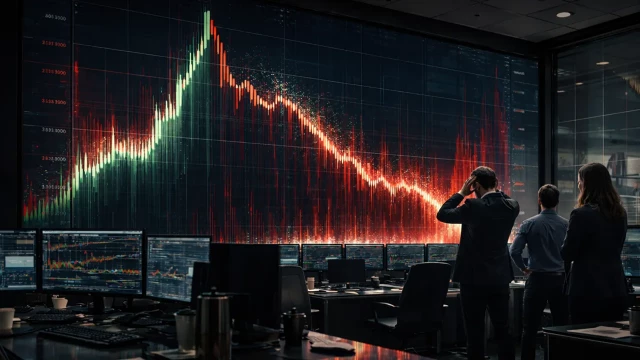
The RAVE token experienced a sharp valuation cycle on April 18, reaching a peak market capitalization of $6.7 billion before suffering a 95% decline within a matter of hours. This event illustrates the mechanics of how concentrated supply and thin liquidity interact with perpetual futures markets to create extreme price swings. The presence of a live perpetual market allowed for leveraged positioning that amplified the initial rally and accelerated the subsequent liquidation cascade.
Mechanics of Liquidity and Leverage
The collapse of RAVE was driven by a structural imbalance between the circulating supply and the available liquidity on exchange platforms. When a token with a thin float is paired with a perpetual futures market, the cost to move the spot price is significantly lower than in traditional equity markets. Market participants utilized these futures contracts to gain exposure to the asset, creating a feedback loop where rising prices triggered further buying interest.
Once the price reached its peak, the lack of depth in the order book meant that even moderate sell pressure could not be absorbed without significant slippage. As the price began to retreat, long positions were liquidated, forcing market makers and liquidity providers to hedge their positions by selling the underlying asset. This process created a rapid downward spiral that wiped out the majority of the token value in a single session. The interplay between these derivatives and the underlying token highlights the risks inherent in assets where the majority of the supply remains concentrated in few hands.
Structural Risks in Emerging Digital Assets
The RAVE incident serves as a case study for how crypto market analysis identifies systemic vulnerabilities in new tokens. Assets with low float and high volatility often attract speculative interest that is disconnected from fundamental utility. When these tokens are listed on perpetual exchanges, they gain a layer of financialization that can be exploited by those holding the majority of the supply.
AlphaScala data currently tracks various assets across sectors, including COIN stock page with an Alpha Score of 33/100, which reflects the broader volatility observed in crypto-adjacent financial services. The risk profile of such assets is compounded by the speed at which these markets operate, leaving little room for error for participants caught in the middle of a liquidity event.
- Concentrated supply allows for artificial price manipulation.
- Thin float prevents effective price discovery.
- Perpetual futures amplify volatility through forced liquidations.
These dynamics are increasingly relevant as SEC Signals Pivot Away From Enforcement-Led Crypto Oversight changes the landscape for how new tokens are brought to market. The next concrete marker for this specific event will be the disclosure of wallet activity and exchange-level data regarding the concentration of RAVE holdings. Observers should monitor whether exchange operators implement stricter listing requirements for tokens that exhibit these specific supply characteristics to mitigate future systemic failures.