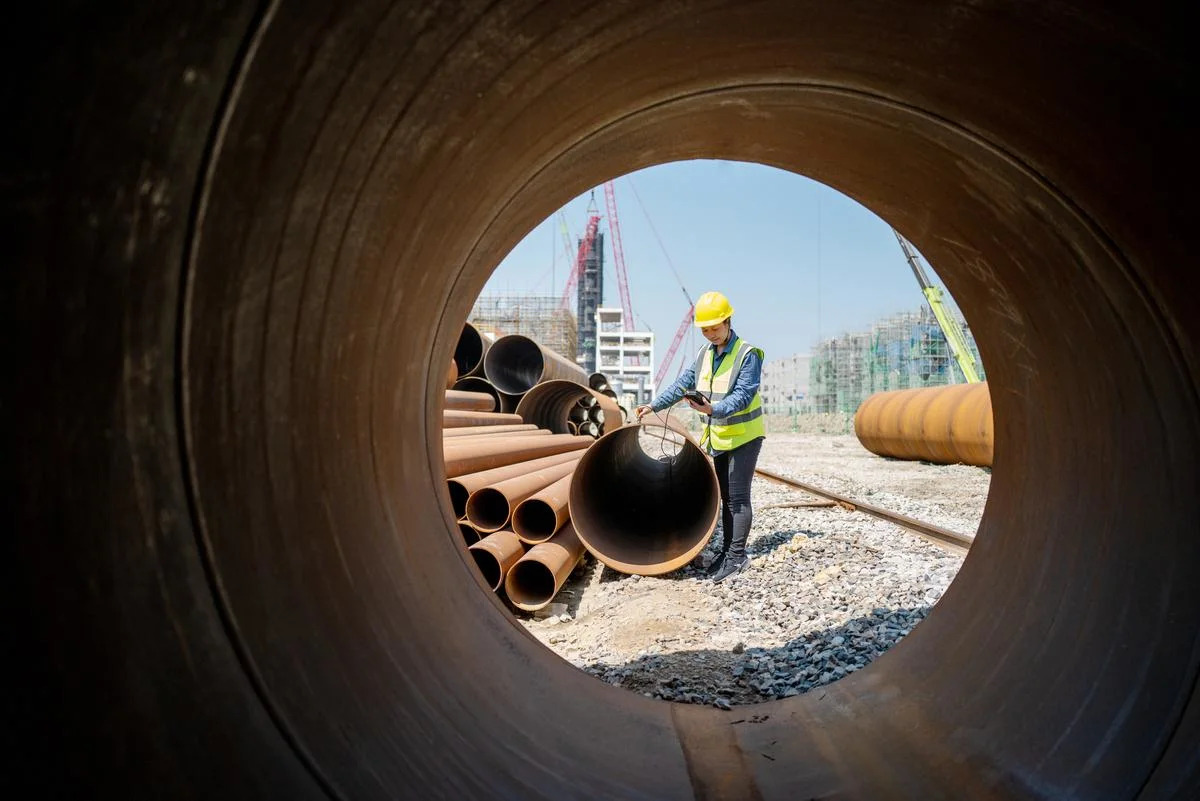
A consortium of energy companies just greenlit a $2.25 Bcf/d gas pipeline out of the Permian Basin. The Solitude Pipeline System, a joint venture between WhiteWater, Diamondback Energy (FANG), Devon Energy (DVN), MPLX (MPLX), and Western Midstream Partners (WES), will run from the Permian to Katy, Texas. Phase one targets late 2029 for commercial service. Phase two, adding another 2.25 Bcf/d, follows in 2030.
The partners have already locked in long-term firm transportation agreements with investment-grade shippers. That is the critical piece. Without that pre-commitment, pipeline economics do not work.
WhiteWater holds 50% of the venture. Devon takes 25%. MPLX gets 10%. Diamondback and Western Midstream each own 7.5%.
For producers, the payoff is pricing. The Waha hub in West Texas has been a headache for years. Production growth kept outpacing takeaway capacity, which meant periodic negative pricing for associated gas. Devon's press release on its participation put it bluntly: "Permian producers have long absorbed volatile and periodically negative pricing at the Waha hub, where takeaway capacity has repeatedly failed to keep pace with associated gas growth." Firm long-haul capacity to the Gulf Coast changes that math. Gas moves from a constrained market to LNG export terminals and Gulf Coast demand centers, where prices run higher.
Devon is no stranger to this play. It was a founding equity owner of Matterhorn Express, which it sold last year. It also secured shipping capacity on two other large-scale pipeline projects, Blackcomb and Eiger. Solitude is the latest piece of a strategy to keep Permian production growing profitably.
Diamondback has run a similar playbook. It took an equity stake in the Epic Crude pipeline as an anchor shipper, then sold that stake last year. Its Solitude investment supports continued production growth, with the same monetization path likely down the road.
For the midstream partners, the deal is about incremental cash flow with low execution risk. Western Midstream took firm capacity on the pipelines in addition to its equity stake, which gives it flow assurance for its own customers. MPLX and Western Midstream both get new sources of lower-risk growth in the 2029-2030 timeframe. That matters for distribution coverage. MPLX yields 7.3%. Western Midstream yields 7.7%. A project like Solitude, backed by investment-grade shippers with a fixed timeline, adds visibility to those payouts.
The structure is a common one in Permian midstream: a joint venture spreads the capital cost, locks in shippers before construction, and gives each partner a piece of the upside without taking the full construction risk alone.
Diamondback Energy (FANG) carries an Alpha Score of 58/100, labeled Moderate. Devon Energy (DVN) scores 57/100, also Moderate. Both stocks are in the Energy sector. The Solitude project is not reflected in current valuations. It will not contribute cash flow until late 2029 at the earliest. But the pre-commitment structure means the revenue stream is largely contracted before a single mile of pipe is laid.
The bigger story is what Solitude says about Permian gas growth. The basin keeps producing more associated gas, and the takeaway constraint has been the limiting factor. Each new pipeline that gets built unlocks another tranche of production that was economically stranded. Solitude adds 2.25 Bcf/d in the first phase, with room to expand. That is real capacity relief for producers who have been watching Waha differentials compress margins.
The JV can expand the system further if shipper demand supports it. That option is built into the design.