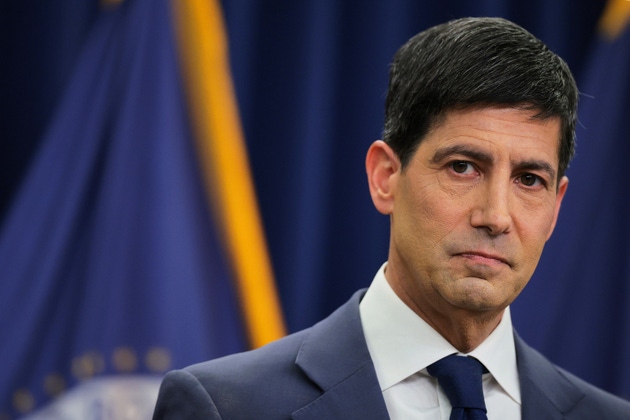
Dario Perkins, a veteran macro strategist, launched a pointed critique of Federal Reserve Chair Kevin Warsh's approach to monetary policy, warning that a reliance on market-driven signals, opaque task forces, and unconventional data sources could destabilize the bond market's faith in the central bank's communication.
Perkins, who has followed Fed behavior for decades, said Warsh's debut has been characterized by a pattern of reacting to real-time market moves rather than laying out a clear forward-looking framework. The absence of a formal dot plot or a consistent press conference structure, Perkins argued, leaves traders guessing about the reaction function. That uncertainty, he wrote, is worse than having no communication at all.
A more immediate worry centers on Warsh's push for "alternative data" – real-time consumer spending, payroll-card receipts, satellite imagery – as inputs into policy decisions. Perkins said this approach risks giving too much weight to volatile, unvetted metrics, and that it undermines the very premise of rule-based guidance. Traders, he noted, already struggle to parse standard data releases; adding alt-data layers without a published methodology would make Fed signals even harder to decode.
For the bond market, the implications are direct. A Fed that communicates through ad hoc task forces and market-driven reactions injects a term-premium premium into longer-dated Treasuries. Perkins pointed out that the US2Y level – the two-year note yield – becomes a battleground: every Warsh speech or data print shifts expectations without the anchor of a published forward path. The dollar, too, becomes more reactive. Perkins said the lack of a clear policy rule means FX traders will price in a wider distribution of outcomes, leaning into dollar strength on any upside surprise and selling on any sign of a dovish pivot.
Gold benefits from the same uncertainty. Perkins noted that a Fed perceived as less predictable reduces the opportunity cost of holding non-yielding assets, particularly if the task forces produce contradictory messaging. Equities, meanwhile, lose the "Fed put" that previous chairs provided through explicit forward guidance. Without a transparent framework, the equity risk premium expands.
Perkins ended on a sharp note: a Fed that governs by market reaction and alt-data experiments, he said, risks breaking the very trust that makes its words matter. He did not offer a specific date for when that trust could crack, only that the pattern is set early in Warsh's term.