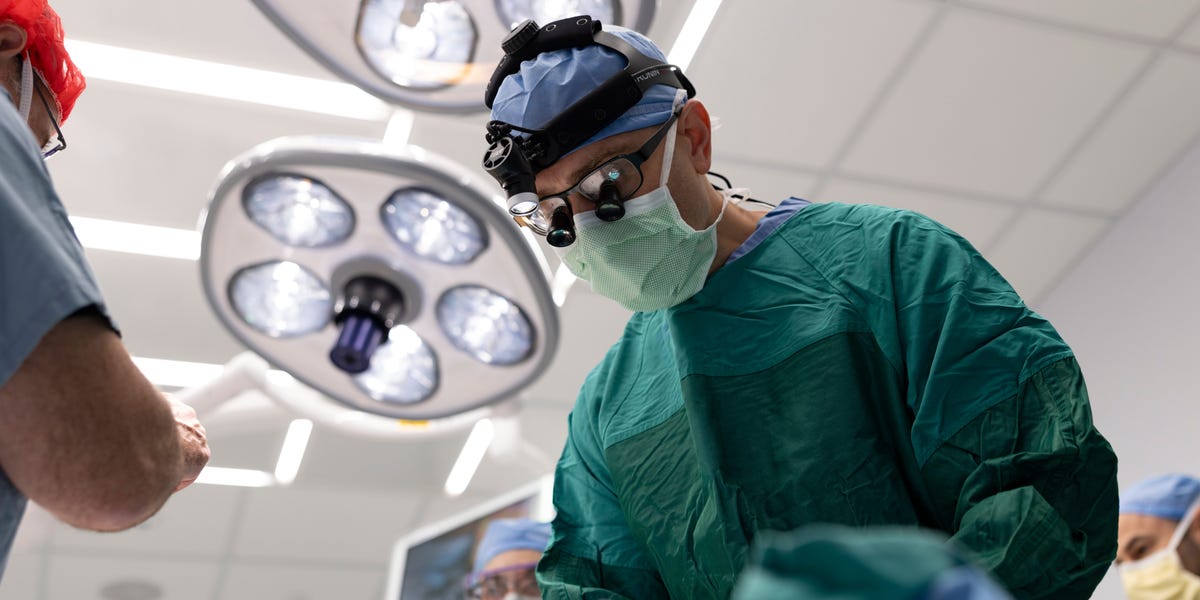
Paradromics, the privately held neurotechnology company, implanted its first long-term brain-computer interface in a patient this month. Dr. Matthew Willsey, a neurosurgeon at the University of Michigan, performed the surgery. He described the procedure as taking about three hours, with the patient recovering well. Paradromics has not disclosed the patient's identity. The company said only that the person has a severe speech impairment.
The chip, named the Paradromics Gen 1, carries 1,561 electrodes. That count is roughly ten times the number in comparable devices from rivals such as Neuralink and Synchron. The higher density allows the system to capture more neural signals at once. Paradromics is aiming to decode speech at more than 60 words per minute by the end of this year.
Dr. Willsey said his engineering background shaped how he approached the implant. The device is designed for long-term use, meaning it stays in place for years rather than weeks. Paradromics plans to collect enough data to support an application to the U.S. Food and Drug Administration for broader clinical testing.
The race among brain-computer interface companies to reach the market has drawn venture capital and public attention. Neuralink received FDA approval for its first-in-human study last year and has performed multiple implants. Synchron has also implanted its stent-based device in several patients. Paradromics is behind in the timeline but its higher electrode density could give it an advantage in data resolution.
Paradromics has raised roughly $110 million to date, including a $40 million Series A in 2022. It has not announced a timeline for a public listing. An acquisition by a larger medtech company is a plausible exit. Medtronic, Boston Scientific and Abbott have all invested in neuromodulation and electrode technology. A positive clinical readout from Paradromics could make it a target.
The near-term catalyst is the speech decoding milestone. If Paradromics demonstrates real-time translation of neural signals into text at 60 words per minute, that would surpass current assistive communication tools. Dr. Willsey said the company expects to publish its first clinical results at a scientific conference later this year.
No brain-computer interface system has yet received permanent FDA approval beyond clinical trial use. Paradromics' first implant moves the timeline forward. The conference presentation will be the next concrete event.