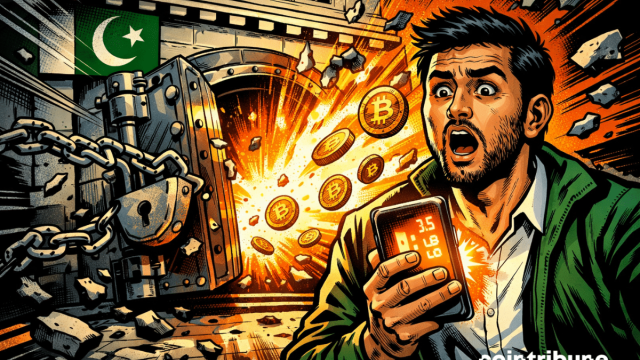
Pakistan Ends Eight-Year Crypto Banking Freeze

Pakistan has reversed an eight-year ban on banking services for crypto firms, allowing licensed entities to open accounts and integrate with the traditional financial system.
Alpha Score of 45 reflects weak overall profile with strong momentum, poor value, poor quality, weak sentiment.
Alpha Score of 55 reflects moderate overall profile with moderate momentum, moderate value, moderate quality. Based on 3 of 4 signals — score is capped at 90 until remaining data ingests.
Alpha Score of 53 reflects moderate overall profile with poor momentum, strong value, strong quality, moderate sentiment.
Alpha Score of 46 reflects weak overall profile with moderate momentum, poor value, weak quality, moderate sentiment.
Pakistan has officially authorized domestic banks to provide services to licensed cryptocurrency entities, ending an eight-year regulatory blockade. This policy shift marks a departure from the country's long-standing prohibition, which had effectively locked digital asset firms out of the traditional financial system since 2016.
A New Regulatory Framework
The move follows years of pressure from emerging fintech players seeking to bridge the gap between fiat and virtual assets. By allowing licensed crypto companies to maintain bank accounts, the State Bank of Pakistan is creating a pathway for institutional integration that was previously unavailable. While the licensing criteria remain stringent, the shift suggests that regulators are moving toward a supervised environment rather than a blanket ban.
This decision aligns with broader global efforts to integrate blockchain-based businesses into regulated frameworks. For local firms, the ability to hold corporate accounts is the single largest hurdle to operational scale. Traders familiar with the crypto market analysis will recognize this as a classic "onboarding" development that typically precedes increased volume and liquidity.
Market Implications and Connectivity
For institutional investors, the primary implication is the reduction of counterparty and operational risk. Previously, firms operating in Pakistan had to rely on informal channels, which inherently limited their ability to scale or attract venture capital. With banking access now sanctioned, the following shifts are likely:
- Institutional Entry: Banks can now act as custodians or settlement layers for local exchanges.
- Capital Efficiency: Lower friction between PKR and digital assets will likely tighten spreads for local traders.
- Compliance Costs: While banks gain fee-based revenue, they will face higher KYC and AML monitoring burdens to maintain these accounts.
Traders should monitor how local exchange volumes react to the normalization of fiat-to-crypto ramps. If banking infrastructure stabilizes, we expect to see increased interest in Bitcoin (BTC) profile and Ethereum (ETH) profile as local demand finds a more efficient outlet. This change also mirrors the broader trend seen in other emerging markets where regulators are prioritizing oversight over total suppression.
What to Watch
Success for this policy will depend on the speed of bank implementation. Banks are notoriously risk-averse when dealing with crypto, so the availability of actual banking services may lag behind the regulatory announcement. Keep an eye on the specific licensing requirements the central bank mandates for these service providers, as these will determine which firms can actually access the system.
"The authorization of bank accounts for licensed crypto companies is a departure from years of restricted access, signaling a new, supervised era for Pakistan's digital asset sector."
Expect a period of cautious integration as banks build out their internal compliance protocols for crypto-linked accounts. The end of the blockade is the first step, but the velocity of new liquidity will depend on how quickly retail and institutional users can navigate the new, albeit likely heavily regulated, process.
AI-drafted from named sources and checked against AlphaScala publishing rules before release. Direct quotes must match source text, low-information tables are removed, and thinner or higher-risk stories can be held for manual review.