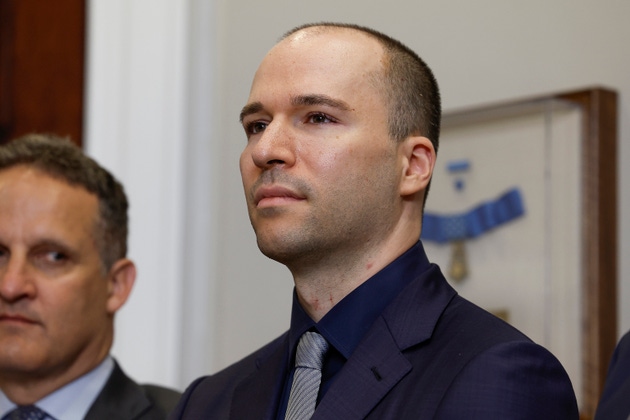
Greg Brockman's Expanded Role at OpenAI
Wall Street Journal reported that Greg Brockman is taking on a broader leadership role at OpenAI, unifying the ChatGPT and Codex product teams. The move comes as the company prepares for an initial public offering. Brockman, previously chairman and chief technology officer, is now more directly involved in day-to-day operations, including navigating competition from Google Gemini, Anthropic, and Meta while managing regulatory headwinds.
The product integration is the most concrete signal yet of OpenAI's strategy ahead of an IPO. ChatGPT drives consumer adoption; Codex powers developer tools. Combining them suggests OpenAI intends to sell a unified platform, not separate products. That changes the revenue narrative for potential investors.
Why the Leadership Shift Matters for the AI Sector
The naive read is that Brockman's promotion is an internal reorganization. The better market read is about execution risk and valuation. OpenAI's private valuation already exceeds $80 billion. An IPO at that level would make it one of the largest tech listings in years. Brockman's expanded mandate implies the company needs to show it can scale both product and engineering without losing focus.
For public markets, the read-through is direct. Microsoft (MSFT) holds a significant stake and has integrated OpenAI's models into Azure. Any sign of leadership stability at OpenAI reduces overhang for Microsoft's AI segment. Conversely, if the IPO reveals governance concerns – such as the board structure or Brockman's role in future decision-making – that could pressure both stocks.
Nvidia (NVDA) is another indirect beneficiary. OpenAI's compute needs drive demand for Nvidia GPUs. A successful IPO would reinforce the AI capital expenditure cycle. Alphabet (GOOGL) faces the opposite risk: a well-funded OpenAI with Brockman coordinating product strategy could intensify competition in search and cloud.
The Next Catalyst: OpenAI's IPO Readiness
The immediate decision point for traders is the timing of the S-1 filing. The SEC review process typically takes three to six months. If Brockman's expanded role is framed as a governance improvement – a stronger executive team with clear product accountability – that could accelerate the timeline. If the filing reveals litigation risks (copyright lawsuits from authors, news outlets, or artists) or regulatory scrutiny from the FTC or EU, the timeline slips.
Traders watching the AI sector should treat this as a watchlist catalyst. The simple view is that a Brockman-led product unification is bullish for OpenAI's IPO. The better view is that the real test is what the S-1 says about revenue concentration, margin trajectory, and customer retention. Brockman's job is to make those numbers look repeatable.
The next concrete marker is the pre-IPO roadshow. Until then, the leadership change keeps OpenAI in the news cycle and reinforces the AI arms race narrative that has driven semiconductor and cloud multiples higher.