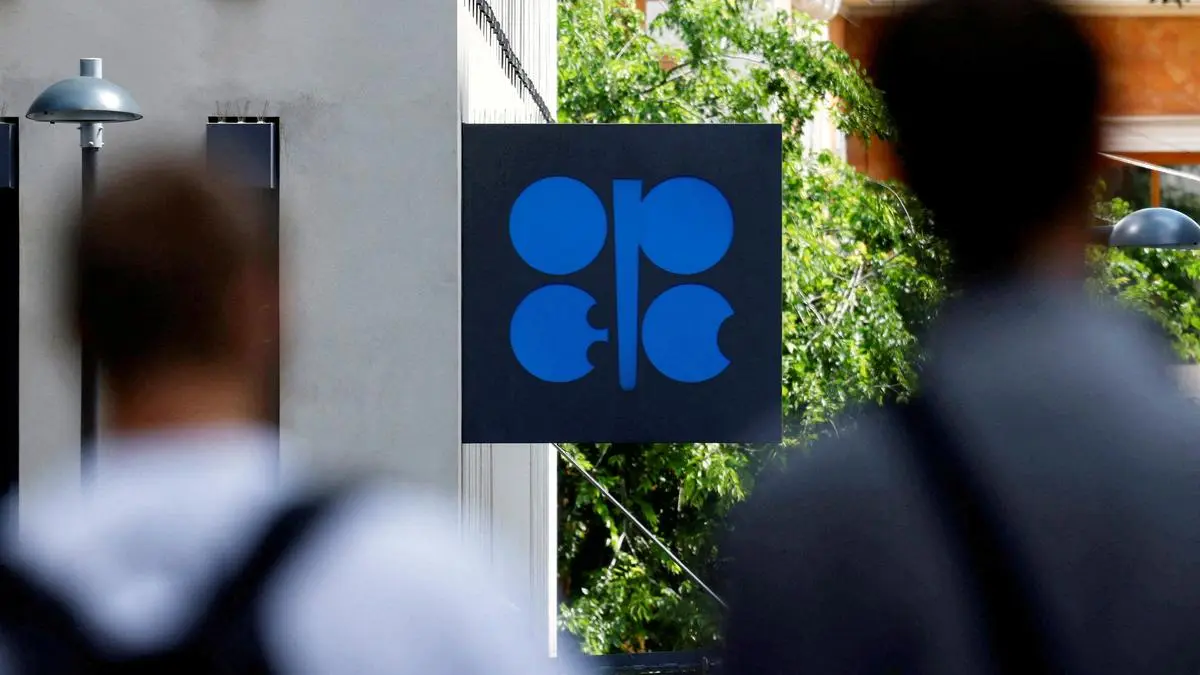
OPEC+ approves a symbolic June production hike to signal stability after the UAE's exit. Watch for UAE export data to see if the cartel's price control holds.
Alpha Score of 56 reflects moderate overall profile with weak momentum, strong value, moderate quality. Based on 3 of 4 signals — score is capped at 90 until remaining data ingests.
OPEC+ nations have approved a modest, symbolic increase in production quotas for June. This decision serves as a strategic signal to maintain market stability following the surprise departure of the United Arab Emirates from the alliance. By opting for a marginal adjustment rather than a structural shift, the group aims to project internal cohesion despite the loss of a key member.
The decision to implement a symbolic hike is less about physical supply and more about signaling. The UAE exit creates a vacuum in the group's long-term production planning, but the remaining members are prioritizing the appearance of continuity. For traders, this indicates that the cartel is currently unwilling to engage in a price war or aggressive market share reclamation. Instead, the focus remains on keeping crude oil profile volatility contained while the group recalibrates its internal influence.
Market participants often interpret quota changes as direct indicators of future physical supply. However, in this instance, the hike is largely performative. The actual impact on global inventory levels will be negligible, as the increase does not reflect a fundamental change in production capacity or a shift in the group's broader commodities analysis strategy. The primary risk is not the supply volume itself, but the potential for the UAE to independently ramp up production, which would undermine the cartel's ability to influence price floors.
With the UAE now operating outside the constraints of OPEC+ quotas, the group faces a new challenge in managing the global supply balance. The UAE has explicitly stated its intention to increase oil investments, signaling a move toward higher output capacity. This creates a divergence between the cartel's managed supply and the potential for unconstrained production from a significant regional player.
This dynamic changes the decision point for the next quarter. Traders should look for discrepancies between the official OPEC+ quota adjustments and the actual export data coming out of the UAE. If the UAE begins to aggressively utilize its new investment capital to boost export volumes, the symbolic nature of the recent OPEC+ meeting will quickly give way to a more competitive pricing environment. The next concrete marker will be the June export figures, which will confirm whether the UAE intends to act as a spoiler to the cartel's current price-support mechanism.
AI-drafted from named sources and checked against AlphaScala publishing rules before release. Direct quotes must match source text, low-information tables are removed, and thinner or higher-risk stories can be held for manual review.